By looking at the problem of complicity in political violence from a social versus a legal perspective, The Politics of Conflict offers readers new insight into the ways in which violence operates.
Written by a survivor of childhood abuse, this moving memoir traces the influence of the author's mother tongue in the formation of her identity, and the role her second language played in providing a psychological sanctuary.
Written by a survivor of childhood abuse, this moving memoir traces the influence of the author's mother tongue in the formation of her identity, and the role her second language played in providing a psychological sanctuary.
It is difficult to imagine how orphan asylums and children's homes - often depicted as places where abuse, deprivation, and cruelty were commonplace - once presented a viable solution to child neglect.
Don't Tell examines the effects of sexual abuse on the emotional and sexual life of men, including their sense of self and their personal relationships.
Social pediatrics complements the traditional practice of pediatrics by creating a network within the community that acts to empower children and their families.
Marchak departs significantly from mainstream explanations of genocide, rejecting racism as a fundamental cause and disputing a wide range of other explanations that cite racist and religious ideologies, perception of threat, authoritarianism, and unique historical circumstances as primary causes.
Don't Tell examines the effects of sexual abuse on the emotional and sexual life of men, including their sense of self and their personal relationships.
Using a convincing causal model of violence, Kasozi attributes the major causes of violence in Uganda to social inequality, the failure to develop legitimate conflict resolution mechanisms, and factors that have influenced the domain and patterns of conflict in that society (such as lack of a common language, religious sectarianism, vigilante justice, and gender inequality).
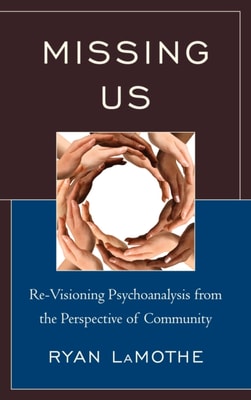
In Missing Us: Re-Visioning Psychoanalysis from the Perspective of Community, Ryan LaMothe questions the ways in which psychoanalytic and psychodynamic theorists and clinicians have historically relied principally on a two-person psychology to understand psychosocial development and practice.
The Long Shadow of Sexual Abuse: Developmental Effects across the Life Cycle has one simple purpose_to describe the profound interferences with normal developmental processes that occur in every subsequent developmental phase throughout life as the result of chronic child sexual abuse.
How do we position ourselves, moment by moment, in relation to our patients and how do these positions inform both what we come to know about our patients and how we intervene?
Mi Rinconcito en el Cielo (My Little Corner of the Sky) tells the remarkable story of Alberto "e;Beto"e; Gonzales, who overcame a childhood of poverty, addiction, bigotry, and violence and went on to change the lives of thousands of children and adults as a mentor and gang prevention specialist.
Putting forward a new approach to the study of corrections, this book draws together public health and corrections and explores the importance of this nexus.
Walter Rodney claimed developing countries were heirs to uneven development and ethnic disequilibrium, including continued forms of oppression from the capitalist countries and their own leaders.
By sharing her personal journey through the pain she has suffered at the hands of her perpetrators, author Erin Merryn proves that one person can make a difference in the lives of others.
Deserted by his mother and abandoned by his father at just three months old, Jerry Coyne was sent to live in a Catholic children's home run by nuns of the order of the Sisters of Nazareth.
Cynthia Owen grew up in Ireland, went to the local convent school, said her prayers and took her first communion with all the other girls in her class.
Throughout the 70s and early 80s English football hooligans wreaked havoc throughout England and Europe until the authorities decided that enough was enough.
As the number of serial killers worldwide has risen steadily - from the emergence of Jack the Ripper in 1888 to Harold Shipman and Ivan Milat, the backpacker killer of the Australian outback - the need to understand mass murder is becoming more urgent.