A leading-edge guide to thinking about and planning for twenty-first-century cities in all their social, political, and ecological complexity The first “urban century” in history has arrived: a majority of the world’s population now resides in cities and their surrounding suburbs.
A groundbreaking account of the early history of rent control Written by one of the country’s foremost urban historians, The Great Rent Wars tells the fascinating but little-known story of the battles between landlords and tenants in the nation’s largest city from 1917 through 1929.
In the face of the most perilous challenges of our time-climate change, terrorism, poverty, and trafficking of drugs, guns, and people-the nations of the world seem paralyzed.
How did neighborhood groceries, parish halls, factories, and even saloons contribute more to urban vitality than did the fiscal might of postwar urban renewal?
The quintessential American suburbs, with their gracious single-family homes, large green lawns, and leaf-shaded streets, reflected not only residents’ dreams but nightmares, not only hopes but fears: fear of others, of racial minorities and lowincome groups, fear of themselves, fear of the market, and, above all, fear of change.
A new understanding of rural-urban migration and inequality in contemporary ChinaMany of the millions of workers streaming in from rural China to jobs at urban factories soon find themselves in new kinds of poverty and oppression.
As human activity and environmental change come to be increasingly recognized as intertwined phenomena on a rapidly urbanizing planet, the field of urban ecology has risen to offer useful ways of thinking about coupled human and natural systems.
Since the 1950s, the housing developments in the West that historian Lincoln Bramwell calls wilderburbs have offered residents both the pleasures of living in nature and the creature comforts of the suburbs.
From tenements to alleyways to latrines, twentieth-century American cities created spaces where pests flourished and people struggled for healthy living conditions.
Using the lens of nutrition security and equity for the living beings and living systems of the planet, Nutrition Security for Planetary Health takes an integrated, systems approach that not only delineates the antecedents of the multifaceted environmental crises-but offers solutions including the extensive co-benefits of whole plant foods nutrition as the foundational dietary pattern for improving planetary health.
Original, action-oriented humanist practices for interpreting and intervening in the city: a new methodology at the intersection of the humanities, design, and urban studies.
Aspects of the urban food truck phenomenon, including community economic development, regulatory issues, and clashes between ethnic authenticity and local sustainability.
An investigation into gentrification and displacement, focusing on the case of Portland, Oregon''s systematic dispersal of black residents from its Albina neighborhood.
An examination of environmental revitalization efforts in low-income communities in Boston, Barcelona, and Havana that help heal traumatized urban neighborhoods.
Examines the culture, politics, and history of the movement for environmental justice in New York City, tracking activism in four neighborhoods on issues of public health, garbage, and energy systems in the context of privatization, deregulation, and globalization.
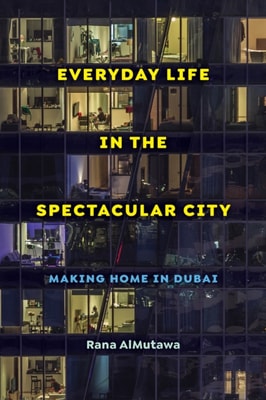
Everyday Life in the Spectacular Cityis a groundbreaking urban ethnography that reveals how middle-class citizens and longtime residents of Dubai interact with the citys so-called superficial spaces to create meaningful social lives.
This new volume draws from provocative discussions on the urban social contract among policy makers, researchers, public intellectuals, and citizens at the 2015 UIC Urban Forum.
Carved out of century-old farmland near Chicago, the Prairie Crossing development is a novel experiment in urban public policy that preserves 69 percent of the land as open space.