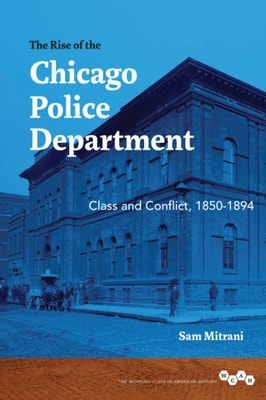
Class turmoil, labor, and law and order in Chicago In this book, Sam Mitrani cogently examines the making of the police department in Chicago, which by the late 1800s had grown into the most violent, turbulent city in America.
Cities, counties, school districts and other local governments have suffered a long-lasting period of fiscal challenges since the beginning of the Great Recession.
Published in 1912 on the heels of Twenty Years at Hull-House and at the height of Jane Addams's popularity, A New Conscience and an Ancient Evil assesses the vulnerability of the rural and immigrant working-class girls who moved to Chicago and fell prey to the sexual bartering of what was known as the white slave trade.
This study reclaims and builds upon the classic work of anthropologist Elena Padilla in an effort to examine constructions of space and identity among Latinos.
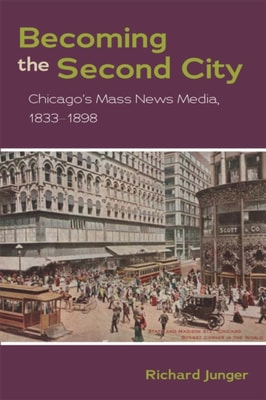
Becoming the Second City examines the development of Chicago's press and analyzes coverage of key events in its history to call attention to the media's impact in shaping the city's cultural and historical landscape.
Research in urban development in the social sciences has increasingly emphasized the importance of underground infrastructure for envisaging sustainable cities and for critiquing the economies of extraction.
'I came away from this book enraged, enlightened and with a sense of urgency to do something' Annie Mac'Lays down a transformative path to peace' David Lammy MP'Compelling' The Sunday Times; 'Assured' Observer; 'Brilliantly written' Nikesh Shukla_________________________Demetri wants to study criminology at university to understand why people around him carry knives.
'Poverty is a very exacting teacher and I had been taught well'The post-war urban jungle of the Glasgow tenements was the setting for Molly Weir's childhood.
Britain's streets have been transformed by the construction of new property - but it's owned by private corporations, designed for profit and watched over by CCTV.
In 2003, an FBI-led task force known as Operation Fly Trap attempted to dismantle a significant drug network in two Bloods-controlled, African American neighborhoods in Los Angeles.
Violent urban schools loom large in our culture: for decades they have served as the centerpieces of political campaigns and as window dressing for brutal television shows and movies.
This book offers a historical analysis of landfill sites in New York City, Greater Toronto, and Greater Tel Aviv, and uses them as case studies to emphasize the international and global scale of issues concerning waste disposal and park redevelopments.
The Progressives-those reformers responsible for the shape of many American institutions, from the Federal Reserve Board to the New School for Social Research-have always presented a mystery.
Thomas Philipp's study of Acre combines the most extensive use to date of local Arabic sources with commercial records in Europe to shed light on a region and power center many identify as the beginning of modern Palestinian history.
This study examines representations of the cityscape and of a so-called "e;new urban violence"e; in both detective-centered and detectiveless crime fiction produced in Spanish America and Spain during recent decades.
Just as the nation witnessed the widespread decay of urban centers, there is a mounting suburban crisis in first-tier suburbs - the early suburbs to develop in metropolitan America.
The essays in this book critically examine the ways in which gendered subjects negotiate their life-worlds in Middle Eastern, South Asian, and African urban landscapes.
This anthology tackles three key issues: how social capital is discussed within the contexts of racial inequality, how this dialogue informs public policy regarding neighbourhood revitalization and economic development, and how effective a strategy utilization of social capital is for improving inner city living conditions.
This book explains how and why cities on the African continent have grown at such a rapid pace, how municipal authorities have tried to cope with this massive influx of people, and how long-time urban residents and newcomers interact, negotiate, and struggle over access to limited resources.
Cities divided by ethnic and cultural conflict need to identify, create and maintain some kind of shared identity amongst their inhabitants, if they wish to survive in competition with one another and not be submerged in tensions.
Demand for owner-occupied housing has expanded dramatically across modern-industrialized societies in recent years leading to volatile increases in residential property values.
Policing Urban Poverty demonstrates that, since the nineteenth century, a core task of the police has been crime control and order maintenance, especially in poor communities.
This book focuses on three ethnic neighbourhoods in San Francisco: commoditized Chinatown, gentrified Japantown, and defunct Manilatown, and argues that the city is global because it comprises a multiplicity of global niches in its midst that interface with and sustain each other at the local level.
Opening with a discussion of the key issues of globalization, migration, multiculturalism, multilingualism and global cities, David Block then turns to four detailed case studies: East Asian students living and working in London; foreign language teachers from France; London's growing Latino community; and second generation South Asian university students.
The searches by European Union major states for 'joined up' approaches to inner city regeneration are examined thematically through a focus on policy evolution since the mid-1970s.