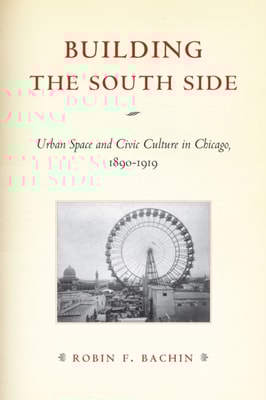
Building the South Side explores the struggle for influence that dominated the planning and development of Chicago's South Side during the Progressive Era.
Despite their twin positions as two of North America's most iconic Italian neighborhoods, South Philly and Toronto's Little Italy have functioned in dramatically different ways since World War II.
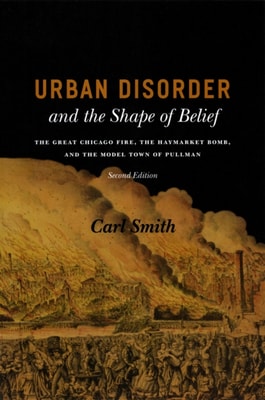
The Great Chicago Fire of 1871, the Haymarket bombing of 1886, and the making and unmaking of the model town of Pullman-these remarkable events in what many considered the quintessential American city forced people across the country to confront the disorder that seemed inevitably to accompany urban growth and social change.
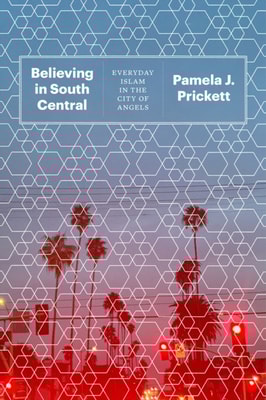
The area of Los Angeles known as South Central is often overshadowed by dismal stereotypes, problematic racial stigmas, and its status as the home to some of the city's poorest and most violent neighborhoods.
As projects like Manhattan's High Line, Chicago's 606, China's eco-cities, and Ethiopia's tree-planting efforts show, cities around the world are devoting serious resources to urban greening.
In the wake of the Great Recession, American cities from Philadelphia to San Diego saw an upsurge in hyperlocal placemaking-small-scale interventions aimed at encouraging greater equity and community engagement in growth and renewal.
Focusing on Chicago's West Side, After Redlining illuminates how urban activists were able to change banks' behavior to support investment in communities that they had once abandoned.
Interrogates the connections between a city's physical landscape and the poverty and social problems that are often concentrated at its literal lowest points.
From the years 2004 to 2008, Beijing and Shanghai witnessed the construction of an extraordinary number of new buildings, many of which were designed by architectural firms overseas.
In 2003, an FBI-led task force known as Operation Fly Trap attempted to dismantle a significant drug network in two Bloods-controlled, African American neighborhoods in Los Angeles.
In contemporary Manila, slums and squatter settlements are peppered throughout the city, often pushing right up against the walled enclaves of the privileged, creating the complex geopolitical pattern of Marco Z.
In the decade after high school, young people continue to rely on their families in many ways-sometimes for financial support, sometimes for help with childcare, and sometimes for continued shelter.
The history of New York City's urban development often centers on titanic municipal figures like Robert Moses and on prominent inner Manhattan sites like Central Park.
Justice Antonin Scalia (1936-2016) was the single most important figure in the emergence of the "e;new originalist"e; interpretation of the US Constitution, which sought to anchor the court's interpretation of the Constitution to the ordinary meaning of the words at the time of drafting.
Studies of immigration to the United States have traditionally focused on a few key states and urban centers, but recent shifts in nonwhite settlement mean that these studies no longer paint the whole picture.
Drawing on economics, sociology, geography, and psychology, Galster delivers a clear-sighted explanation of what neighborhoods are, how they come to be-and what they should be.
Even as Donald Trump's election has galvanized anti-immigration politics, many local governments have welcomed immigrants, some even going so far as to declare their communities "e;sanctuary cities"e; that will limit cooperation with federal immigration authorities.
The problems commonly associated with inner-city schools were not nearly as pervasive a century ago, when black children in most northern cities attended school alongside white children.
We live in a self-proclaimed Urban Age, where we celebrate the city as the source of economic prosperity, a nurturer of social and cultural diversity, and a place primed for democracy.
In Bottleneck, anthropologist Caroline Melly uses the problem of traffic bottlenecks to launch a wide-ranging study of mobility in contemporary urban Senegal-a concept that she argues is central to both citizens' and the state's visions of a successful future.
Historians have devoted surprisingly little attention to African American urban history ofthe postwar period, especially compared with earlier decades.
In 1997 the United Kingdom returned control of Hong Kong to China, ending the city's status as one of the last remnants of the British Empire and initiating a new phase for it as both a modern city and a hub for global migrations.
Harlem is one of the most famous neighborhoods in the world-a historic symbol of both black cultural achievement and of the rigid boundaries separating the rich from the poor.
Downtown America was once the vibrant urban center romanticized in the Petula Clark song-a place where the lights were brighter, where people went to spend their money and forget their worries.
Midnight basketball may not have been invented in Chicago, but the City of Big Shoulders-home of Michael Jordan and the Bulls-is where it first came to national prominence.
In Making the Second Ghetto, Arnold Hirsch argues that in the post-depression years Chicago was a "e;pioneer in developing concepts and devices"e; for housing segregation.
Politicians, citizens, and police agencies have long embraced community policing, hoping to reduce crime and disorder by strengthening the ties between urban residents and the officers entrusted with their protection.
David Grazian's riveting tour of downtown Philadelphia and its newly bustling nightlife scene reveals the city as an urban playground where everyone dabbles in games of chance and perpetrates elaborate cons.
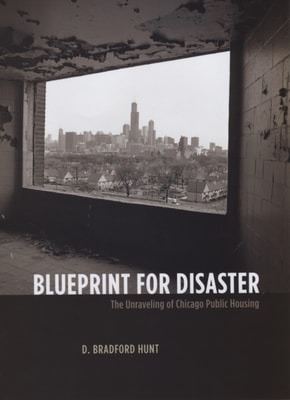
For many years Chicago's looming large-scale housing projects defined the city, and their demolition and redevelopment-via the Chicago Housing Authority's Plan for Transformation-has been perhaps the most startling change in the city's urban landscape in the last twenty years.
Now considered a dysfunctional mess, Chicago's public housing projects once had long waiting lists of would-be residents hoping to leave the slums behind.
Despite the pundits who have written its epitaph and the latter-day refugees who have fled its confines for the half-acre suburban estate, the city neighborhood has endured as an idea central to American culture.