In a cemetery on the southern outskirts of Paris lie the bodies of nearly a hundred of what some have called the first casualties of global climate change.
Cycling has experienced a renaissance in the United States, as cities around the country promote the bicycle as an alternative means of transportation.
The term "e;community organizer"e; was deployed repeatedly against Barack Obama during the 2008 presidential campaign as a way to paint him as an inexperienced politician unfit for the presidency.
First published in 1932, The Taxi-Dance Hall is Paul Goalby Cressey's fascinating study of Chicago's urban nightlife-as seen through the eyes of the patrons, owners, and dancers-for-hire who frequented the city's notoriously seedy "e;taxi-dance"e; halls.
In recent decades a growing number of middle-class parents have considered sending their children to-and often end up becoming active in-urban public schools.
Between the early 1900s and the late 1950s, the attitudes of white Californians toward their Asian American neighbors evolved from outright hostility to relative acceptance.
Violent urban schools loom large in our culture: for decades they have served as the centerpieces of political campaigns and as window dressing for brutal television shows and movies.
"e;Perhaps,"e; wrote Ralph Ellison more than seventy years ago, "e;the zoot suit contains profound political meaning; perhaps the symmetrical frenzy of the Lindy-hop conceals clues to great potential power.
Our traditional image of Chicago-as a gritty metropolis carved into ethnically defined enclaves where the game of machine politics overshadows its ends-is such a powerful shaper of the city's identity that many of its closest observers fail to notice that a new Chicago has emerged over the past two decades.
Few would deny that getting ahead is a legitimate goal of learning, but the phrase implies a cruel hierarchy: a student does not simply get ahead, but gets ahead of others.
In Sex Trafficking, Scandal, and the Transformation of Journalism, Gretchen Soderlund offers a new way to understand sensationalism in both newspapers and reform movements.
Discuss real estate with any young family and the subject of schools is certain to come up-in fact, it will likely be a crucial factor in determining where that family lives.
Race and Real Estate brings together new work by architects, sociologists, legal scholars, and literary critics that qualifies and complicates traditional narratives of race, property, and citizenship in the United States.
Race and Real Estate brings together new work by architects, sociologists, legal scholars, and literary critics that qualifies and complicates traditional narratives of race, property, and citizenship in the United States.
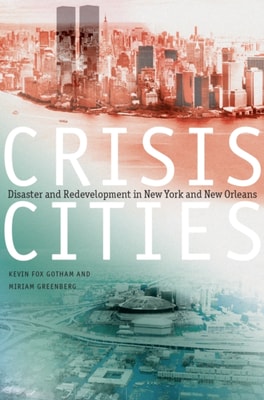
Crisis Cities blends critical theoretical insight with a historically-grounded comparative study to examine the redevelopment efforts following the 9/11 and Hurricane Katrina disasters.
Imprisoned by the Past: Warren McCleskey and the American Death Penalty connects the history of the American death penalty to the case of Warren McCleskey.
In The Tumbleweed Society, Allison Pugh offers a moving exploration of sacrifice, betrayal, defiance, and resignation, as people cope in a society where relationships and jobs seem to change constantly.
Coming Home to New Orleans documents grassroots rebuilding efforts in New Orleans neighborhoods after hurricane Katrina, and draws lessons on their contribution to the post-disaster recovery of cities.
Based on a three-year study conducted in Brooklyn's Greenpoint/Williamsburg section, Norman Street is an in-depth, detailed description of life in a multi-ethnic working class neighborhood during New York City's fiscal crisis of 1975-1978.
The two volumes of The Oxford Handbook of Mobile Music Studies consolidate an area of scholarly inquiry that addresses how mechanical, electrical, and digital technologies and their corresponding economies of scale have rendered music and sound increasingly mobile-portable, fungible, and ubiquitous.
Chicago is home to the third-largest concentration of Puerto Ricans in the United States, but scholarship on the city rarely accounts for their presence.
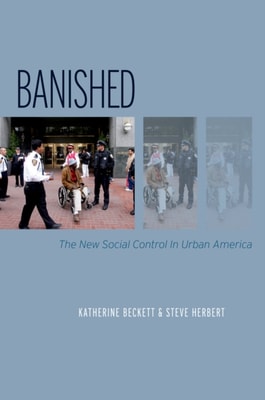
With urban poverty rising and affordable housing disappearing, the homeless and other "e;disorderly"e; people continue to occupy public space in many American cities.
Social capital theorists have shown that some people do better than others in part because they enjoy larger, more supportive, or otherwise more useful networks.
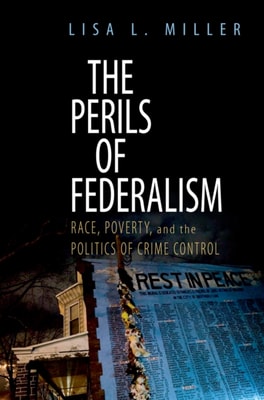
Much of the existing research on race and crime focuses on the manipulation of crime by political elites or the racially biased nature of crime policy.
During the first half of the twentieth century, Atlantic City was the nation's most popular middle-class resort--the home of the famed Boardwalk, the Miss America Pageant, and the board game Monopoly.
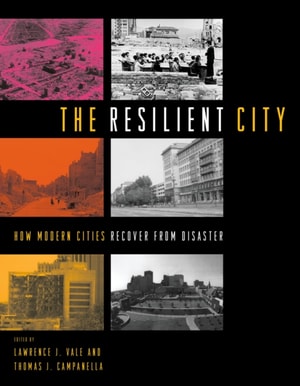
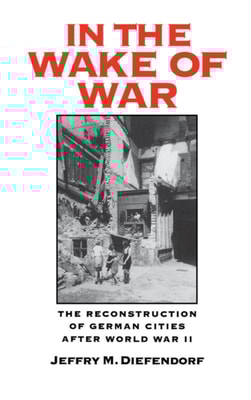
In 1945 Germany's cities lay in ruins, destroyed by Allied bombers `hat left major architectural monuments badly damaged and much of the housing stock reduced to rubble.
Focusing contemporary democratic theory on the neglected topic of punishment, Punishment, Participatory Democracy, and the Jury argues for increased civic engagement in criminal justice as an antidote to the American penal state.
In a richly illustrated, revelatory study of Philadelphia's Germantown Avenue, home to a diverse array of more than 90 Christian and Muslim congregations, Katie Day explores the formative and multifaceted role of religious congregations within an urban environment.
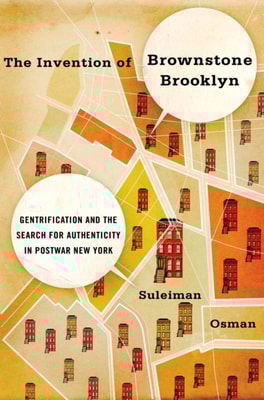
As cities have gentrified, educated urbanites have come to prize what they regard as "e;authentic"e; urban life: aging buildings, art galleries, small boutiques, upscale food markets, neighborhood old-timers, funky ethnic restaurants, and old, family-owned shops.
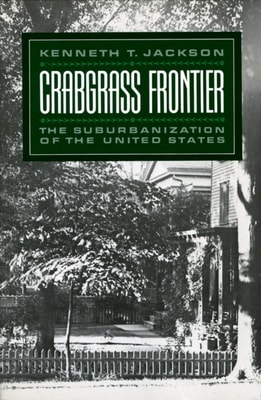
This first full-scale history of the development of the American suburb examines how "e;the good life"e; in America came to be equated with the a home of one's own surrounded by a grassy yard and located far from the urban workplace.
Considered one of the city's most notorious industrial slums in the 1940s and 1950s, Brownstone Brooklyn by the 1980s had become a post-industrial landscape of hip bars, yoga studios, and beautifully renovated, wildly expensive townhouses.
Considered one of the city's most notorious industrial slums in the 1940s and 1950s, Brownstone Brooklyn by the 1980s had become a post-industrial landscape of hip bars, yoga studios, and beautifully renovated, wildly expensive townhouses.
Presents an innovative, synergistic practice model that will help social workers use restorative justice skills to facilitate healing and recovery in the families and communities that they serve.
Moving beyond the usual good-versus-evil story that pits master-planner Robert Moses against the plucky neighborhood advocate Jane Jacobs, Samuel Zipp sheds new light on the rise and fall of New York's urban renewal in the decades after World War II.
This first full-scale history of the development of the American suburb examines how "e;the good life"e; in America came to be equated with the a home of one's own surrounded by a grassy yard and located far from the urban workplace.