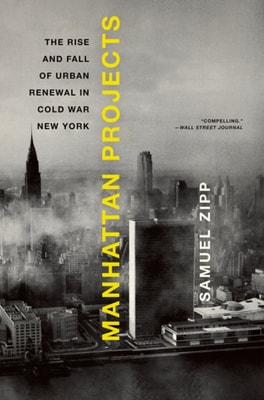
Moving beyond the usual good-versus-evil story that pits master-planner Robert Moses against the plucky neighborhood advocate Jane Jacobs, Samuel Zipp sheds new light on the rise and fall of New York's urban renewal in the decades after World War II.
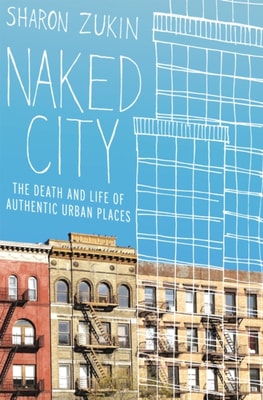
As cities have gentrified, educated urbanites have come to prize what they regard as "e;authentic"e; urban life: aging buildings, art galleries, small boutiques, upscale food markets, neighborhood old-timers, funky ethnic restaurants, and old, family-owned shops.
With urban poverty rising and affordable housing disappearing, the homeless and other "e;disorderly"e; people continue to occupy public space in many American cities.
Attempts to show what happened to slavery in an urban environment and to reconstruct the texture of life of the Negroes who lived in bondage in the cities.
Social capital theorists have shown that some people do better than others in part because they enjoy larger, more supportive, or otherwise more useful networks.
Much of the existing research on race and crime focuses on the manipulation of crime by political elites or the racially biased nature of crime policy.
Based on a three-year study conducted in Brooklyn's Greenpoint/Williamsburg section, Norman Street is an in-depth, detailed description of life in a multi-ethnic working class neighborhood during New York City's fiscal crisis of 1975-1978.
The Oxford Handbook of Urban Politics is an authoritative volume on an established subject in political science and the academy more generally: urban politics and urban studies.
Since the advent of the European Union, politicians have increasingly emphasized the notion of a European social model as an alternative to the American form of market capitalism, which is seen as promoting economic growth without regard for solidarity and social progress.
This volume embodies a problem-driven and theoretically informed approach to bridging frontier research in urban economics and urban/regional planning.
In The Tumbleweed Society, Allison Pugh offers a moving exploration of sacrifice, betrayal, defiance, and resignation, as people cope in a society where relationships and jobs seem to change constantly.
People convicted of crimes are subject to a criminal sentence, but they also face a host of other restrictive legal measures: Some are denied access to jobs, housing, welfare, the vote, or other goods.
The past decade brought forth a wave of excitement and promise for researchers and practitioners interested in community practice as an approach based on social justice principles and an embrace of community participatory actions.
The past decade brought forth a wave of excitement and promise for researchers and practitioners interested in community practice as an approach based on social justice principles and an embrace of community participatory actions.
In Border Lives, Sergio Chavez moves past Tijuana's notorious image as a hub of sex, drugs, and crime to tell the story of the diverse group of individuals who use both sides of the U.
In Border Lives, Sergio Chavez moves past Tijuana's notorious image as a hub of sex, drugs, and crime to tell the story of the diverse group of individuals who use both sides of the U.
In a richly illustrated, revelatory study of Philadelphia's Germantown Avenue, home to a diverse array of more than 90 Christian and Muslim congregations, Katie Day explores the formative and multifaceted role of religious congregations within an urban environment.
More than five decades have passed since Jane Jacobs wrote her classic The Death and Life of Great American Cities, and since a front page headline in the New York Times read, "e;Cars Choking Cities as 'Urban Sprawl' Takes Over.
More than five decades have passed since Jane Jacobs wrote her classic The Death and Life of Great American Cities, and since a front page headline in the New York Times read, "e;Cars Choking Cities as 'Urban Sprawl' Takes Over.
From gang- and drug-related shootings to mass shootings in schools, shopping centers, and movie theatres, reports of gun crimes fill the headlines of newspapers and nightly news programs.
From gang- and drug-related shootings to mass shootings in schools, shopping centers, and movie theatres, reports of gun crimes fill the headlines of newspapers and nightly news programs.
Coming Home to New Orleans documents grassroots rebuilding efforts in New Orleans neighborhoods after hurricane Katrina, and draws lessons on their contribution to the post-disaster recovery of cities.
In Imprisoned in English, Anna Wierzbicka argues that in the present English-dominated world, millions of people - including academics, lawyers, diplomats, and writers - can become "e;prisoners of English"e;, unable to think outside English.
During the first half of the twentieth century, Atlantic City was the nation's most popular middle-class resort--the home of the famed Boardwalk, the Miss America Pageant, and the board game Monopoly.
Not long ago, neighborhoods such as the South Bronx, South Central Los Angeles, and Boston's Roxbury were crime-ridden wastelands of vacant lots and burned-out buildings, notorious symbols of urban decay.
Community social work practice based on a capacity enhancement model offers tremendous potential for unifying communities consisting of groups from very different cultural backgrounds, and in the process of doing so, make physical changes in the community.
Empirically based, the daily experience of adolescent black females is explicated within an explanatory model of social context and developmental theory.
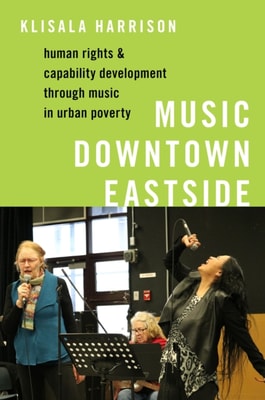
Music Downtown Eastside draws on two decades of research in one of North America's poorest urban areas to illustrate how human rights can be promoted through music.
Music Downtown Eastside draws on two decades of research in one of North America's poorest urban areas to illustrate how human rights can be promoted through music.
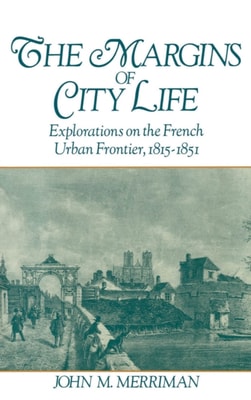
The Margins of Urban Life brings to life the "e;floating worlds of the periphery"e; in nineteenth-century French cities--the world of beggars, the most miserable prostitutes, ragpickers, casual labor, and unwanted people; the location of slaughterhouses, gas factories, tanneries, and, increasingly, even executions.
Built by industrialists whose early businesses contributed to the escalation of the Industrial Revolution, company towns flourished in countries that embraced capitalism and open-market trading.
Lane here illuminates the African-American experience through a close look at a single city, once the metropolitan headquarters of black America, now typical of many.
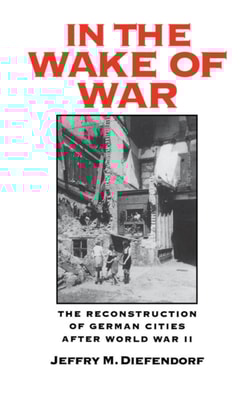
In 1945 Germany's cities lay in ruins, destroyed by Allied bombers `hat left major architectural monuments badly damaged and much of the housing stock reduced to rubble.