This book focuses on the relationship between the auto industry and the built environment at multiple scales, a topic of particular interest now as the industry is going through a period of major transformation.
This book deals with the immediate effects of, and response to, Hurricane Maria on the social, ecological, and technological systems (SETS) of Puerto Rico.
This volume presents innovative work on innovative methods, tools and practices aimed at supporting the transition of Asian and Middle Eastern cities and regions towards a more smart and sustainable dimension.
The recent rise of cities in global environmental politics has stimulated remarkable debates about sustainable urban development and the geopolitics of a changing world order no longer defined by tightly bordered national regimes.
"e;An Ethnography of the Goodman Building vividly incorporates a wide variety of methods to tell the story of class struggle in a building, neighborhood, and city that is replicated globally.
This book uses crime-science and traditional criminological approaches to explore urban crime in the rapidly urbanising country Nigeria, as a case study for urban crime in developing nations.
Over recent decades, the historico-geographical approach to urban morphology has been prominent in the debate on the physical form of our cities and on the agents and processes shaping that form over time.
This book examines how non-economic inter- and intra-group relationships were reflected in residential patterns around the first decade of the 21st century in Whitechapel, an old yet attractive absorption neighbourhood in east London, UK.
An ethnography of urban citizenship, global belonging, and queerness in a rapidly growing provincial city in the Global South, Queerly Cosmopolitan explores how people develop a sense of belonging in a city understood by many to be "e;unimportant"e; and "e;in the middle of nowhere.
This book is a product of collaborative research between the Institut de recherche pour le d,veloppement (IRD, France), the University of Ghana, Legon and CODESRIA.
This edited volume is a compilation of the 'built environment' in response to many investigations, analyses and sometimes mere observations of the various dialogues and interactions of the built, in context to its ecology, perception and design.
This book uses international case studies to present insights on the policies, actors, and institutions that are critical to successful transit-oriented development (TOD).
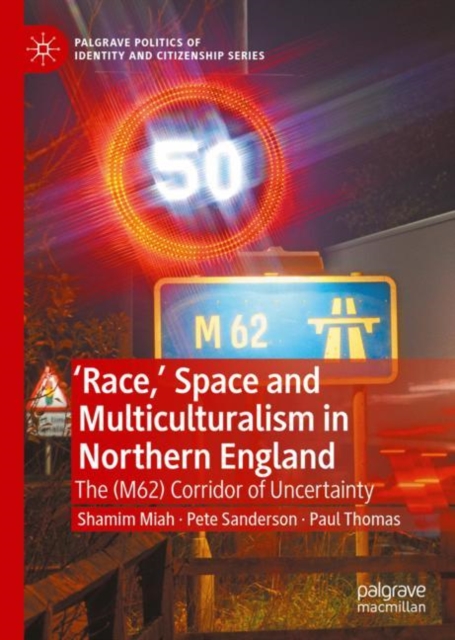
This book challenges the narrative of Northern England as a failed space of multiculturalism, drawing on a historically-contextualised discussion of ethnic relations to argue that multiculturalism has been more successful and locally situated than these assumptions allow.
This volume presents a timely collection of research papers on the progress, opportunities, and challenges related to the advancement of geospatial technologies for applications in urban health research and management.
This book approaches cultural landscape as a driver for societal challenges, economic development, social inclusion, place assessment and heritage conservation.
Extrait : "Le plus Parisien de tous les Parisiens de son temps, on était certain, entre 1830 et 1870, de le rencontrer chaque soir sur le boulevard, c'est-à-dire entre la rue Drouot et la chaussée d'Antin.
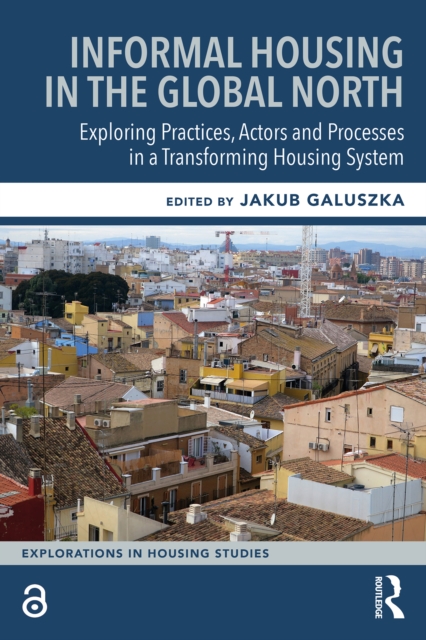
Informal Housing in the Global North proposes analytical and conceptual approaches to investigate the progressing 'informalisation' of contemporary housing in the Global North and beyond.
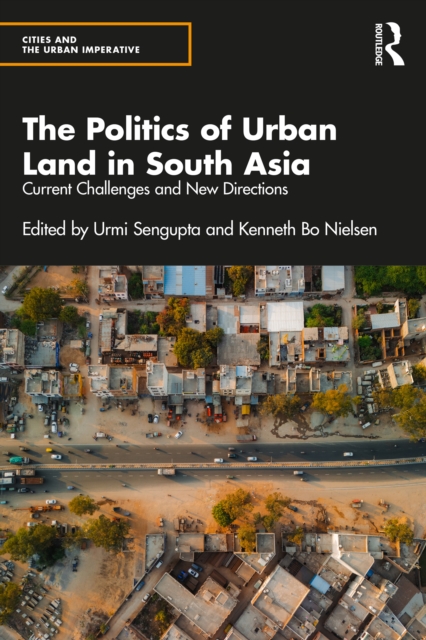
Cities in South Asia are homes to one of the highest concentrations of people anywhere in the world and the allocation of land and urban resources and the benefits that can be derived from them in this region have become increasingly contested.
This book presents essential insights into lifelong learning and education in healthy and sustainable cities, providing a basis for strategies to help achieve the 2030 Agenda sustainable development and health promotion goals.
A description from the belly of the beast that is MS-13: the first book to reveal the inner workings of the most violent gang in the world, written by an anthropologist who was there.
Jonathan Foiles weaves together psychology and public policy, exploring the trauma underlying urbanization in a book hailed as "e;an urgent call for reform"e; (Kirkus Reviews).
Administraciones de ciudades de todo el mundo, desde la populosa Ciudad de México a la "eterna" Roma, viven hoy en estado de emergencia, sin poder cerrar sus números y recurriendo a auxilios centrales cada vez más inciertos.
Global capitalism fails young Barcelona couples in this dynamic debutHeartbreaking and hilarious New York Times Book ReviewNopcas stories, written with clarity and flair, are smart and modern, filled with sharply observed detail.
How do we move from defensive tactics that respond to the latest stages of capitalist urbanization, to transformative, strategic revolts, attacking the root causes and putting into practice alternative forms of urban life?