In the first book-length treatise on historical ecology of the West Indies, Island Historical Ecology addresses Caribbean island ecologies from the perspective of social and cultural interventions over approximately eight millennia of human occupations.
For the first time in over 30 years, a new ethnographic study emerges on the Bugkalot tribe, more widely known as the Ilongot of the northern Philippines.
In the past fifteen years, there has been a virtual explosion of anthropological literature arguing that morality should be considered central to human practice.
Grounded in scholarly analysis and personal reflection, and drawing on a multi-sited and multi-method research design, Momentous Mobilities disentangles the meanings attached to temporary travels and stays abroad and offers empirical evidence as well as novel theoretical arguments to develop an anthropology of mobility.
Despite the three decades that have passed since the fall of the Berlin Wall, the historical narrative of East Germany is hardly fixed in public memory, as German society continues to grapple with the legacies of the Cold War.
Set against a volatile political landscape, Irish republican culture has struggled to maintain continuity with the past, affirm legitimacy in the present, and generate a sense of community for the future.
In Serbia, as elsewhere in postsocialist Europe, the rise of civil society was expected to support a smooth transformation to Western models of liberal democracy and capitalism.
In the accounts compiled in this book, ethnography occurs through processes of material and social interventions that turn the field into a site for epistemic collaboration.
Based on an ethnographic account of subsistence use of Amazonian forests by Wapishana people in Guyana, Edges, Frontiers, Fringes examines the social, cultural and behavioral bases for sustainability and resilience in indigenous resource use.
When this work one that contributes to both the history and anthropology fields first appeared in 1982, it was hailed as a landmark study of the role of folklore in nation-building.
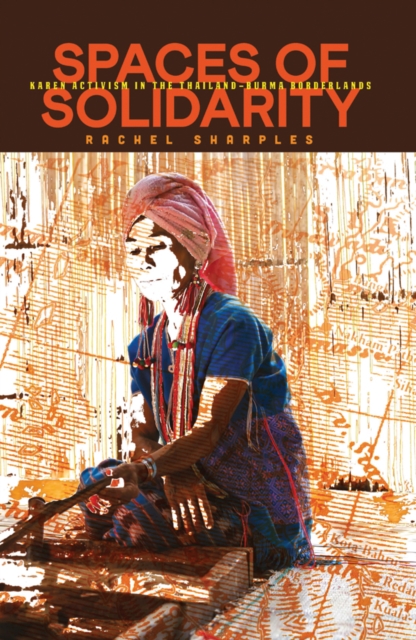
Exploring notions of activism and space as narrated by Karen displaced persons and refugees in the Thai-Burma borderlands, this book looks beyond refugees as passive victims or a humanitarian case .
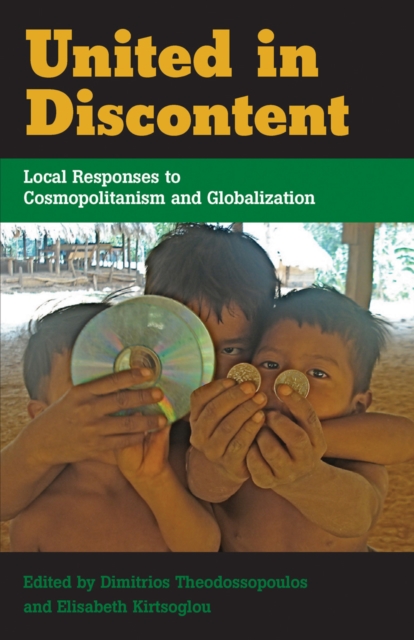
Cosmopolitanism is often discussed in a critical and disapproving manner: as a concept complicit with the interests of the powerful, or as a notion related to Western political supremacy, the ills of globalization, inequality, and capitalist economic penetration.
Science and technology studies, cultural anthropology and cultural studies deal with the complex relations between material, symbolic, technical and political practices.
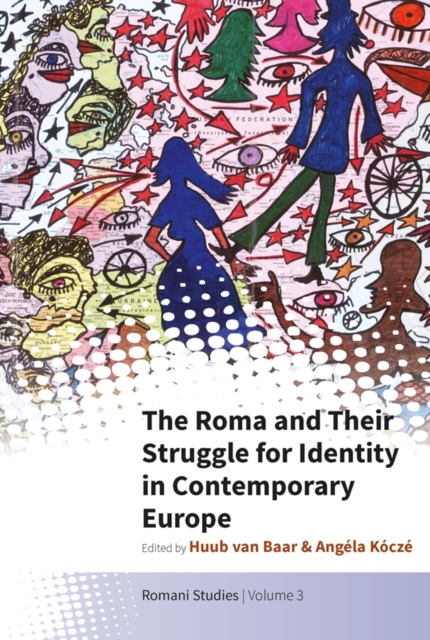
Thirty years after the collapse of Communism, and at a time of increasing anti-migrant and anti-Roma sentiment, this book analyses how Roma identity is expressed in contemporary Europe.
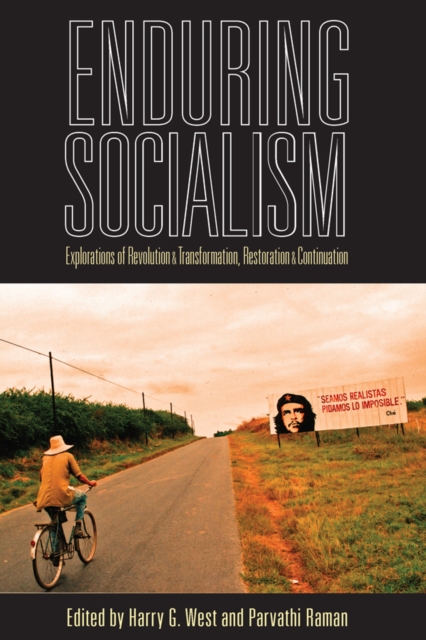
Against the historical backdrop of successive socialist and post-socialist claims to have completely remade society, the contributors to this volume explore the complex and often paradoxical continuities between diverse post-socialist presents and their corresponding socialist and pre-socialist pasts.
Two decades after the publication of Clifford and Marcus volume Writing Culture, this collection provides a fresh and diverse reassessment of the debates that this pioneering volume unleashed.
During recent years, attempts have been made to move beyond the Eurocentric perspective that characterized the social sciences, especially anthropology, for over 150 years.
Many people investigating the operation of large-scale environmentalist organizations see signs of power, knowledge and governance in their policies and projects.
Our lives are mostly composed of ordinary reality the flow of moment-to-moment existence and yet it has been largely overlooked as a subject in itself for anthropological study.
Around 1800 roughly three per cent of the human population lived in urban areas; by 2030 this number is expected to have gone up to some seventy per cent.
Scholars from various disciplines have used key concepts to grasp mobilities, but as of yet, a working vocabulary of these has not been fully developed.
Analyzing the workings of boundary maintenance in the areas of anthropology, energy, gender, and law, Nader contrasts dominant trends in academia with work that pushes the boundaries of acceptable methods and theories.
Examining street vending as a global, urban, and informalized practice found both in the Global North and Global South, this volume presents contributions from international scholars working in cities as diverse as Berlin, Dhaka, New York City, Los Angeles, Calcutta, Rio de Janeiro, and Mexico City.
In the last forty years anthropologists have made major contributions to understanding the heterogeneity of reproductive trends and processes underlying them.
Drawing from ethnographic material based on long-term research, this volume considers competing forms of power at micro- and macro-levels in Guyana, where the local is marked by extensive migration, corruption, and differing levels of violence.
In recent years, political and social theory has been transformed by the heterogeneous approaches to feeling and emotion jointly referred to as affect theory .
This ethnography of personhood in post-genocide Rwanda investigates how residents of a small town grapple with what kinds of persons they ought to become in the wake of violence.
French sociologist and anthropologist Pierre Bourdieu s relevance for studies of spatiality and mobility has received less attention than other aspects of his work.