In this book, Ibrahim employs Bourdieu's key concepts in order to explain the complex dynamics of social movements by detailing the key stages of development of, and ideological conflict between, 21st century British anti-capitalist organizations, and their interactions with wider social and political forces.
This book offers a unique and accessible way of conceptualizing the vocations of art, science, and politics in the capitalist world through an examination of some neglected features of the work of the scholar who first traced their origins and consequences in 'the West': Max Weber.
Battered and bruised by injuries (often self-inflicted) sustained in the first half of the twentieth century since 1950 sociology in Australia has fought its way back into the academic mainstream.
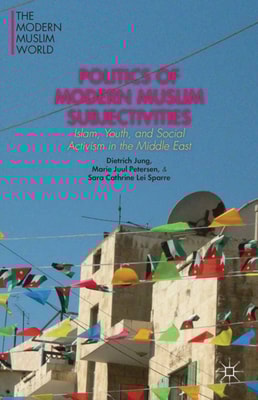
Examining modern Muslim identity constructions, the authors introduce a novel analytical framework to Islamic Studies, drawing on theories of successive modernities, sociology of religion, and poststructuralist approaches to modern subjectivity, as well as the results of extensive fieldwork in the Middle East, particularly Egypt and Jordan.
The past century of labor was definitively captured by theories like Fordism and Taylorism, or scientific managment, but how do we make sense of global production today?
This book draws on recent developments across a range of perspectives including psychoanalysis, narrative studies, social practice theory, posthumanism and trans-species psychology, to establish a radical psychosocial alternative to mainstream understanding of 'environmental problems'.
Edited by Francois Depelteau and Christopher Powell, this volume and its companion, Applying Relational Sociology: Networks, Relations, addresses fundamental questions about what relational sociology is and how it works.
Offering a comprehensive overview of contemporary theoretical and programmatic issues in the fields of sustainability, culture, communication, development and social change, this book explores the relationship between communication and sustainability from a social change perspective.
Leading sociologists outline the historical development of the discipline in Britain and document its continuing influence in this essential and comprehensive reference work.
This book examines the relationship between development economics, social protection and democratization in the specific context of Sub-Saharan Africa.
Theory on the Edge brings together some of the foremost specialists working at the interdisciplinary interface between Irish Studies, feminist theory, queer theory, and gender and sexuality studies in order to trace the contemporary development of feminist thinking and activism in Ireland.
This book consists of a fundamental deconstruction and reconstruction of the key concepts of Criminology and The Sociology of Law, providing a coherent expression of the relationships between these newly constructed concepts and thus a radically new statement of the relationship between society, crime and the law.
A collection of 18 contributions by well-known scholars in and outside the US, The Unhappy Divorce of Sociology and Psychoanalysis shows how sociology has much to gain from incorporating rather than overlooking or marginalizing psychoanalysis and psychosocial approaches to a wide range of social topics.
The Proactionary Imperative debates the concept of transforming human nature, including such thorny topics as humanity's privilege as a species, our capacity to 'play God', the idea that we might treat our genes as a capital investment, eugenics and what it might mean to be 'human' in the context of risky scientific and technological interventions.
Using innovative empirical data, this book presents a unique approach to looking at moments, exploring the deeper meanings of why memories stand out and how they influence an individual's sense of self.
The diagnosis of 'Dyslexia' and the medical problematisation of reading difficulties were almost unknown one hundred years ago, yet today the British Dyslexia Association estimates that up to ten per cent of the UK population may have some form of dyslexia, with numbers in the United States estimated to be as high as twenty per cent.
Disasters are part of the modern condition, a source of physical anxiety and existential angst, and they are increasing in frequency, cost and severity.
Drawing on a range of theoretical perspectives and engaging with new empirical evidence from around the world, this collection examines how privilege, agency and affect are linked, and where possibilities for social change might lie.
Social Media and Strategic Communications provides truly comprehensive and original scholarly research that exhibits the strategic implementation of social media in both advertising and public relations.
Drawing on the experience and insights of 70 researchers across 7 countries and from a diverse range of cultures, regions and disciplines, this book explores the issues and ethics involved in cross-cultural research and how such research can be done with integrity.
Exploring the ambivalent grammar of empathy where questions of geo-politics and social justice are at stake - in popular science, international development, postcolonial fiction, feminist and queer theory - this book addresses the critical implications of empathy's uneven effects.
Sociological explanations of racism tend to concentrate on the structures and dynamics of modern life that facilitate discrimination and hierarchies of inequality.
There are many differences of opinion between sociologists about how best to investigate social issues and about the quality of the answers that different questions produce.
This book challenges the discourses, narrative frames, and systems of beliefs that support and promote violence and conflict, it defines new comprehensive approaches to human security as preventative and empowering to individuals, and it provides conceptual frameworks and methodological tools for enhancing the processes of communicating peace.
Prompted by the 'affective turn' within the entire spectrum of the social sciences, this books brings together the twin disciplines of political psychology and the political sociology of emotions to explore the complex relationship between politics and emotion at both the mass and individual level with special focus on cases of political tension.
Examining the interplay between distrust, trust and corruption, this book maps out the social mechanisms that make actors and organizations in the public sphere perform their activities in a civilized manner.
If we're interested in why society changes and develops, and if we want to identify the forces that influence our personal beliefs and choices, then we must have an understanding of the nature and scope of human power.
This book, for the first time, brings Niklas Luhmann's work into dialogue with other theoretical positions, including Lacan, Derrida, Deleuze, gender studies, bioethics, translation, ANT, eco-theories and complexity theory.