The transformation of the human sciences into the social sciences in the third part of the 19th century was closely related to attempts to develop and implement methods for dealing with social tensions and the rationalization of society.
The transformation of the human sciences into the social sciences in the third part of the 19th century was closely related to attempts to develop and implement methods for dealing with social tensions and the rationalization of society.
Governmentality, Biopower, and Everyday Life synthesizes and extends the disparate strands of scholarship on Foucault's notions of governmentality and biopower and grounds them in familiar social contexts including the private realm, the market, and the state/military.
Governmentality, Biopower, and Everyday Life synthesizes and extends the disparate strands of scholarship on Foucault's notions of governmentality and biopower and grounds them in familiar social contexts including the private realm, the market, and the state/military.
Edward Said is widely recognized for his work as a critic and theorist of Orientalism and the Palestine crisis, but far less attention has been devoted to his considerable body of literary and cultural criticism.
Edward Said is widely recognized for his work as a critic and theorist of Orientalism and the Palestine crisis, but far less attention has been devoted to his considerable body of literary and cultural criticism.
No Place Like Home examines the emergence of home-based women workers as paradigmatic figures of contemporary capitalism, neoliberal governmentality, and socio-political contestation.
No Place Like Home examines the emergence of home-based women workers as paradigmatic figures of contemporary capitalism, neoliberal governmentality, and socio-political contestation.
Ideal for use, either as a second text in a standard criminology course, or for a discrete course on biosocial perspectives, this book of original chapters breaks new and important ground for ways today's criminologists need to think more broadly about the crime problem.
Ideal for use, either as a second text in a standard criminology course, or for a discrete course on biosocial perspectives, this book of original chapters breaks new and important ground for ways today's criminologists need to think more broadly about the crime problem.
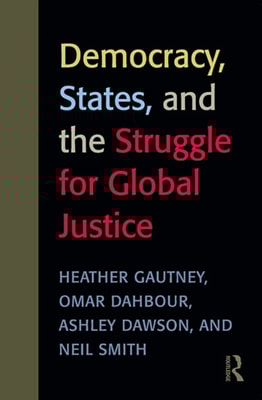
Democracy, States, and the Struggle for Social Justice draws on the fields of geography, political theory, and cultural studies to analyze experiments with novel forms of democracy, highlighting the critical issue of the changing nature of the state and citizenship in the contemporary political landscape as they are buffeted by countervailing forces of corporate globalization and participatory politics.
Democracy, States, and the Struggle for Social Justice draws on the fields of geography, political theory, and cultural studies to analyze experiments with novel forms of democracy, highlighting the critical issue of the changing nature of the state and citizenship in the contemporary political landscape as they are buffeted by countervailing forces of corporate globalization and participatory politics.
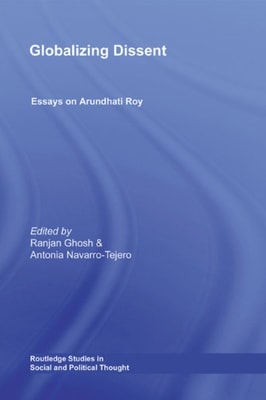
Arundhati Roy is not only an accomplished novelist, but equally gifted in unraveling the politics of globalization, the power and ideology of corporate culture, fundamentalism, terrorism, and other issues gripping today's world.
Arundhati Roy is not only an accomplished novelist, but equally gifted in unraveling the politics of globalization, the power and ideology of corporate culture, fundamentalism, terrorism, and other issues gripping today's world.
First published in 1945, Maurice Merleau-Ponty's monumental Phenomenologie de la perception signalled the arrival of a major new philosophical and intellectual voice in post-war Europe.
First published in 1945, Maurice Merleau-Ponty's monumental Phenomenologie de la perception signalled the arrival of a major new philosophical and intellectual voice in post-war Europe.
For this important selection from Weber, sections of text from Weber's major works (Gesammelte, Aufsatze Zur Religionssoziologie, including The Protestant Ethic and the Spirit of Capitalism; General Economic History; and The Agrarian Sociology of Ancient Civilisations) have been carefully edited and substantially translated to form a coherent and integrated volume.
For this important selection from Weber, sections of text from Weber's major works (Gesammelte, Aufsatze Zur Religionssoziologie, including The Protestant Ethic and the Spirit of Capitalism; General Economic History; and The Agrarian Sociology of Ancient Civilisations) have been carefully edited and substantially translated to form a coherent and integrated volume.
In The Limits of Rationality Rogers Brubaker explores the intimate and ambiguous interplay between Max Weber's empirical work and his moral vision, between his historical and sociological analysis of the 'specific and peculiar rationalism' of modern Western civilization and his deeply ambivalent moral response to that rationalism.
In The Limits of Rationality Rogers Brubaker explores the intimate and ambiguous interplay between Max Weber's empirical work and his moral vision, between his historical and sociological analysis of the 'specific and peculiar rationalism' of modern Western civilization and his deeply ambivalent moral response to that rationalism.
Whilst an increasing amount of attention is being paid to law's connection or involvement with National Socialism, less attention is focused upon thinking through the links between law and the emergence of antisemitism.
Whilst an increasing amount of attention is being paid to law's connection or involvement with National Socialism, less attention is focused upon thinking through the links between law and the emergence of antisemitism.
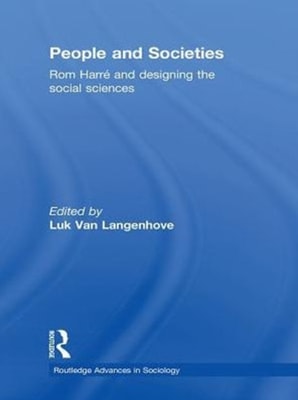
Rom Harre has pushed the boundaries of our thinking about people and societies and has challenged the orthodox philosophy of science and social psychology.
Rom Harre has pushed the boundaries of our thinking about people and societies and has challenged the orthodox philosophy of science and social psychology.
This book introduces social scientists to the ideas of George Herbert Mead (1863-1931) - one of the most original yet neglected thinkers of early twentieth century sociology.
This book introduces social scientists to the ideas of George Herbert Mead (1863-1931) - one of the most original yet neglected thinkers of early twentieth century sociology.
This book provides readers - students, researchers, academics, policy-makers, activists and interested non-specialists - with a sophisticated understanding of contemporary discussion, analysis and theorizing of issues pertaining to conflict, citizenship and civil society.
This book provides readers - students, researchers, academics, policy-makers, activists and interested non-specialists - with a sophisticated understanding of contemporary discussion, analysis and theorizing of issues pertaining to conflict, citizenship and civil society.
This book undertakes a critique of the pervasive notion that human beings are separate from and elevated above the nonhuman world and explores its role in the constitution of modernity.
This book undertakes a critique of the pervasive notion that human beings are separate from and elevated above the nonhuman world and explores its role in the constitution of modernity.
Originally published in 1918, this enduring work by renowned sociologist and Liberal politician Leonard Trelawny Hobhouse encompasses a series of five key lectures, first delivered at the London School of Economics in the autumn of 1917.
Originally published in 1918, this enduring work by renowned sociologist and Liberal politician Leonard Trelawny Hobhouse encompasses a series of five key lectures, first delivered at the London School of Economics in the autumn of 1917.