Without social movements and wider struggles for progressive social change, the field of Geography would lack much of its contemporary relevance and vibrancy.
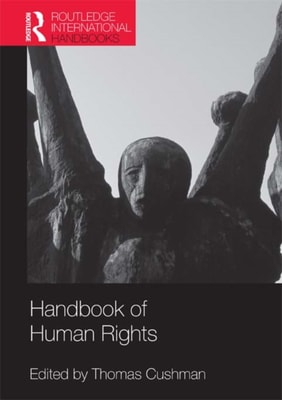
In mapping out the field of human rights for those studying and researching within both humanities and social science disciplines, the Handbook of Human Rights not only provides a solid foundation for the reader who wants to learn the basic parameters of the field, but also promotes new thinking and frameworks for the study of human rights in the twenty-first century.
In mapping out the field of human rights for those studying and researching within both humanities and social science disciplines, the Handbook of Human Rights not only provides a solid foundation for the reader who wants to learn the basic parameters of the field, but also promotes new thinking and frameworks for the study of human rights in the twenty-first century.
In recent decades, human rights have come to occupy an apparently unshakable position as a key and pervasive feature of contemporary global public culture.
In recent decades, human rights have come to occupy an apparently unshakable position as a key and pervasive feature of contemporary global public culture.
Social scientists often refer to contemporary advanced societies as 'knowledge societies', which indicates the extent to which 'science', 'knowledge' and 'knowledge production' have become fundamental phenomena in Western societies and central concerns for the social sciences.
Social scientists often refer to contemporary advanced societies as 'knowledge societies', which indicates the extent to which 'science', 'knowledge' and 'knowledge production' have become fundamental phenomena in Western societies and central concerns for the social sciences.
Cultural Analysis and Bourdieu's Legacy explores the achievements and limitations of a Bourdieusian approach to cultural analysis through original contributions from distinguished international scholars.
Cultural Analysis and Bourdieu's Legacy explores the achievements and limitations of a Bourdieusian approach to cultural analysis through original contributions from distinguished international scholars.
Since the end of the Second World War, society has been characterised by rapid and extensive political, economic, scientific, and technological change.
Since the end of the Second World War, society has been characterised by rapid and extensive political, economic, scientific, and technological change.
Zarakol presents the first comprehensive history of the international relations in ''the East'', and rethinks ''sovereignty'', ''order-making'' and ''decline''.
Zarakol presents the first comprehensive history of the international relations in ''the East'', and rethinks ''sovereignty'', ''order-making'' and ''decline''.
Shows that economic concerns about jobs, costs, and consumption, rather than climate change, are likely to drive energy transition in developing countries.
It explores the formation of India''s rural middle class, which rests on a complex, and often contradictory, set of processes that began unfolding with growing industrialisation in rural areas.
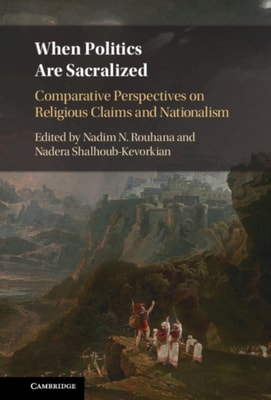
This book provides a comparative, interdisciplinary analysis of the invocation and interaction of religious and national assertions in sacralizing local and global politics.
This book provides a comparative, interdisciplinary analysis of the invocation and interaction of religious and national assertions in sacralizing local and global politics.