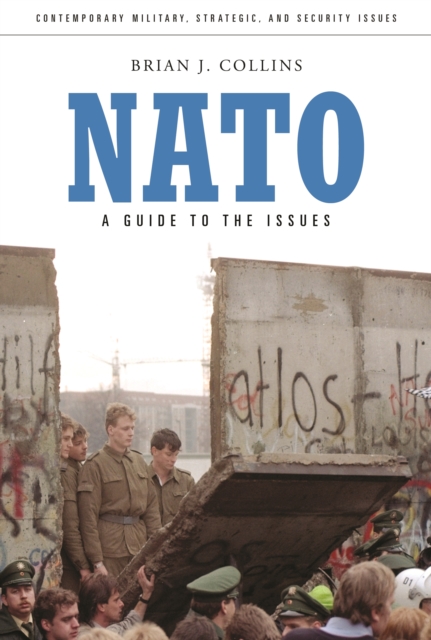
This superb introduction to NATO is written for the national security novice, yet is full of insights for the more seasoned hand interested in how and why NATO reached its current state.
This book addresses the issue that is whether the new Eas and West atmosphere of detente and arms reduction can smother the sparks of conflict on the Korean peninsula and perhaps illuminate the path to a Korea reunified as a democratic state.
This book presents a model to help enhance civil-military interaction in disaster response settings for the benefit of affected communities and the host nation.
Winner: Army Historical Foundation Distinguished Book AwardDuring the Civil War, thirty-six officers in the Army of the Potomac were assigned corps commands of up to 30,000 men.
The National Academies of Sciences, Engineering, and Medicine's Army Research Laboratory Technical Assessment Board (ARLTAB) provides biennial assessments of the scientific and technical quality of the research, development, and analysis programs at the Army Research Laboratory (ARL), focusing on ballistics sciences, human sciences, information sciences, materials sciences, and mechanical sciences.
Chemical, Biological, Radiological, Nuclear, and high-yield Explosive (CBRNE) events have the potential to destabilize governments, create conditions that exacerbate violence or promote terrorism.
Historically, most terrorist attacks on civilian targets have involved the use of firearms or explosives, and current defensive strategies are aimed at preventing attacks perpetrated by such means.
Perchloratea powerful oxidant used in solid rocket fuels by the military and aerospace industryhas been detected in public drinking water supplies of over 11 million people at concentrations of at least 4 parts per billion (ppb).
The same technologies that fuel scientific advances also pose potential risksthat the knowledge, tools, and techniques gained through legitimate biotechnology research could be misused to create biological weapons or for bioterrorism.
Encryption is a process for making information unreadable by an adversary who does not possess a specific key that is required to make the encrypted information readable.
Whether or not the United States has safe and effective medical countermeasuressuch as vaccines, drugs, and diagnostic toolsavailable for use during a disaster can mean the difference between life and death for many Americans.
The same technologies that fuel scientific advances also pose potential risksthat the knowledge, tools, and techniques gained through legitimate biotechnology research could be misused to create biological weapons or for bioterrorism.
During public health emergencies such as pandemic influenza outbreaks or terrorist attacks, effective vaccines, drugs, diagnostics, and other medical countermeasures are essential to protecting national security and the public's well-being.
The History of Steam Navigation, is a comprehensive history of the development and impact of steam-powered ships, from their origins in the late 18th century to the mid-19th century.
The Cooperative Threat Reduction (CTR) Program was created in 1991 as a set of support activities assisting the Former Soviet Union states in securing and eliminating strategic nuclear weapons and the materials used to create them.
The anthrax attacks in fall 2001 spurred an extensive and costly decontamination effort where many decisions had to be made about which sites required cleanup, what method to use, how to determine the effectiveness of the cleanup, and how "e;clean"e; the building had to be for reoccupation.
The chemical sector is a key part of the national economy and has been designated by the Department of Homeland Security (DHS) as one of 17 sectors comprising the nation's Critical Infrastructure.
The Standing Committee on Defense Materials Manufacturing and Infrastructure (DMMI) conducted a workshop on July 23-24, 2012, to share information and gather perspectives on issues concerning Materials and Manufacturing Capabilities for Sustaining Defense Systems.
In the United States there are several thousand devices containing high-activity radiation sources licensed for use in areas ranging from medical uses such as cancer therapy to safety uses such as testing of structures and industrial equipment.
The events of September 11, 2001 changed perceptions, rearranged national priorities, and produced significant new government entities, including the U.
The anthrax attacks in fall 2001 spurred an extensive and costly decontamination effort where many decisions had to be made about which sites required cleanup, what method to use, how to determine the effectiveness of the cleanup, and how "e;clean"e; the building had to be for reoccupation.
The United States is increasingly dependent on information and information technology for both civilian and military purposes, as are many other nations.
The chemical sector is a key part of the national economy and has been designated by the Department of Homeland Security (DHS) as one of 17 sectors comprising the nation's Critical Infrastructure.
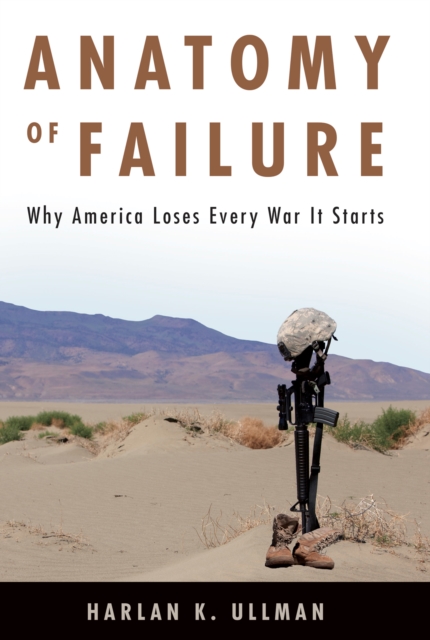
Since the end of World War II, America lost every war it started and failed in military interventions when it did not use sound strategic thinking or have sufficient knowledge and understanding of the circumstances in deciding to use force.