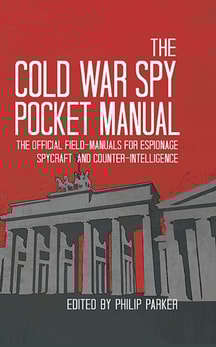
"Some twenty-five years after its conclusion, yet with its echoes resonating once more in contemporary East-West relations, the rigors and detail of many aspects of the Cold War are becoming increasingly of interest.
"Some twenty-five years after its conclusion, yet with its echoes resonating once more in contemporary East-West relations, the rigors and detail of many aspects of the Cold War are becoming increasingly of interest.
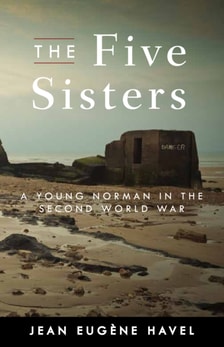
First raised by his maternal grandmother and her four youngest sisters in the harbour city of Le Havre, in the English Channel, a boy, Jean, will discover later in tragic circumstances the love of his mother.
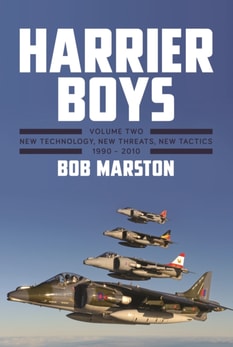
In the second volume of Harrier Boys, as with the first, the history of this remarkable aircraft in service with UK armed forces is illustrated through personal reminiscences of the people who worked with it.
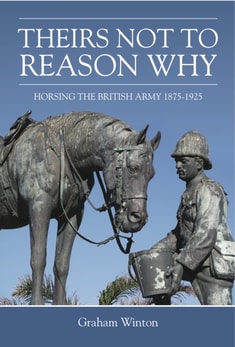
Nominated for the Royal Historical Society Whitfield Book Prize 2013Nominated for the NYMAS Arthur Goodzeit Book Award 2013Nominated for the SAHR Templer Medal 2013This book provides the first comprehensive study of the British Army’s horse services between 1875-1925, including the use of horses in the 1899-1902 Anglo-Boer and the 1914-18 wars.
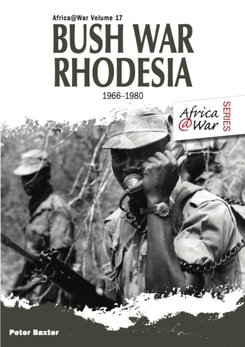
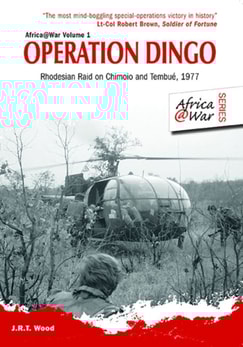
It has been over three decades since the Union Jack was lowered on the colony of Rhodesia, but the bitter and divisive civil war that preceded it has continued to endure as a textbook counterinsurgency campaign fought between a mobile, motivated and highly trained Rhodesian security establishment and two constituted liberations movements motivated, resourced and inspired by the ideals of communist revolution in the third world.
It has been over three decades since the Union Jack was lowered on the colony of Rhodesia, but the bitter and divisive civil war that preceded it has continued to endure as a textbook counterinsurgency campaign fought between a mobile, motivated and highly trained Rhodesian security establishment and two constituted liberations movements motivated, resourced and inspired by the ideals of communist revolution in the third world.
Nominated for the Royal Historical Society Whitfield Book Prize 2013Nominated for the NYMAS Arthur Goodzeit Book Award 2013Nominated for the SAHR Templer Medal 2013This book provides the first comprehensive study of the British Army’s horse services between 1875-1925, including the use of horses in the 1899-1902 Anglo-Boer and the 1914-18 wars.
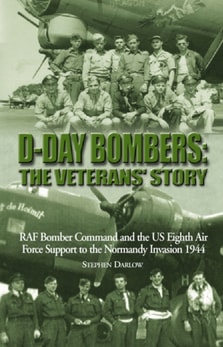
This book is largely an eye-witness account of the heavy bomber contribution to the success of the D-Day landings and therefore to the winning of the war in Europe.
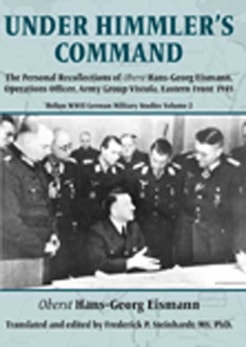
Under Himmler's Command addresses two areas of World War II hitherto neglected - Heinrich Himmler as a military commander, and the German staff officer corps during the last months of the war on the Eastern Front.
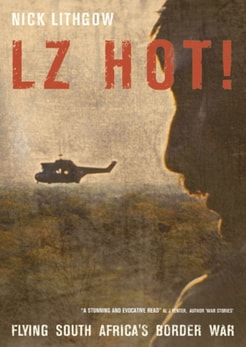
This book captures the experience of the South African Air Force helicopter pilot as never before; from 'rookie' to seasoned combat aviator in one of history's most intense counterinsurgency conflicts - the South African Border War.
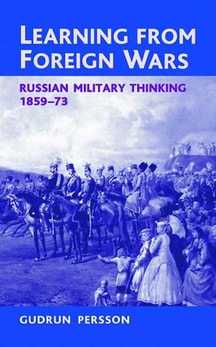
Learning from Foreign Wars examines how the Russian army interpreted, and what lessons it learned from the wars in Europe between 1859 and 1871, and the American Civil War.
With the interest shown in "The Royal Corps of Signals: Unit History (1920-2001) and their Antecedents", it was decided to extend the work to include some of the principal Commonwealth Signal Corps, and to provide supplemental data regarding British Signals that has come to light since the original volume was published.
Since the publication of The Rifles Are There in 2005, which dealt with the 1st and 2nd Battalions Royal Ulster Rifles in the Second World War, it was felt by many that a follow up volume dealing with the Korean conflict was overdue.
Battle for Cassinga is written as a firsthand account by an ordinary South African paratrooper who was at the 1978 assault on the Angolan headquarters of PLAN, the armed wing of SWAPO.
In the later years of the Second World War Germany was subjected to a tremendous onslaught by the bomber commands of both the RAF and USAAF, as well as being assaulted by land.
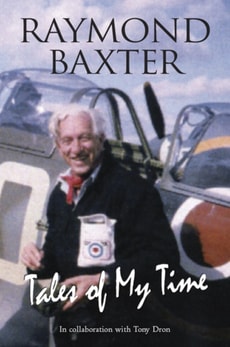
Raymond Baxter, WW2 fighter pilot, postwar radio and TV commentator at major events from motor races to great State occasions, was later the famous presenter of television’s Tomorrow’s World.
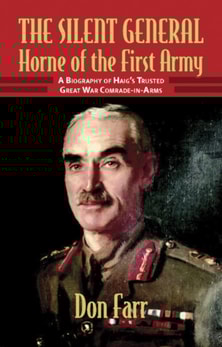
Whether or not Henry Sinclair Horne was the ‘silent’ General he might certainly, if he were still alive, lay claim to being the ‘forgotten’ General of the Western Front.
Dutch SS accounts are very rare, particularly ones such as this, covering recruitment, training, and frontline service first with 5th SS Panzer Division 'Wiking', then later with SS Regiment Besslein.
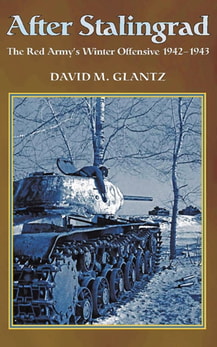
In the wake of the Red Army's signal victory at Stalingrad, which began when its surprise counteroffensive encircled German Sixth Army in Stalingrad region in mid-November 1942 and ended when its forces liquidated beleaguered Sixth Army in early February 1943, the Soviet High Command (Stavka) expanded its counteroffensive into a full-fledged winter offensive which nearly collapsed German defenses in southern Russia.
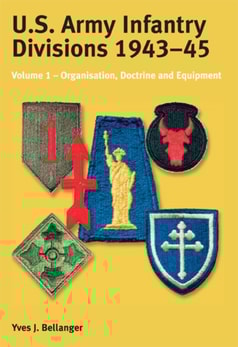
In the first of a two-volume study, the author presents an extremely detailed record of the Organisation, doctrine and equipment of US Army infantry divisions during the latter part of World War II.
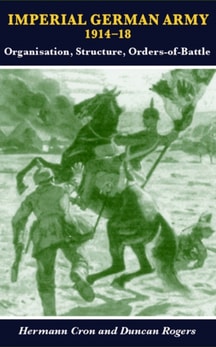
A detailed account of the composition, structure and Organisation of the First World War German Army has long been needed by English-language readers - this work will fill this gap admirably.
An Active Service' traces a young Sid Dowland from civilian life into the tough environment of the Guards Depot in the 1930's and then on to a Guards service Battalion in London and prewar Egypt.
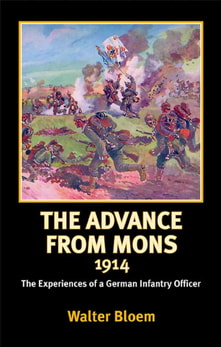
Here is an outstanding personal memoir penned by a German infantry officer recalling his experiences during the initial days and weeks of the war in the West, July-September 1914.
The year of 1914 had been a difficult one for the British Expeditionary Force, the war that had started in August had not been over by the expected time of Christmas.
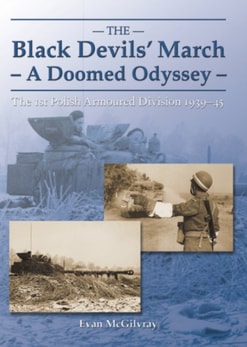
The Black Devils March is an account of how the 1st (and only) Polish Armoured Division in the West under the leadership of General Stanislaw Maczek, arose out of the ashes of defeat and while attempting to avoid the internal politics of the Polish Government in Exile, was able to return to Europe in August 1944 on the side of the Western Allies.
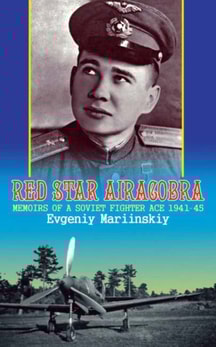
Evgeniy Mariinskiy, a Soviet fighter ace and Hero of the Soviet Union, shot down 20 enemy planes in aerial combat over the Eastern Front between 1943 and 1945.
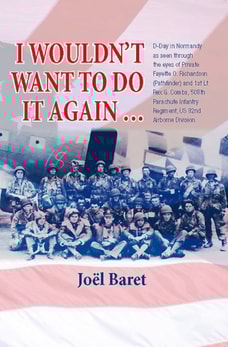
Based on the written testimonies and personal archives of two veterans of the 508th Parachute Infantry Regiment attached to the famous US 82nd Airborne Division, this book tells the story of two young Americans who unwittingly became actors in one of the greatest crusades against tyranny the world has ever known.
With heightened tensions mounting in the Cold War, President Dwight Eisenhower's request for more accurate intelligence information on the Soviet Union was the spark that ignited the U-2 project.
At the beginning of the Second World War the Nazi hierarchy at an early stage, had fully recognized the importance of controlling the depiction of military conflict in order to ensure the continued morale of their combat troops by providing a bridge between the soldiers and their families.
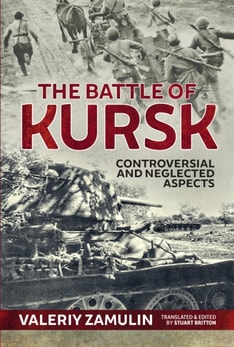
In this book, noted historian of the Battle of Kursk Valeriy Zamulin, the author of multiple Russian-language books on the Battle of Kursk and Destroying the Myth: The Tank Battle at Prokhorovka, Kursk, July 1943: An Operational Narrative takes a fresh look at several controversial and neglected topics regarding the battle and its run-up.
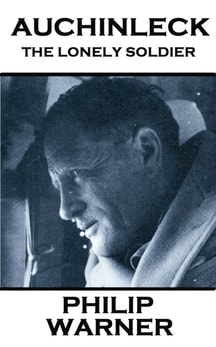
For as long as generalship in war is studied, there is certain to be controversy over the qualities, achievements and treatment of Field Marshal Sir Claude Auchinleck.
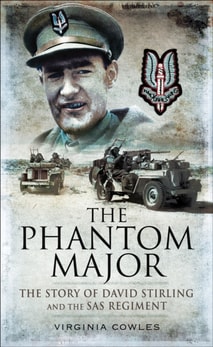
An action-packed biography of "e;one of the legitimate storybook heroes of World War II"e; and the special forces regiment he founded (The New York Times).
This magnificent Pulitzer Prize-winning history, told primarily from the Japanese viewpoint, traces the dramatic fortunes of the Empire of the Sun from the invasion of Manchuria to the dropping of the atomic bombs, demolishing many myths surrounding this catastrophic conflict.