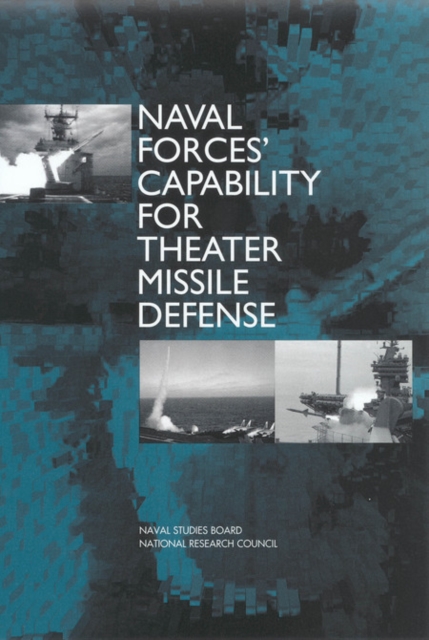
At the request of the Chief of Naval Operations, the National Research Council, under the auspices of the Naval Studies Board, established a committee to assess the Department of the Navy's current and future naval theater missile defense (TMD) capabilities.
As ballistic missile technology proliferates, and as ballistic missile defenses are deployed by both the Russian Federation and the United States, it is increasingly important for these two countries to seek ways to reap the benefits of systems that can protect their own national security interests against limited missile attacks from third countries without undermining the strategic balance that the two governments maintain to ensure stability.
Improvised explosive devices (IEDs) are a type of unconventional explosive weapon that can be deployed in a variety of ways, and can cause loss of life, injury, and property damage in both military and civilian environments.
A gripping account of the epic hunt for Hitler's most terrifying battleship - the legendary Tirpitz - and the brave men who risked their lives to attack and destroy this most potent symbol of the Nazi's fearsome war machine.
From the award-winning co-author of I Am Malala, this book asks just how the might of NATO, with 48 countries and 140,000 troops on the ground, failed to defeat a group of religious students and farmers?
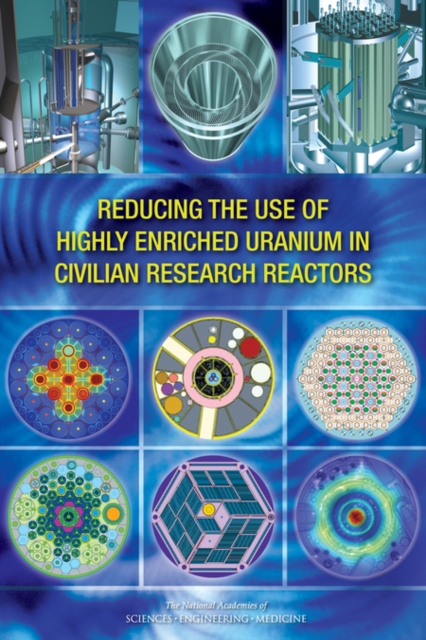
The continued presence of highly enriched uranium (HEU) in civilian installations such as research reactors poses a threat to national and international security.
Recent disclosures about the bulk collection of domestic phone call records and other signals intelligence programs have stimulated widespread debate about the implications of such practices for the civil liberties and privacy of Americans.
According to recent reports, the United States currently accounts for less than one-third of global research and development spending, and it is projected that this fraction will decline to 18% by 2050.
This letter is the abbreviated version of an update of the interim report on testing, evaluation, costs, and benefits of advanced spectroscopic portals (ASPs), issued by the National Academies' Committee on Advanced Spectroscopic Portals in June 2009 (NRC 2009).
Our nation faces the distinct possibility of a catastrophic terrorist attack using an improvised nuclear device (IND), according to international and U.
From a military operational standpoint, surprise is an event or capability that could affect the outcome of a mission or campaign for which preparations are not in place.
Whether or not the United States has safe and effective medical countermeasuressuch as vaccines, drugs, and diagnostic toolsavailable for use during a disaster can mean the difference between life and death for many Americans.
This book presents a summary of the Workshop on Public Response to Alerts and Warnings on Mobile Devices: Current Knowledge and Research Gaps, held April 13 and 14, 2010, in Washington, D.
During public health emergencies such as terrorist attacks or influenza outbreaks, the public health system's ability to save lives could depend on dispensing medical countermeasures such as antibiotics, antiviral medications, and vaccines to a large number of people in a short amount of time.
This letter is the abbreviated version of an update of the interim report on testing, evaluation, costs, and benefits of advanced spectroscopic portals (ASPs), issued by the National Academies' Committee on Advanced Spectroscopic Portals in June 2009 (NRC 2009).
Given the growing importance of cyberspace to nearly all aspects of national life, a secure cyberspace is vitally important to the nation, but cyberspace is far from secure today.
This book presents a summary of the Workshop on Public Response to Alerts and Warnings on Mobile Devices: Current Knowledge and Research Gaps, held April 13 and 14, 2010, in Washington, D.
The management challenge in orchestrating a multitude of DOE headquarters, laboratory, and contractor personnel at about 50 sites in Russia is daunting.
This report examines the proposed testing methodology and facility that the Department of Defense (DOD) will use to test and evaluate the effectiveness of its detection system against biological warfare agentsan issue that impacts battlefield missions as well as homeland security missions.
NASA's Human Exploration and Development of Space (HEDS) program within the Office of Space Flight has proposed a new framework for space technology and systems developmentAdvanced Systems, Technology, Research, and Analysis (ASTRA) for future space flight capabilities.
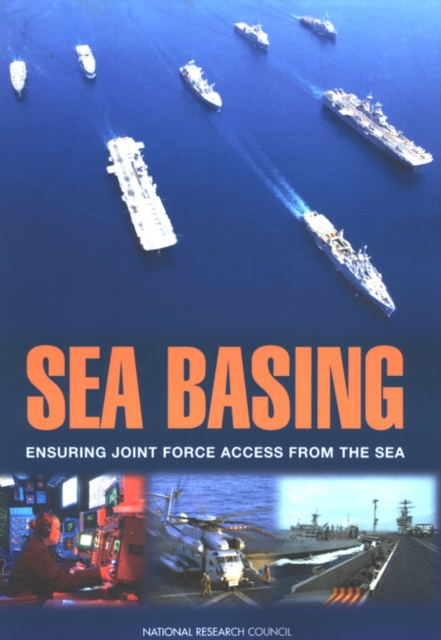
The availability of land bases from which to launch and maintain military, diplomatic, and humanitarian relief operations is becoming increasingly uncertain because of physical or political constraints.
This book addresses new technologies being considered by the Federal Aviation Administration (FAA) for screening airport passengers for concealed weapons and explosives.
On March 3-4, 2008, the Institute of Medicine (IOM) Forum on Medical and Public Health Preparedness for Catastrophic Events hosted a workshop titled "e;Medical Countermeasures Dispensing.
The 2nd International Forum on Biosecurity, held in Budapest, Hungary on March 30 - April 2, 2008, represents the efforts of a number of individuals and organizations, over the last five years, to engage the international community of life scientists in addressing how to reduce the risk that the results of their work could be used for hostile purposes by terrorists and states.
Biometric recognitionthe automated recognition of individuals based on their behavioral and biological characteristicis promoted as a way to help identify terrorists, provide better control of access to physical facilities and financial accounts, and increase the efficiency of access to services and their utilization.
The United States currently has no place to dispose of the high-level radioactive waste resulting from the production of the nuclear weapons and the operation of nuclear electronic power plants.
At the request of the Chief of Naval Operations, the National Research Council, under the auspices of the Naval Studies Board, established a committee to assess the Department of the Navy's current and future naval theater missile defense (TMD) capabilities.
Today's world poses a triple threat to the American population: infectious diseases, contamination of food and water, and bioattacks (biowarfare or bioterrorism).
The Blast Mitigation for Structures Program (BMSP) is a research and development activity conducted by the Defense Threat Reduction Agency (DTRA) to improve the performance of buildings that are targets of terrorist attack.