Within the last 30 years, the genomes of thousands of organisms, from viruses, to bacteria, to humans, have been sequenced or partially sequenced and deposited in databases freely accessible to scientists around the world.
This report explores whether there are core pedagogical and skill-based homeland security program needs; examines current and proposed education programs focusing on various aspects of homeland security; comments on the possible parallels between homeland security, area studies, international relations, and science policy, as developed or emerging academic thrusts; and suggests potential curricula needs, particularly those that involve interdisciplinary aspects.
This new report from the National Research Council's Nuclear and Radiation Studies Board (NRSB) and the Transportation Research Board reviews the risks and technical and societal concerns for the transport of spent nuclear fuel and high-level radioactive waste in the United States.
Biomedical advances have made it possible to identify and manipulate features of living organisms in useful waysleading to improvements in public health, agriculture, and other areas.
The report examines a draft plan, prepared by the Environmental Protection Agency, that identifies critical security issues for drinking water and wastewater and outlines related research and technical support needs.
The report examines the Environmental Protection Agency's three-year plan for a comprehensive response to a chemical or biological attack on a civilian or public sector facility.
Existing and Potential Standoff Explosives Detection Techniques examines the scientific techniques currently used as the basis for explosives detection and determineswhether other techniques might provide promising research avenues with possible pathways to new detection protocols.
The report provides an independent assessment of suitable test protocols that might be useful and reliable for the testing and evaluation of standoff chemical agent detectors.
The events of September 11, 2001 changed perceptions, rearranged national priorities, and produced significant new government entities, including the U.
During public health emergencies such as terrorist attacks or influenza outbreaks, the public health system's ability to save lives could depend on dispensing medical countermeasures such as antibiotics, antiviral medications, and vaccines to a large number of people in a short amount of time.
During public health emergencies such as pandemic influenza outbreaks or terrorist attacks, effective vaccines, drugs, diagnostics, and other medical countermeasures are essential to protecting national security and the public's well-being.
On September 22-23, 2009, the National Research Council held a workshop on the field evaluation of behavioral and cognitive sciencesbased methods and tools for use in the areas of intelligence and counterintelligence.
On September 22-23, 2009, the National Research Council held a workshop on the field evaluation of behavioral and cognitive sciencesbased methods and tools for use in the areas of intelligence and counterintelligence.
Biometric recognitionthe automated recognition of individuals based on their behavioral and biological characteristicis promoted as a way to help identify terrorists, provide better control of access to physical facilities and financial accounts, and increase the efficiency of access to services and their utilization.
Smallpox was a devastating disease that decimated human populations for centuries, and its eradication in 1980 was a monumental achievement for the global health community.
On March 3-4, 2008, the Institute of Medicine (IOM) Forum on Medical and Public Health Preparedness for Catastrophic Events hosted a workshop titled "e;Medical Countermeasures Dispensing.
The 2nd International Forum on Biosecurity, held in Budapest, Hungary on March 30 - April 2, 2008, represents the efforts of a number of individuals and organizations, over the last five years, to engage the international community of life scientists in addressing how to reduce the risk that the results of their work could be used for hostile purposes by terrorists and states.
Warfighting is an authentic American philosophy of action that will thrill the millions of fans of SunTzu''s The Art of War and Musashi''s The Book of Five Rings.
Summer''s inspired analysis of America''s war in Vietnam answers the most pressing questions remaining from that terrible conflict more than a decade before Robert McNamara''s painful admissions.
Examines how the United States can employ its massive, high-tech firepower in an effective manner when future conflicts are likely to be limited and of low intensity.
This groundbreaking historical study reveals the shocking infiltration of Soviet spies in America-and the top-secret cryptography program that caught them.
An engaging guide to the various ways in which war is now waged-and how to adapt to this new reality "e;This brisk everyman's guide-straight-talking and free of jargon-is a useful tasting menu to a fast moving, constantly evolving set of problems.
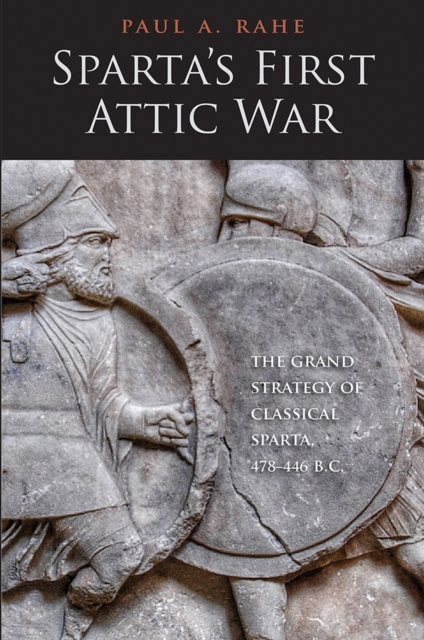
The latest volume in Paul Rahe’s expansive history of Sparta’s response to the challenges posed to its grand strategy In a continuation of his multivolume series on ancient Sparta, Paul Rahe narrates the second stage in the six-decades-long, epic struggle between Sparta and Athens that first erupted some seventeen years after their joint victory in the Persian Wars.
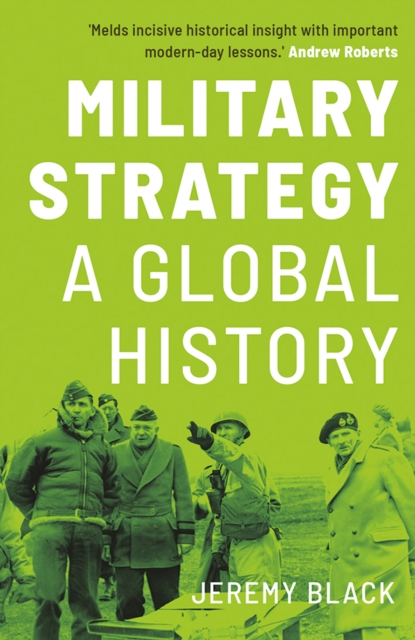
A global account of military strategy, which examines the practices, rather than the theories, of the most significant military figures of the past 400 yearsStrategy has existed as long as there has been organised conflict.
This handbook offers a collection of cutting-edge essays on all aspects of strategic culture by a mix of international scholars, consultants, military officers, and policymakers.
Historians have portrayed British participation in World War I as a series of tragic debacles, with lines of men mown down by machine guns, with untried new military technology, and incompetent generals who threw their troops into improvised and unsuccessful attacks.