A longtime professor at the Naval War College who once directed strategic and long-range planning for the Navy and Marine Corps in Europe considers the transformation of the U.
This study examines the transformation of the United States Navy as a fighting organization that took place on the North Atlantic Station between 1874 and 1897.
As a follow-up to the highly regarded British Pacific Fleet, David Hobbs looks at the post-World War II fortunes of the most powerful fleet in the Royal Navy-its decline in the face of diminishing resources, its final fall at the hands of ignorant politicians, and its recent resurrection in the form of the Queen Elizabeth class carriers, the largest ships ever built for the Royal Navy.
This collection of essays was first published in 1974, and the fact that it remains relevant today is a testament to Marder's legacy as arguably the greatest naval historian of the 20th century.
In this new paperback edition of America Spreads Her Sails, fourteen writers and historians demonstrate how American men and goods in American-made ships moved out over Alfred Thayer Mahan's "e;broad common,"e; the sea, to extend the country's commerce, power, political influence, and culture.
The National Maritime Museum in Greenwich houses the largest collection of scale ship models in the world, many of which are contemporary artifacts made by the craftsmen of the navy or the shipbuilders themselves, ranging from the mid-seventeenth century to the present day.
Peter the Great created the Russian navy from nothing, but it soon surpassed Sweden as the Baltic naval power, while in the Black Sea it became an essential tool in driving back the Ottoman Turks from Europe.
This book does for naval anti-aircraft defense what Friedman's Naval Firepower did for surface gunnery - it makes a highly complex but historically crucial subject accessible to the layman.
Gradually evolving from sailing frigates, the first modern cruiser is not easy to define, but this book starts with the earliest steam paddle warships, covers the evolution of screw-driven frigates, corvettes and sloops, and then the succeeding iron, composite and steel-hulled classes down to the last armoured cruisers.
The launch in 1906 of HMS Dreadnought, the world's first all-big-gun battleship, rendered all existing battle fleets obsolete while at the same time wiping out the Royal Navy's numerical advantage.
More a book about Coast Guard heritage than an academic history, this book focuses on a variety of relatively unknown Guardsmen who personify the service's core values.
By the summer of 1915 Germany was faced with two major problems in fighting World War I: how to break the British blockade and how to stop or seriously disrupt the British supply line across the Atlantic.
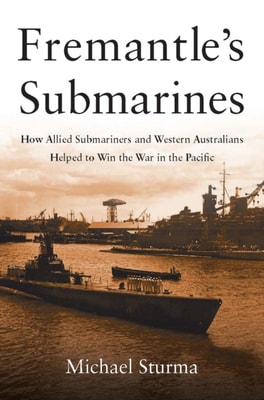
From unpromising beginnings in March 1942, the Allied submarine base at Fremantle on the west coast of Australia became a vital part of the Allied offensive against Japan.
This book looks at an allegation of betrayal made against a young Foreign Office clerk, Victor Buckley, who, it was claimed, leaked privileged information to agents of the southern States during the American Civil War.
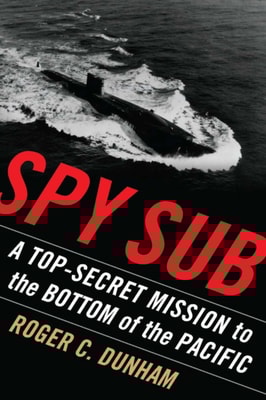
Spy Sub is the acclaimed story of the secret mission by the USS Viperfish to find a lost Soviet submarine armed with nuclear missiles in the great depths of the Pacific Ocean.