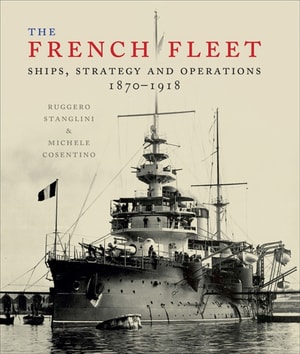
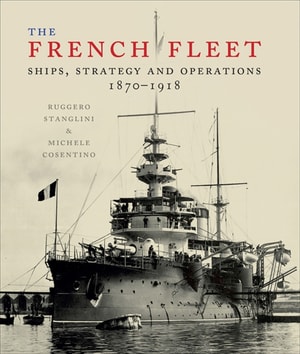
At the end of the 1870-1 Franco-Prussian war, the French Navy began to reconstruct its fleet, replacing old generation warships with steam-powered and iron-hulled men-of-war.
At the end of the 1870-1 Franco-Prussian war, the French Navy began to reconstruct its fleet, replacing old generation warships with steam-powered and iron-hulled men-of-war.
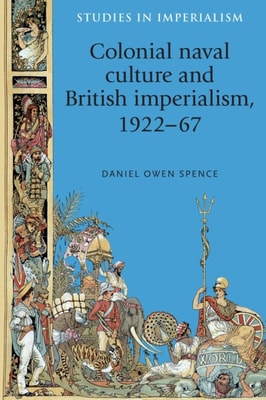
Naval forces from fifteen colonial territories fought for the British Empire during the Second World War, providing an important new lens for understanding imperial power and colonial relations on the eve of decolonisation.
Naval forces from fifteen colonial territories fought for the British Empire during the Second World War, providing an important new lens for understanding imperial power and colonial relations on the eve of decolonisation.
Depicted by the man himself, The Journals of James Cook is an intimate first-hand account, providing an uncensored and reliable narrative of adventures spanning across the globe.
The Royal Canadian Navy is best known for its role in the defence of convoys against attacks by U-boats, particularly those in the mid-Atlantic from 1941--1943.
In a stretch of the North Atlantic known as the Black Pit, far from land-based air cover, escorted convoys travelling the main trade routes between Newfoundland and Ireland were regularly besieged by marauding U-boats in classical naval confrontations.
From its eighteenth-century roots in exploration and trade, to the major conflicts of the First and Second World Wars, through to current roles in multinational operations with United Nations and NATO forces, Canada's navy - now celebrating its one hundredth anniversary - has been an expression of Canadian nationhood and a catalyst in the complex process of national unity.
From its eighteenth-century roots in exploration and trade, to the major conflicts of the First and Second World Wars, through to current roles in multinational operations with United Nations and NATO forces, Canada's navy - now celebrating its one hundredth anniversary - has been an expression of Canadian nationhood and a catalyst in the complex process of national unity.
From its eighteenth-century roots in exploration and trade, to the major conflicts of the First and Second World Wars, through to current roles in multinational operations with United Nations and NATO forces, Canada's navy - now celebrating its one hundredth anniversary - has been an expression of Canadian nationhood and a catalyst in the complex process of national unity.
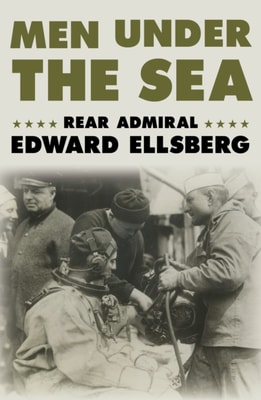
A Navy admiral's firsthand account of the Allied salvage operation that played a key role in recovering North Africa from the Nazis during World War II.
The man who led the salvage efforts to raise a sunken US Navy submarine recounts the mission in a tale "e;that will surely rank among the epics of the sea"e; (The Philadelphia Inquirer).
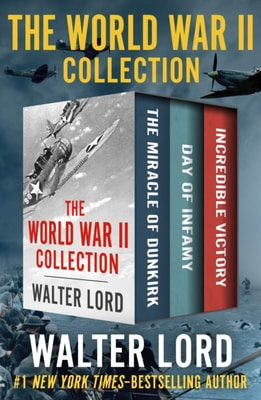
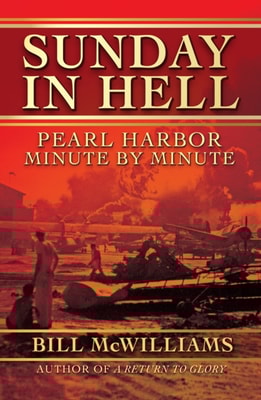
The New York Times-bestselling authors of Miracle at Midway delve into the surprise attack on Pearl Harbor during WWII in "e;a superb work of history"e; (Albuquerque Journal Magazine).
New York Times bestseller: The true story of the WWII naval battle portrayed in the Roland Emmerich film is "e;something special among war histories"e; (Chicago Sun-Times).
In the summer of 1814 a squadron of Royal Navy ships attacked the tiny Connecticut seaport of Stonington, and declared its intention of destroying the town.
From prehistoric times to the present, the Ocean has been used as a highway for trade, a source of food and resources, and a space for recreation and military conquest, as well as an inspiration for religion, culture, and the arts.
Built in Birkenhead, England, from 1862 to 1865, the "e;Laird rams"e; were two innovative armored warships intended for service with the Confederate Navy during the Civil War.