Once athletes reach the highest levels of competition in college and professional sports, the mental aspect of the game becomes increasingly vital to performance.
Advancements in Mental Skills Training presents contemporary evidence-based intervention approaches from leading sport psychology researchers and practitioners.
Sport's "e;concussion crisis"e; has been characterized by controversial scientific discoveries, athlete suicides, and high-profile lawsuits involving professional sports leagues, while provoking widespread media coverage, changes to game rules, and debate about the future of many popular sports.
Sport's "e;concussion crisis"e; has been characterized by controversial scientific discoveries, athlete suicides, and high-profile lawsuits involving professional sports leagues, while provoking widespread media coverage, changes to game rules, and debate about the future of many popular sports.
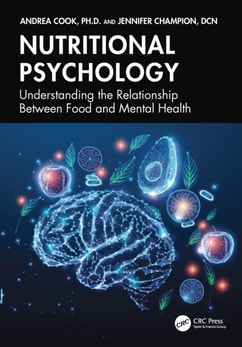
Nutritional Psychology: Understanding the Relationship Between Food and Mental Health provides a broad look at the intersection between food and mental health and offers a comprehensive approach to effectively prioritize nutrition as a powerful component to maintaining overall wellbeing.
In this superbly researched, accessible text, Paul Bennett delivers a novel and much sought-after approach to clinical psychology: lifespan perspective.
As positive psychology continues to make leaps and bounds in terms of scientific advancement, the focus on the importance of the body within optimal functioning is still lagging.
A leading psychologist explores the phenomenon of athletes across the sports world who engage in high-risk behavior that often destroys lives, bodies, and reputations.
The first book to gather firsthand accounts of successful practices, and thinking habits, of sports legends and super-athletes-from across sports including football, baseball, basketball, boxing, golf, car-racing, and swimming-this work holds lessons that can power not only athletic success, but winning in any daily challenges of life or work.
From finding common ground with warlords, introducing the Taliban to change, and working with NFL greats such as Marshawn Lynch, this uplifting memoir and ';study of resilience' (General Paul Selva, United States Air Force) from coach and personal development expert, Tareq Azim, will help you build a relationship with fear and embrace your own power.
Join David Cook--world-renowned sports and performance psychologist, speaker, and bestselling author--as he teaches you that in golf and in life, it's time to get out of your own way and let your true self shine.
Think like Britain's greatest living Olympian: Ten steps to push your limits and achieve the impossible from the one of the world's greatest swimmers'The most dominant sportsperson in Great Britain today - and perhaps ever' TelegraphFrom one of the best elite athletes on the planet comes a book bursting with no-nonsense advice on how to locate your inner gladiator, and first-hand wisdom to help you push yourself beyond what you thought was possible.
THE #1 INTERNATIONAL BESTSELLER'I can't recommend a book stronger than I would Belonging' - Bruce Daisley, Eat Sleep Work Repeat podcast'Gareth Southgate's secret weapon' - Guardian'A copy of Eastwood's new book, Belonging, was given to every England player when they reported for duty at the European Championships' - TelegraphIn BELONGING Owen Eastwood reveals, for the first time, the ethos that has made him one of the most in-demand Performance Coaches in the world.
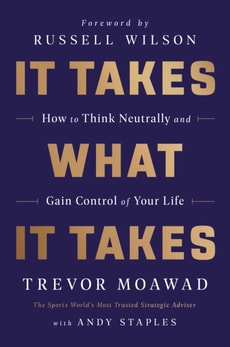
Foreword by Seattle Seahawks quarterback Russell WilsonFrom a top mental conditioning coach"e;the worlds best brain trainer (Sports Illustrated)who has transformed the lives and careers of elite athletes, business leaders, and military personnel, battle-tested strategies that will give you tools to manage and overcome negativity and achieve any goal.
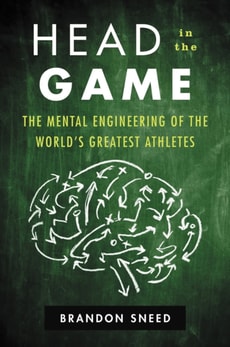
An intriguing blend of science and sports that explores how some of the worlds greatest athletes are utilizing the last frontier of performance-enhancing technology-the mental mapping and engineering of their own brains-for peak performance, and what it means for the future of athleticism, sports, and the rest of us.
'A treasure of recollections and reactions, talking heroes, controversies and big themes' i paper'Brearley is at his best in these quirky, delightful essays when he is exploring the human qualities of humbler players .
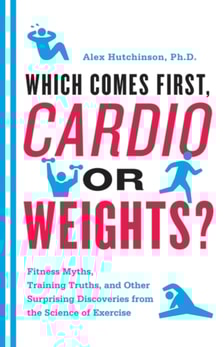
Award-winning journalist, physicist, and bestselling author ofEndureAlex Hutchinson reveals the little-known and often surprising truths that science has uncovered about exercise, ranging from cardio and weights to competition to weight loss.
All In: Poker Night Lessons for Winning Big at Your Career goes beyond any of the other bestselling poker books on the market and at last tells you how to put your poker playing skills to use in the business world.
For six extraordinary years around the turn of the millennium, the Yankees were baseball's unstoppable force, with players such as Paul O'Neill, Derek Jeter, and Mariano Rivera.
In Breaking the Slump, NBC golf commentator Jimmy Roberts shares the "e;slump stories"e; of some of the greatest professional golfers of all time-from Arnold Palmer, Jack Nicklaus, and Tom Watson to Phil Michelson and Dottie Palmer-offering valuable tips and strategies to help any player overcome that inevitable stretch of absolutely wretched golf.
This comprehensive and accessible resource can be used as textbook or a self-help book and is aimed at students, athletes, coaches, sport scientists or indeed any-one looking to enhance their performance, whatever their sport or activity.
'After all this time Frankie Dettori still ranks amongst the all-time greats of the sport' LESTER PIGGOTT'An autobiography as gripping as any Dick Francis thriller' YORKSHIRE POST'Endearingly honest.
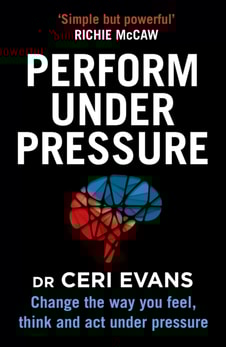
The transformative mind-model for performing under stress and making pressure your advantageUsed by the planet's top performers In Performance Under Pressure, forensic psychiatrist Dr Ceri Evans gives you the tools to take control of the moment.
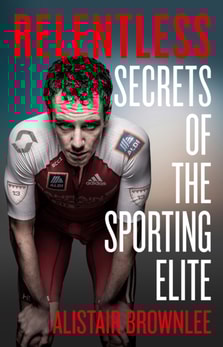
In his quest to define 'sporting greatness', double Olympic champion Alistair Brownlee has spent nearly 4 years interviewing and training with some of the greatest minds in sport to discover what it takes to become - and remain - a champion.