This volume, number 15 in the Studies in Water Policy and Management Series and joins two other volumes (8 and 10) that collectively summarize a significant part of the post-World War II experience of Western experts and donors with the development and management of irrigation in Third World countries.
This volume, number 15 in the Studies in Water Policy and Management Series and joins two other volumes (8 and 10) that collectively summarize a significant part of the post-World War II experience of Western experts and donors with the development and management of irrigation in Third World countries.
This outstanding reference book deals with effects of various agricultural practices on ground water quality and usage; and ground water management strategies for protection of ground water affected by agriculture.
This work features scientific, technical and practical information on mineral, organic and synthetic conditioners, as well as their beneficial effects on the soil's physical properties that promote optimal plant growth, maximize soil fertility, and enhance biomediation processes.
The Handbook of Irrigation System Selection for Semi-Arid Regions compares the various types of available irrigation systems for different regions and conditions, and explains how to analyze field data to determine the suitability of the land for surface, sprinkle, or drip irrigation systems.
The Handbook of Irrigation System Selection for Semi-Arid Regions compares the various types of available irrigation systems for different regions and conditions, and explains how to analyze field data to determine the suitability of the land for surface, sprinkle, or drip irrigation systems.
Complete guidelines to developing and maintaining the most effective, environment-friendly irrigation systems for golf coursesGolf Course Irrigation offers valuable insight on the design, installation, management, and maintenance of irrigation systems-the most important management tool used on today's golf courses.
Published in 1999, this work sets out to assess the potential of urban and peri-urban agriculture for generating income and for improving food supply for the growing urban population in Africa.
Published in 1999, this work sets out to assess the potential of urban and peri-urban agriculture for generating income and for improving food supply for the growing urban population in Africa.
Recognizing drought as a characteristic feature of the North American climate, the contributors to this volume seek to organize available evidence of both prehistoric and modern drought events and to provide information on the severity of droughts, especially those which have occurred since weather records have been kept.
The international conference Arid Lands: Today and Tomorrow drew more than 400 participants from over 3 S countries to Tucson, Arizona, for one week in October of 19 8 S.
New evidence that the ancient Mayas practiced intensive, often irrigated, agriculture on a massive scale has forced revision in current thinking about that civilization.
In Mali and throughout the Sahel, governments increasingly rely on parastatal organizations to overcome the problems of lagging food production and rural poverty.
Traditionally, indigenous irrigation in many countries of Asia, Africa, and Latin America has been managed quite well by water users, who design, build, operate, and maintain often sophisticated, but usually small-scale, systems.
Celebrating the work of Keith McLachlan, a well-known and much-admired geographer of the Middle East and North Africa, this book combines three interrelated topics that define the region.
This work presents models that characterize the relationships between quantity and quality of irrigation water application, and agricultural production and the environment.
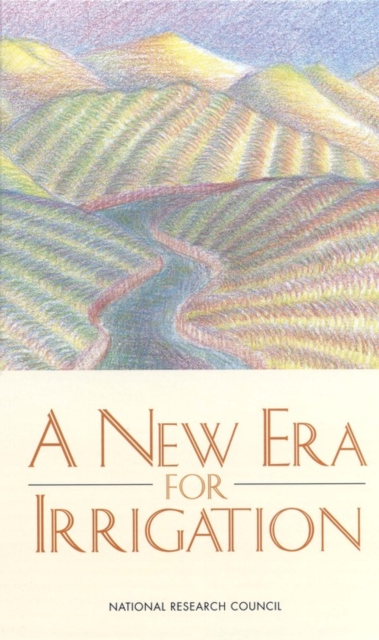
Irrigated agriculture has played a critical role in the economic and social development of the United Statesbut it is also at the root of increasing controversy.
Dry areas suffer not only from limited rainfall but alsonatural leakage'-90% of rainwater is lost directly or indirectly, and is unavailable for agriculture or domestic use.