The potato (Solanum tuberosum) is the world's fourth most important food crop after maize, rice and wheat with 377 million tonnes fresh-weight of tubers produced in 2016 from 19.
This book is unique and original, constituting a pioneering study in the use of spatial economics and related analytical approaches to Brazil's Cerrado agricultural development and the formation of agro-industrial value chains.
The main objective of this book is to integrate environmental knowledge observed in local agriculture, based on the understanding of soils science and ecology, and to propose possible technical solutions and a more integrated approach to tropical agriculture.
This volume integrates a conceptual framework with participatory methodologies to understand the complexities of dryland socio-ecological systems, and to address challenges and opportunities for stewardship of future drylands and climate change in the global south.
Soil and water salinity is a major challenge for the agricultural community and policy makers in terms of meeting the burgeoning population's demand for food and other agricultural commodities.
This book discusses the regulatory and trade challenges facing the global adoption of biotechnological products and offers strategies for overcoming these obstacles and moving towards greater global food security.
Plants, being sessile and autotrophic in nature, must cope with challenging environmental aberrations and therefore have evolved various responsive or defensive mechanisms including stress sensing mechanisms, antioxidant system, signaling pathways, secondary metabolites biosynthesis, and other defensive pathways among which accumulation of osmolytes or osmo-protectants is an important phenomenon.
Global climate change is bound to create a number of abiotic and biotic stresses in the environment, which would affect the overall growth and productivity of plants.
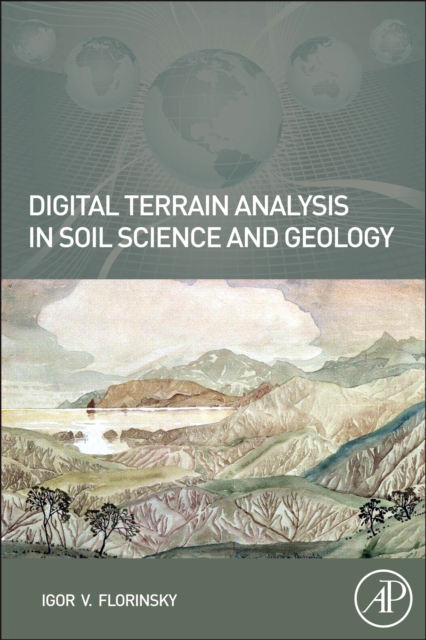
Digital Terrain Analysis in Soil Science and Geology provides soil scientists and geologists with an integrated view of the principles and methods of digital terrain analysis.
Homeostasis and Toxicology of Non-Essential Metals synthesizes the explosion of new information on the molecular, cellular, and organismal handling of metals in fish in the past 15 years.
Sustainable Recovery and Reutilization of Cereal Processing By-Products addresses topics associated with the sustainable management of cereal manufacturing.
Organic wastes are traditionally applied to land to recover their fertilizer value, but the microbial turnover of such organic matter in soil is often out of phase with the requirements of growing plants.
Best Synthetic Methods: Organophosphorus (V) Chemistry provides systematic coverage of the most common classes of pentavalent organophosphorus compounds and reagents (including phosphonyl, phosphoryl, and organophosphates), and allows researchers an easy point of entry into this complex and economically important field.
Las Buenas Prácticas Agrícolas, BPA, son un conjunto de procedimientos que se realizan en sistemas de producción de forma amigable con los recursos naturales las cuales contribuyen a generar un producto limpio, sano y seguro para el consumidor.
This curated book addresses, in the scholarly realm, the problems of soil degradation and provides some practical solutions for them to save soil life.
This book provides a global review of the mechanisms, incidence and control measures related to the problems of soil compaction in agriculture, forestry and other cropping systems.
Over the past 20 years, synchrotron-based research applications have provided important insight into the geochemical cycling of ions and the chemical and crystallographic properties of minerals in soils and sediments.
Interpretation of Micromorphological Features of Soils and Regolith, 2nd edition, provides researchers and students with a global tool for interpretation of micromorphological features of regoliths and soils.
This book creates a multidisciplinary forum of discussion on Ficus carica with particular emphasis on its horticulture, post-harvest, marketability, phytochemistry, extraction protocols, biochemistry, nutritional value, functionality, health-promoting properties, ethnomedicinal applications, technology and processing.
Contributors to this special 100th volume were carefully selected by the editor for their perspectives on not only the current state-of-the-art of their topic but also where their fields are going and what future opportunities exist to advance scientific frontiers.
This book is a unified, condensed, and simplified version of the recently issued twin volumes, Fundamentals of Soil Physics and Applications of Soil Physics.