This is the history of the International Tropical Timber Organization (ITTO); its aims, policies and achievements, through drawing on contemporary records and the author's own wide experience.
This is the history of the International Tropical Timber Organization (ITTO); its aims, policies and achievements, through drawing on contemporary records and the author's own wide experience.
'This book carefully blends conceptual insights with extensive empirical evidence to navigate the reader through an issue that is still poorly understood [and is] a valuable reference for the development practitioner to understand the fundamental causes of illegal logging, its myriad consequences and the policy choices available to address the problem' Nalin Kishor, Forest Law Enforcement and Governance Coordinator, The World Bank 'An excellent resource for those working to conserve and sustainably manage forests worldwide.
'This book carefully blends conceptual insights with extensive empirical evidence to navigate the reader through an issue that is still poorly understood [and is] a valuable reference for the development practitioner to understand the fundamental causes of illegal logging, its myriad consequences and the policy choices available to address the problem' Nalin Kishor, Forest Law Enforcement and Governance Coordinator, The World Bank 'An excellent resource for those working to conserve and sustainably manage forests worldwide.
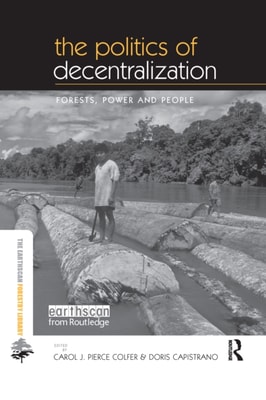
The decentralization of control over the vast forests of the world is moving at a rapid pace, with both positive and negative ramifications for people and forests themselves.
The decentralization of control over the vast forests of the world is moving at a rapid pace, with both positive and negative ramifications for people and forests themselves.
This book brings together scientists and practitioners from five continents to present their experience in undertaking activities that contribute to our understanding and informed management of mountain areas.
This book brings together scientists and practitioners from five continents to present their experience in undertaking activities that contribute to our understanding and informed management of mountain areas.
Participatory research has emerged as an approach to producing knowledge that is sufficiently grounded in local needs and realities to support community-based natural resource management (CBNRM), and it is often touted as crucial to the sustainable management of forests and other natural resources.
Participatory research has emerged as an approach to producing knowledge that is sufficiently grounded in local needs and realities to support community-based natural resource management (CBNRM), and it is often touted as crucial to the sustainable management of forests and other natural resources.
In this, the latest in the People and Plants series, plant conservation is described in the context of livelihoods and development, and ways of balancing the conservation of plant diversity with the use of plants and the environment for human benefit are discussed.
In this, the latest in the People and Plants series, plant conservation is described in the context of livelihoods and development, and ways of balancing the conservation of plant diversity with the use of plants and the environment for human benefit are discussed.
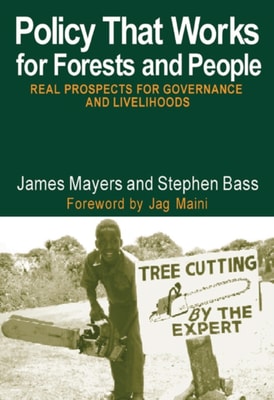
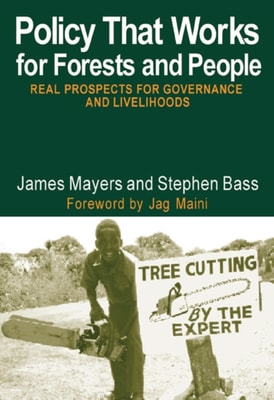
Since its original publication by the International Institute for Environment and Development in 1999, Policy That Works for Forests and People has been recognised as the most authoritative study to date of policy processes that affect forests and people.
Since its original publication by the International Institute for Environment and Development in 1999, Policy That Works for Forests and People has been recognised as the most authoritative study to date of policy processes that affect forests and people.
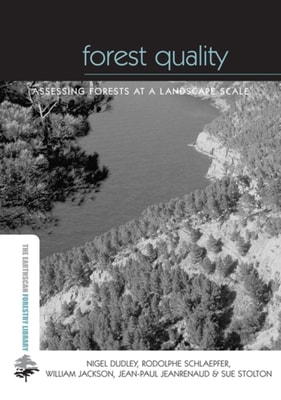
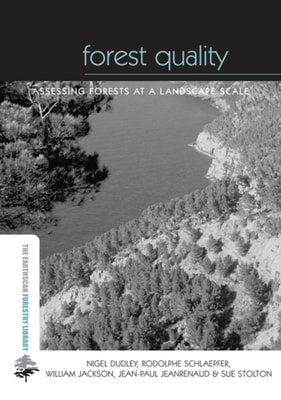
Deforestation is frequently a topic of discussion in the environmental arena, but it is not just the number of trees that matters; the quality of the forest is also important.
Deforestation is frequently a topic of discussion in the environmental arena, but it is not just the number of trees that matters; the quality of the forest is also important.
,With tens of millions of hectares and hundreds of millions of lives in the balance, the debate over who should control South Asia,s forests is of tremendous political significance.
,With tens of millions of hectares and hundreds of millions of lives in the balance, the debate over who should control South Asia,s forests is of tremendous political significance.
,At last a really useful book telling us how all the rhetoric about ecosystem approaches and sustainable forest management is being translated into practical solutions on the ground, CLAUDE MARTIN, WWF INTERNATIONAL ,For too long, foresters have seen forests as logs waiting to be turned into something useful.
,At last a really useful book telling us how all the rhetoric about ecosystem approaches and sustainable forest management is being translated into practical solutions on the ground, CLAUDE MARTIN, WWF INTERNATIONAL ,For too long, foresters have seen forests as logs waiting to be turned into something useful.
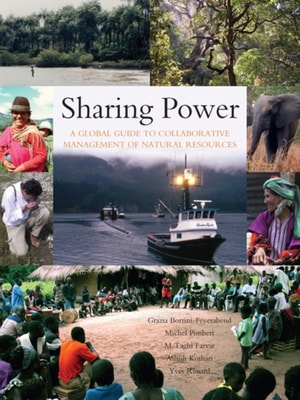
The collaborative orco-management of natural resources - whether between states and local communities or amongst and within communities themselves - is a process of collective understanding and actions to bring about negotiated agreements on roles, rights and responsibilities for decentralized governance of natural resources.
The collaborative orco-management of natural resources - whether between states and local communities or amongst and within communities themselves - is a process of collective understanding and actions to bring about negotiated agreements on roles, rights and responsibilities for decentralized governance of natural resources.
'This book provides an excellent overview of more than a decade of transformation in a forest landscape where the interests of local people, extractive industries and globally important biodiversity are in conflict.
'This book provides an excellent overview of more than a decade of transformation in a forest landscape where the interests of local people, extractive industries and globally important biodiversity are in conflict.
First published in 1995, The Forest Certification Handbook has become the landmark book concerning all aspects of forest and wood product certification from policy to business to in-the-field technical issues.
First published in 1995, The Forest Certification Handbook has become the landmark book concerning all aspects of forest and wood product certification from policy to business to in-the-field technical issues.
Forests and woodlands provide an enormous range of goods and services to society, from timber and firewood to medicinal plants, watershed protection, destinations for tourists and sacred sites.