This book provides a snapshot on economic thinking about global change and provides a starting point for researchers for evaluating the economics of global change in the context of agriculture, forestry, and resource issues.
The contributors consider how social science perspectives can contribute to our understanding of communities and their conflicting choices regarding the allocation and use of forest, agriculture and other natural resources.
This book of selected research papers, originally presented at the "e;Symposium of Fragile Lands of Latin America-The Search for Sustainable Uses,"e; presents some fresh evidence of the viability of a few "e;non-conventional"e; strategies for natural resource development and management.
This book explores some of the relationship between forestry and rural development focusing on lessons that the overall experience in rural development might have for social forestry.
This book shows in detail that environmental consequences of very large increases in biomass utilization could be serious, if they were carried out without proper management.
Can forestry compete with manufacturing and agriculture for scarce capital or is investment in forestry attractive only when non-economic considerations--for example, the social desirability of forestry investments--are taken into account?
Much of the improvement in material living standards in the Third World is attributable to the exploitation of nonrenewable resources such as fossil fuels and metallic ores, and to the exploitation of renewable resource systems at rates that cannot be sustained.
This book provides a snapshot on economic thinking about global change and provides a starting point for researchers for evaluating the economics of global change in the context of agriculture, forestry, and resource issues.
This book shows in detail that environmental consequences of very large increases in biomass utilization could be serious, if they were carried out without proper management.
The contributors consider how social science perspectives can contribute to our understanding of communities and their conflicting choices regarding the allocation and use of forest, agriculture and other natural resources.
This book of selected research papers, originally presented at the "e;Symposium of Fragile Lands of Latin America-The Search for Sustainable Uses,"e; presents some fresh evidence of the viability of a few "e;non-conventional"e; strategies for natural resource development and management.
This book explores some of the relationship between forestry and rural development focusing on lessons that the overall experience in rural development might have for social forestry.
Can forestry compete with manufacturing and agriculture for scarce capital or is investment in forestry attractive only when non-economic considerations--for example, the social desirability of forestry investments--are taken into account?
With the increasing atmospheric carbon dioxide concentration and the resulting environmental consequences for plants, it is necessary to consider the future of rubber plantations, an important source of latex for rubber production.
This volume provides an abundance of valuable information on emerging eco-friendly technology and its potential role in combating climate change via agroforesty.
This volume provides an abundance of valuable information on emerging eco-friendly technology and its potential role in combating climate change via agroforesty.
This book is designed to help landowners and forestry professionals develop, implement, and monitor programs to manage both deer and forests with emphasis on resolving deer impact issues.
Biometry for Forestry and Environmental Data with Examples in R focuses on statistical methods that are widely applicable in forestry and environmental sciences, but it also includes material that is of wider interest.
The 5th International Symposium on the Molecular Breeding of Forage and Turf covers all aspects of molecular breeding of forage and turf plants, from gene discovery, functional genomics, molecular genetics and marker technology, marker-assisted selection, transgenesis to transgenic molecular breeding; address applications - among others - for enhanced quality, tolerance to biotic and abiotic stresses; relating to forage grasses, forage legumes, their bacterial and fungal endosymbionts, as well as turf grasses.
Simply put, allelopathy refers to an ecological phenomenon of plant-plant interference through release of organic chemicals (allelochemicals) in the environment.
The Alsea Logging and Aquatic Resources Study, commissioned by the Oregon Legislature in 1959, marked the beginning of four decades of research in the Pacific Northwest devoted to understanding the impacts of forest practices on water quality, water quantity, aquatic habitat, and aquatic organism popu- tions.
Forested landscapes have provided many important testing grounds for the devel- ment and application of landscape ecological principles and methods in North America.
Is it a sign of the times that last year the Nobel committee chose to award the Nobel Peace prize to Wangari Maathai for having planted 30 million trees?
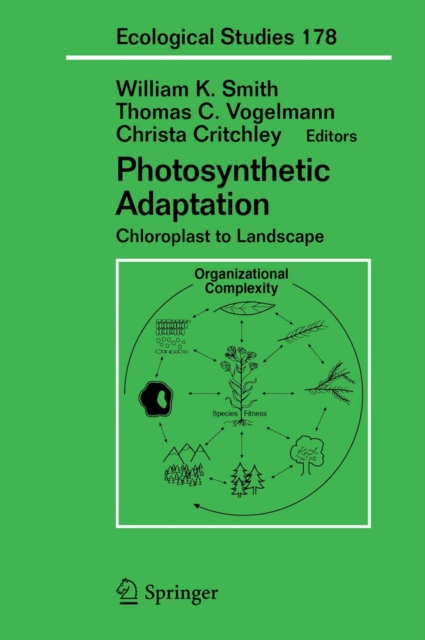
Photosynthetic Adaptation: Chloroplast to Landscape thoroughly studies photosynthetic mechanisms at each structural level, from cells to leaves, crown, and canopy.
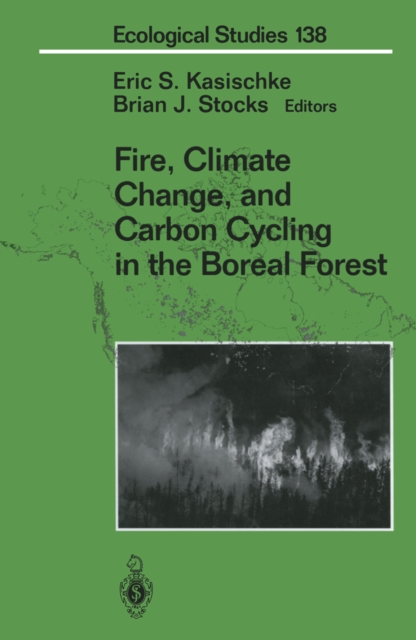
In boreal forests, which contain large amounts of the world's terrestrial organic carbon, fire is a natural and fundamental disturbance regime essential in controlling many ecosystem processes.
Tree Pathology: A Short Introduction is a compilation of texts about some of the significant stress factors that are capable of inducing tree injuries and diseases.
This book provides a theoretical basis and a collection of management science tools that account for the interactions between different components of a managed forest ecosystem.
Developments in genomics and biotechnology are opening up new avenues for accelerating the domestication of forest trees in a climate change driven world.
Agroforestry is a land use system that allows for the concurrent production of trees and agricultural crops and/or animals from the same piece of land.