Disaster preparedness and response management is a burgeoning field of technological research, and staying abreast of the latest developments within the field is a difficult task.
'Structural mechanics in reactor technology, LWR Pressure Components' is the proceedings and transactions of the international conference on structural mechanics in reactor technology, held in 1987.
The third volume in this series, this deals with dams which generate electricity and maintain the natural resources and industrial facilities, including power-generating stations, storage tanks and piping of nuclear power stations.
The third volume in this series, this deals with dams which generate electricity and maintain the natural resources and industrial facilities, including power-generating stations, storage tanks and piping of nuclear power stations.
'Structural mechanics in reactor technology, LWR Pressure Components' is the proceedings and transactions of the international conference on structural mechanics in reactor technology, held in 1987.
This book provides an engineer's perspective on the traditional construction methods for timber frames with infills, focusing on traditional paianta houses in Romania and minka houses in Japan to provide insights into the construction, seismic behavior, and design considerations of such structures.
Geologic hazards pose the greatest threat to human safety for any geotechnical undertaking, but it is ultimately the engineer's ability to recognize and cope with these hazards that will determine the safety of life and property.
This book provides an engineer's perspective on the traditional construction methods for timber frames with infills, focusing on traditional paianta houses in Romania and minka houses in Japan to provide insights into the construction, seismic behavior, and design considerations of such structures.
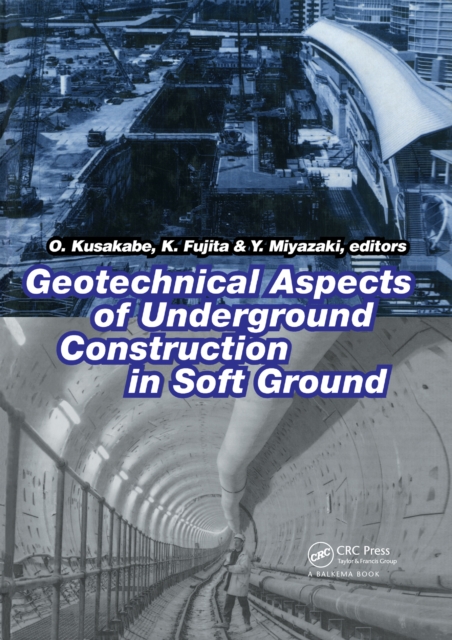
This title looks at geotechnical aspects of underground construction, from bored tunnelling to shield tunnelling, modelling and prediction and braced excavation.
This title looks at geotechnical aspects of underground construction, from bored tunnelling to shield tunnelling, modelling and prediction and braced excavation.
Written in straightforward non-technical language, with numerous diagrams and photographs, this book takes a look at 'the invisible art' of the great builders: how they founded their constructions in the earth and strove to understand and combat the natural forces, such as earth pressures, water, landslides, earthquakes, and almost imperceptible geological changes, with which they had to contend.
Written in straightforward non-technical language, with numerous diagrams and photographs, this book takes a look at 'the invisible art' of the great builders: how they founded their constructions in the earth and strove to understand and combat the natural forces, such as earth pressures, water, landslides, earthquakes, and almost imperceptible geological changes, with which they had to contend.
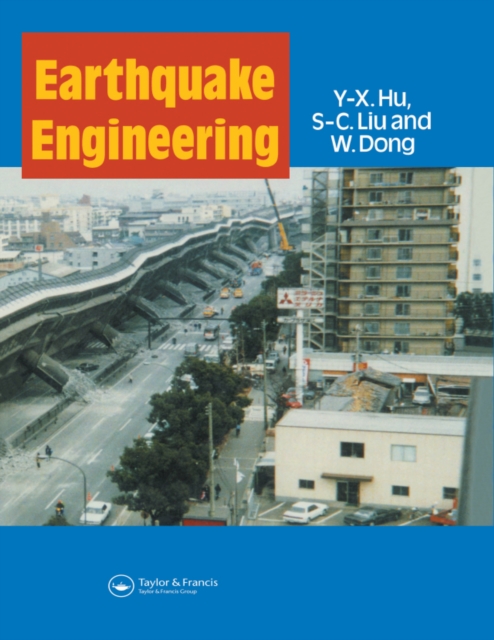
A unified presentation of engineering seismology and earthquake-resistant design, this book presents a wide ranging coverage of the whole subject of earthquake engineering so that the reader is given a clear appreciation of earthquakes before dealing with their effects on structures.
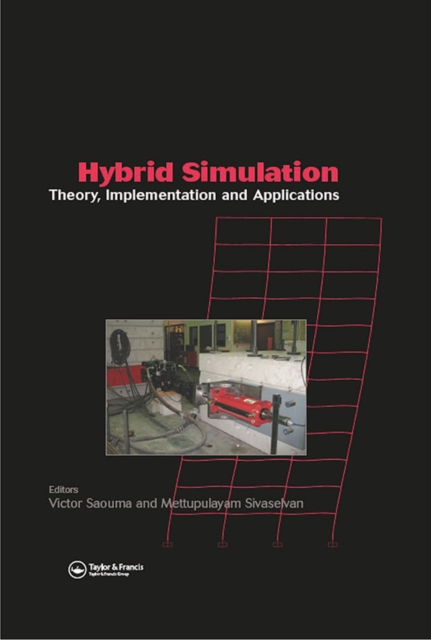
Hybrid Simulation: Theory, Implementation and Applications deals with a rapidly evolving technology combining computer simulation (typically finite element) and physical laboratory testing of two complementary substructures.
Soil Liquefaction during Recent Large-Scale Earthquakes contains selected papers presented at the New Zealand , Japan Workshop on Soil Liquefaction during Recent Large-Scale Earthquakes (Auckland, New Zealand, 2-3 December 2013).
COST is an intergovernmental framework for European Cooperation in Science and Technology, allowing the coordination of nationally-funded research on a European level.
This book examines the recent developments in computerized structural analysis and finite element analysis to re-appraise existing approximate techniques and to define their scope and limits more accurately.
Gain Confidence in Modeling Techniques Used for Complicated Bridge StructuresBridge structures vary considerably in form, size, complexity, and importance.
In recent years the theory and technology of modelling and computation in engineering has expanded rapidly, and has been widely applied in various kinds of engineering projects.
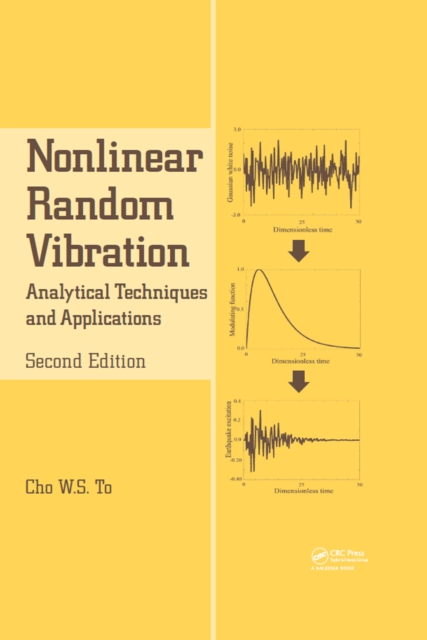
This second edition of the book, Nonlinear Random Vibration: Analytical Techniques and Applications, expands on the original edition with additional detailed steps in various places in the text.
Controlling a system's vibrational behavior, whether for reducing harmful vibrations or for enhancing useful types, is critical to ensure safe and economical operation as well as longer structural and equipment lifetimes.
Forty scientists working in 13 different countries detail in this work the most recent advances in seismic design and performance assessment of reinforced concrete buildings.
The ever-increasing traffic demands, coupled with deteriorating condition of bridge structures, present great challenges for maintaining a healthy transportation network.
The study of rock dynamics is important because many rock mechanics and rock engineering problems involve dynamic loading ranging from earthquakes to vibrations and explosions.
An innovative concept, smart structural systems have proven to be extremely effective in absorbing damaging energy and/or counteracting potentially devastating force, thus limiting structural collapse and subsequent injury.
Soil-structure interaction is an area of major importance in geotechnical engineering and geomechanics Advanced Geotechnical Engineering: Soil-Structure Interaction using Computer and Material Models covers computer and analytical methods for a number of geotechnical problems.
This book is a state-of-the-art report on the ductility of steel structures, containing a comprehensive review of the technical literature available, and presenting the results of the authors' own extensive research activities in this area.
This book examines and presents essential aspects of the behavior, analysis, design and detailing of reinforced concrete buildings subjected to strong seismic activity.
Focussing on structural reliability methods, reliability-based optimization, structural system reliability and risk analysis, lifetime performance and various applications in civil engineering.
Tools to Safeguard New Buildings and Assess Existing OnesNonlinear analysis methods such as static pushover are globally considered a reliable tool for seismic and structural assessment.
This book describes the enormous depth of work carried out since the early 1970s on the Messina Strait Bridge, up to the recent award of the detailed design and construction contract.
Providing real world applications for different structural types and seismic characteristics, Seismic Design of Steel Structures combines knowledge of seismic behavior of steel structures with the principles of earthquake engineering.
This book introduces practising engineers and post-graduate students to modern approaches to seismic design, with a particular focus on reinforced concrete structures, earthquake resistant design of new buildings and assessment, repair and strengthening of existing buildings.
Academic and industry experts describe the use of chemical (permeation) grouting beneath an airport runway to improve ground resistance to liquefaction.
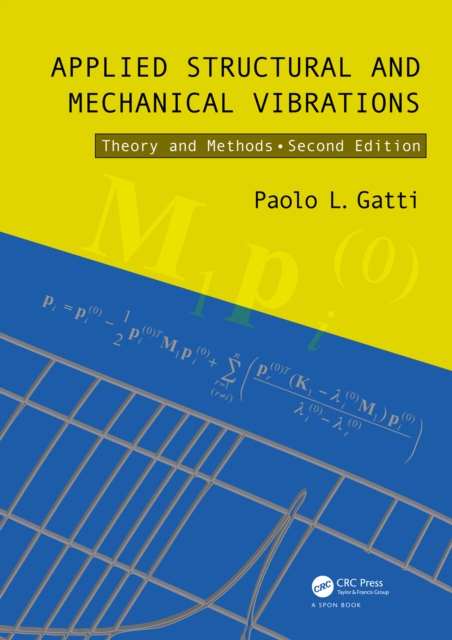
The second edition of Applied Structural and Mechanical Vibrations: Theory and Methods continues the first edition's dual focus on the mathematical theory and the practical aspects of engineering vibrations measurement and analysis.
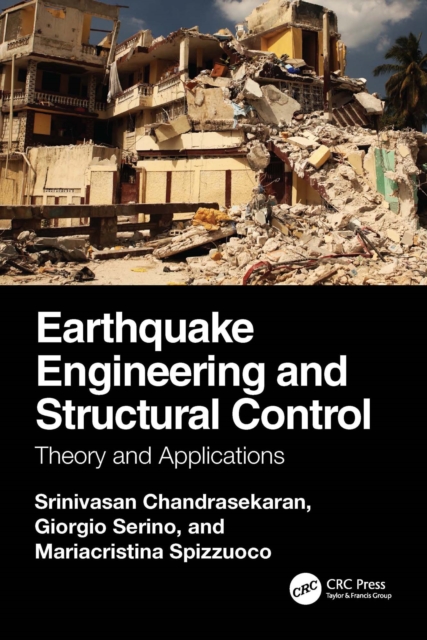
Earthquake Engineering and Structural Control: Theory and Applications examines the basics of structural dynamics with its application for earthquake engineering and structural control methods.
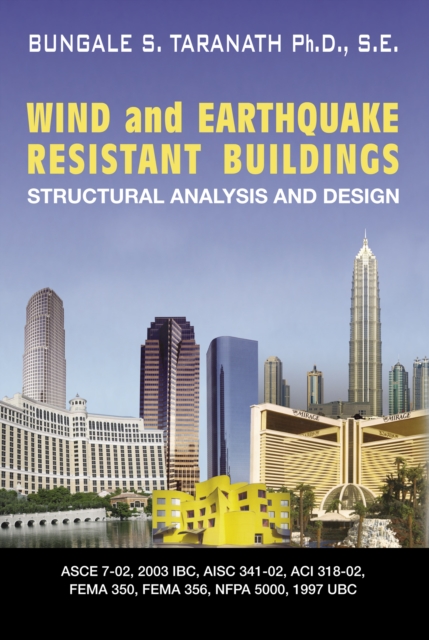
Developed as a resource for practicing engineers, while simultaneously serving as a text in a formal classroom setting, Wind and Earthquake Resistant Buildings provides a fundmental understanding of the behavior of steel, concrete, and composite building structures.