El objetivo de este libro es el de promover un verdadero progreso del proyecto sismorresistente orientado hacia el comportamiento estructural, lo que requiere un conocimiento profundo acerca de cómo se desarrolla la plastificación de la estructura hasta su colapso.
Este libro está dirigido a estudiantes de grado y postgrado, así como a ingenieros estructurales, arquitectos y otros profesionales interesados en el diseño sismorresisente de edificios.
Academic and industry experts describe the use of chemical (permeation) grouting beneath an airport runway to improve ground resistance to liquefaction.
Industrial Explosives and their Applications for Rock Excavation focuses on applications of industrial explosives in civil and mining engineering works.
Pile foundations are the most common form of deep foundations that are used both onshore and offshore to transfer large superstructural loads into competent soil strata.
New Edition: Introduction to Computational Earthquake Engineering (3rd Edition)Introduction to Computational Earthquake Engineering covers solid continuum mechanics, finite element method and stochastic modeling comprehensively, with the second and third chapters explaining the numerical simulation of strong ground motion and faulting, respectively.
Soft computing methods such as neural networks and genetic algorithms draw on the problem solving strategies of the natural world which differ fundamentally from the mathematically-based computing methods normally used in engineering.
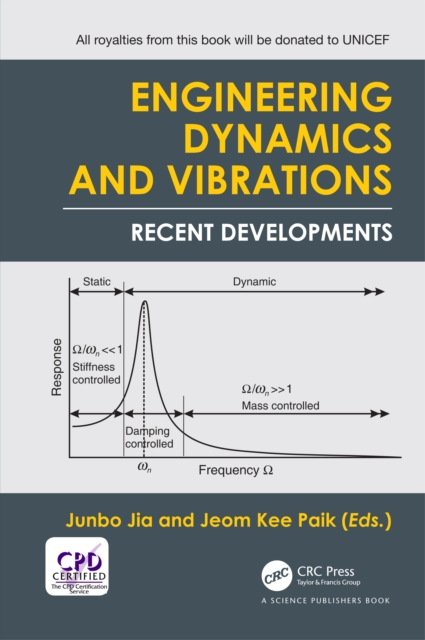
Engineering dynamics and vibrations has become an essential topic for ensuring structural integrity and operational functionality in different engineering areas.
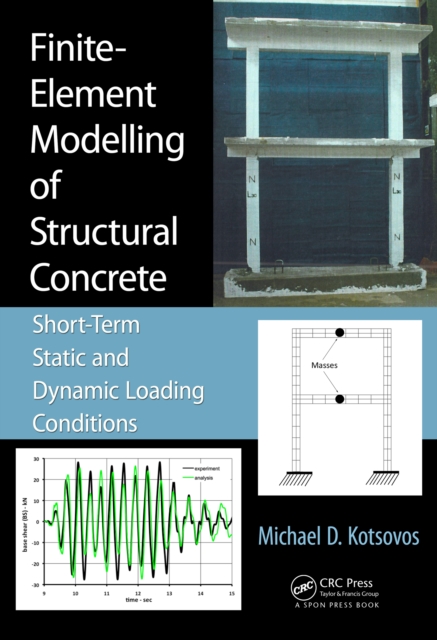
A Powerful Tool for the Analysis and Design of Complex Structural ElementsFinite-Element Modelling of Structural Concrete: Short-Term Static and Dynamic Loading Conditions presents a finite-element model of structural concrete under short-term loading, covering the whole range of short-term loading conditions, from static (monotonic and cyclic) to
An earthquake is a powerful surface acoustic wave (SAW) generated by a seismic event, such as a volcano or motion of the Earth's layers, that propagates on the Earth's surface.
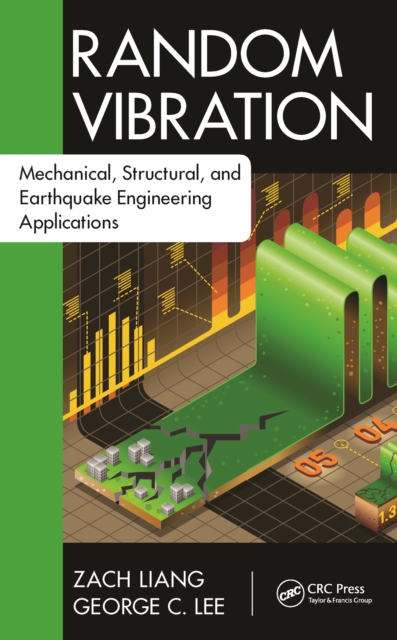
Focuses on the Basic Methodologies Needed to Handle Random ProcessesAfter determining that most textbooks on random vibrations are mathematically intensive and often too difficult for students to fully digest in a single course, the authors of Random Vibration: Mechanical, Structural, and Earthquake Engineering Applications decided to revise the cu
Forty scientists working in 13 different countries detail in this work the most recent advances in seismic design and performance assessment of reinforced concrete buildings.
This volume consists of papers presented at the International Workshop on Concrete Shear in Earthquake, held at the University of Houston, Texas, USA, 13-16 January 1991.
Hybrid Simulation: Theory, Implementation and Applications deals with a rapidly evolving technology combining computer simulation (typically finite element) and physical laboratory testing of two complementary substructures.
This book describes the application of nonlinear static and dynamic analysis for the design, maintenance and seismic strengthening of reinforced concrete structures.
This book is a state-of-the-art report on the ductility of steel structures, containing a comprehensive review of the technical literature available, and presenting the results of the authors' own extensive research activities in this area.
A unified presentation of engineering seismology and earthquake-resistant design, this book presents a wide ranging coverage of the whole subject of earthquake engineering so that the reader is given a clear appreciation of earthquakes before dealing with their effects on structures.
This book examines the recent developments in computerized structural analysis and finite element analysis to re-appraise existing approximate techniques and to define their scope and limits more accurately.
This book introduces practising engineers and post-graduate students to modern approaches to seismic design, with a particular focus on reinforced concrete structures, earthquake resistant design of new buildings and assessment, repair and strengthening of existing buildings.
This book describes the enormous depth of work carried out since the early 1970s on the Messina Strait Bridge, up to the recent award of the detailed design and construction contract.
The aim of this book, by the Commission on Wall Structures of the International Council for Building (CIB), is to select certain countries or regions, and examine enclosure masonry walls which are perceived as being typical.
Today's biggest structural engineering challenge is to design better structures, and a key issue is the need to take an integrated approach which balances control of costs with the requirement for handling earthquakes and other dynamic forces.
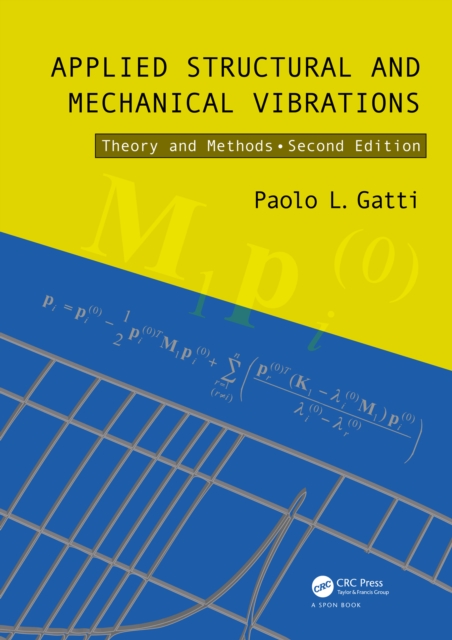
The second edition of Applied Structural and Mechanical Vibrations: Theory and Methods continues the first edition's dual focus on the mathematical theory and the practical aspects of engineering vibrations measurement and analysis.
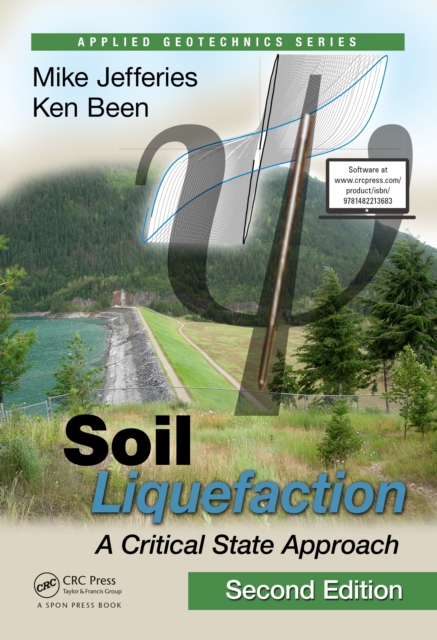
A Rigorous and Definitive Guide to Soil LiquefactionSoil liquefaction occurs when soil loses much of its strength or stiffness for a time-usually a few minutes or less-and which may then cause structural failure, financial loss, and even death.
Wavelets as a Powerful Signal Processing ToolThe principles of wavelets can be applied to a range of problems in civil engineering structures, such as earthquake-induced vibration analysis, bridge vibrations, and damage identification.
Disaster preparedness and response management is a burgeoning field of technological research, and staying abreast of the latest developments within the field is a difficult task.
This second edition of the book, Nonlinear Random Vibration: Analytical Techniques and Applications, expands on the original edition with additional detailed steps in various places in the text.
Soil-structure interaction is an area of major importance in geotechnical engineering and geomechanics Advanced Geotechnical Engineering: Soil-Structure Interaction using Computer and Material Models covers computer and analytical methods for a number of geotechnical problems.
Continually increasing demands on infrastructures mean that maintenance and renewal require timely, appropriate action that maximizes benefits while minimizing cost.