Principle of Reinforced Concrete introduces the main properties of structural concrete and its mechanical behavior under various conditions as well as all aspects of the combined function of reinforcement and concrete.
Fresh off of volume two of his piping series, Advanced Piping Design, Peter Smith has joined forces with skilled consultants to take his piping series to the next level.
Written for the piping engineer and designer in the field, this two-part series helps to fill a void in piping literature, since the Rip Weaver books of the '90s were taken out of print at the advent of the Computer Aid Design (CAD) era.
Primarily designed and constructed to resist outwardly directed loads imposed on the foundation of a structure, anchor plates play an important role in the design of structures (including seawalls, transmission towers, tunnels, buried pipelines, and retaining walls).
In recent years, bridge engineers and researchers are increasingly turning to the finite element method for the design of Steel and Steel-Concrete Composite Bridges.
Piping and Pipeline Calculations Manual, Second Edition provides engineers and designers with a quick reference guide to calculations, codes, and standards applicable to piping systems.
Written by an author with more than 25 years of field and academic experience, Soil Improvement and Ground Modification Methods explains ground improvement technologies for converting marginal soil into soil that will support all types of structures.
Intelligent Vibration Control in Civil Engineering Structures provides readers with an all-encompassing view of the theoretical studies, design methods, real-world implementations, and applications relevant to the topicThe book focuses on design and property tests on different intelligent control devices, innovative control strategies, analysis examples for structures with intelligent control devices, and designs and tests for intelligent controllers.
The first of two books concentrating on the dynamics of slender bodies within or containing axial flow, Fluid-Structure Interaction, Volume 1 covers the fundamentals and mechanisms giving rise to flow-induced vibration, with a particular focus on the challenges associated with pipes conveying fluid.
Subsea repairs and inspection are costly for petroleum and pipeline engineers and proper training is needed to focus on ensuring system strength and integrity.
Based on over 40 years of experience in the field, Ramesh Singh goes beyond corrosion control, providing techniques for addressing present and future integrity issues.
With most of the easy gas and oil reserves discovered and prices rebounding, companies are now drilling far offshore in extreme weather condition environments.
Construction Calculations is a manual that provides end users with a comprehensive guide for many of the formulas, mathematical vectors and conversion factors that are commonly encountered during the design and construction stages of a construction project.
Piezocone and cone penetration tests (CPTu and CPT) applications in foundation engineering includes different approaches for determining the bearing capacity of shallow foundations, along with methods for determining pile bearing capacity and settlement concepts.
Advances in Multi-Physics and Multi-Scale Couplings in Geo-Environmental Mechanics reunites some of the most recent work from the French research group MeGe GDR (National Research Group on Multiscale and Multiphysics Couplings in Geo-Environmental Mechanics) on the theme of multi-scale and multi-physics modeling of geomaterials, with a special focus on micromechanical aspects.
Advanced Design Examples of Seismic Retrofit of Structures provides insights on the problems associated with the seismic retrofitting of existing structures.
Corrosion and its Consequences for Reinforced Concrete Structures serves as an indispensable guide for engineers, scientists and researchers, exploring the fundamental aspects of corrosion in reinforced concrete.
The non-destructive evaluation of civil engineering structures in reinforced concrete is becoming an increasingly important issue in this field of engineering.
Advanced Mechanics of Composite Materials and Structures analyzes contemporary theoretical models at the micro- and macro levels of material structure.
Elastic, Plastic and Yield Design of Reinforced Structures presents a whole set of new results which have been published by the authors over the last 30 years in the field of continuum solid mechanics applied to the analysis and design of reinforced civil engineering structures.
Onshore Structural Design Calculations: Energy Processing Facilities provides structural engineers and designers with the necessary calculations and advanced computer software program instruction for creating effective design solutions using structural steel and concrete, also helping users comply with the myriad of international codes and standards for designing structures that is required to house or transport the material being processed.
The design of tall buildings and complex structures involves challenging activities, including: scheme design, modelling, structural analysis and detailed design.
Granular Geomechanics provides a comprehensive exploration of soils as granular materials and the manner in which a soil's engineering properties form grain-scale mechanics.
Computational Methods for Fracture in Porous Media: Isogeometric and Extended Finite Element Methods provides a self-contained presentation of new modeling techniques for simulating crack propagation in fluid-saturated porous materials.
Written by an international group of contributors, Ground Improvement Case Histories: Compaction, Grouting and Geosynthetics provides over 700 pages of international case-histories.
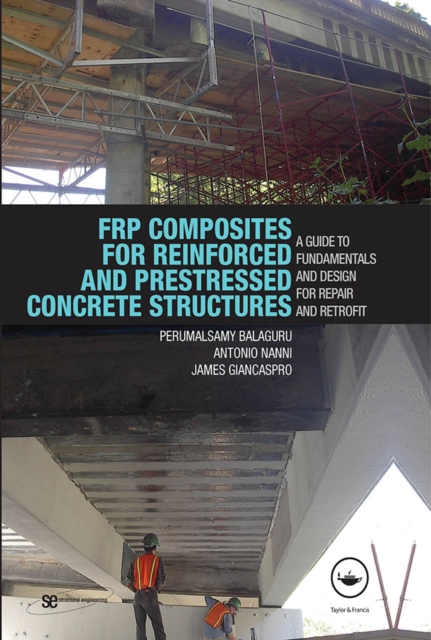
Strengthening of Concrete Structures Using Fiber Reinforced Polymers (FRP): Design, Construction and Practical Applications presents a best practice guide on the structural design and strengthening of bridge structures using advanced Fiber Reinforced Polymer (FRP) composites.
Advanced High Strength Natural Fibre Composites in Construction provides the basic framework and knowledge required for the efficient and sustainable use of natural fiber composites as a structural and building material, along with information on the ongoing efforts to improve the efficiency of use and competitiveness of these composites.
Characteristics and Uses of Steel Slag in Building Construction focuses predominantly on the utilization of ferrous slag (blast furnace and steel slag) in building construction.