Environmental and chemical sensors in optical fiber sensor technology The nature of the environment in which we live and work, and the precarious state of many aspects of the natural environment, has been a major lesson for scientists over the last few decades.
Nonlinear Optical Materials and Devices for Applications in Information Technology takes the reader from fundamental interactions of laser light in materials to the latest developments of digital optical information processing.
After earlier meetings in Enschede (NL, 1994), Basel (CH, 1996) and Banff (CDN, 1998), muTAS 2000 is the fourth international symposium on the subject of miniaturized techniques, methods, devices and systems for (bio)chemical analysis and synthesis.
In-fl ight simulation experiments performed in 1967 with a variable-stabil ity aircraft during the author's stay at Princeton University, motivated the study of handl ing characteristics of future transport aircraft with closed-loop fl ight control systems.
The purpose of this Dictionary, published jointly by Kluwer Technische Boeken, BV (Deventer, The Netherlands) and Russky yazyk Publishers (Moscow, USSR) is to help the user read and translate Englisch, German, French, Dutch and Russian texts in electrical engineer- ing.
The history of scientific research and technological development is replete with examples of breakthroughs that have advanced the frontiers of knowledge, but seldom does it record events that constitute paradigm shifts in broad areas of intellectual pursuit.
The benefits and success of multi-carrier (MC) modulation on one side and the flexibility offered by the spread spectrum (SS) technique on the other side have motivated many researchers to investigate the combination of both techniques since 1993.
An Advanced Study Institute on Fast Electrical and Optical Diagnostic Principles and Techniques was held at II Ciocco, Castelvecchio Pascoli, Italy, 10-24 July 1983.
Preface to Second Edition From the time that the original edition was published in 1985, multidimensional systems theory has matured into a discipline of research and teaching with an expanding array of applications.
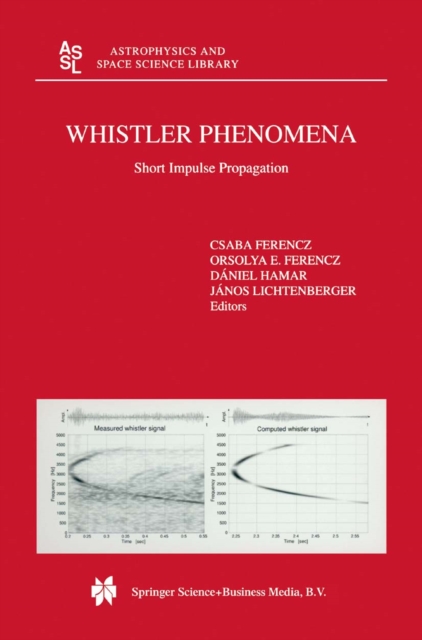
In this volume, the authors present theoretical explanations for a few basic problems connected with the propagation of extra wide band, short impulses in linear media, and with the propagation of whistlers and megawhistlers in plasmas.
During 27-31 July 1997, thirty-seven researchers in acoustics, aeronautics, elastodynamics, electromagnetics, hydrodynamics and mathematics participated in a Symposium on Computa- tional Methods for Unbounded Domains.
Success in the fabrication of structures at the nanometer length scale has opened up a new horizon to condensed matter physics: the study of quantum phenomena in confined boxes, wires, rings, etc.
Sensors and Sensory Systems for an Electronic Nose reviews the current state of progress in the development of an electronic instrument capable of olfaction.
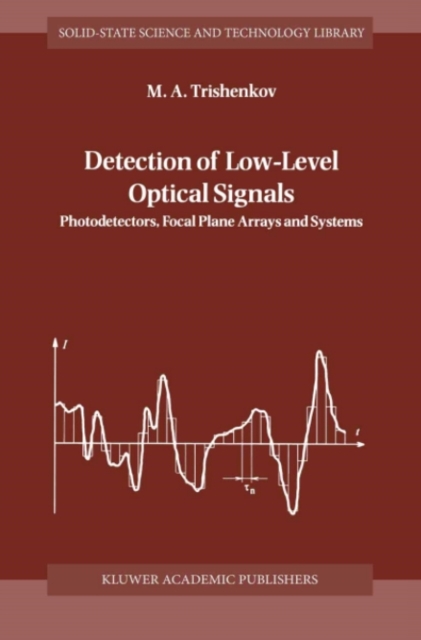
This book is addressed to designers of photodetectors and photodetecting systems, designers of focal plane arrays, charge-coupled devices, specialists in IR technologies, designers of optoelectronic detecting, guiding and tracking systems, systems for IR direction finders, lidars, lightwave communication systems, IR imagers.
The use of sensor's with machines, whether to control them continuously or to inspect and verify their operation, can be highly cost-effective in particular areas of industrial automation.
The special interest in electronics all over the world is due to its decisive role in the scien tific and technical progress now taking place in all fields of modern technology.
Recent advances in our understanding of complex composite media, especially chiral media for microwave applications, suggest the feasibility of creating novel materials with unusual properties and the possibility of constructing new microwave devices using such materials.