This book publishes a number of papers that were presented at GeoMEast, Sustainable Civil Infrastructures, an international congress held in Cairo, Egypt, in November 2019.
This book provides a comprehensive overview of innovative remediation techniques and strategies for soils contaminated by heavy metals or organic compounds (e.
This book presents an assortment of case-studies pertaining to the use of sustainable technologies for heavy metal removal and recovery from mining and metallurgical wastes, construction and demolition wastes, spent catalysts and electronic wastes.
This book presents a comprehensive overview of the use of microorganisms and microbial metabolites as a future sustainable basis of agricultural, environmental and industrial developments.
This book gives up-to-date information and broad views on e-waste recycling and management using the latest techniques for industrialist and academicians.
This book introduces the latest results in research and practice of industrial solid waste recycling in China's western regions, where more than 50% of the waste in the whole country was produced.
This book reviews principles, techniques and applications of metal, metal oxides, metal sulfides and metal-organic frameworks for removal and degradation of pollutants.
The book seeks to address the intersection of food organics and the emergence of a new contractualism between producers, distributors and consumers, and between nation states.
Winner of the International Solid Waste Association's 2014 Publication Award, Handbook of Recycling is an authoritative review of the current state-of-the-art of recycling, reuse and reclamation processes commonly implemented today and how they interact with one another.
Plant Metal Interaction: Emerging Remediation Techniques covers different heavy metals and their effect on soils and plants, along with the remediation techniques currently available.
Petroleum Waste Treatment and Pollution Control combines state-of-the-art and traditional treatment and control methods for removing, controlling, and treating problems, such as groundwater contamination, aromatics, oil, grease, organic removal, and VOCs.
Nanotechnology in Water and Waste Water Treatment: Theory and Applications explores the unique physicochemical and surface properties of nanoparticles and highlights the advantages they provide for engineering applications.
Microbial Wastewater Treatment focuses on the exploitation of microorganisms as decontaminating tools to treat polluted wastewater, a worldwide concern.
Pollution Control and Resource Recovery: Municipal Solid Wastes Incineration: Bottom Ash and Fly Ash explains the tools and technologies needed to characterize, stabilize, treat, recycle, or properly dispose bottom and fly ash.
This book covers the latest in recycling and reuse research focused toward greater sustainability and includes chapters authored by the world's leading thinkers and practitioners in the field.
The book focuses on a global issue-municipal solid waste management (MSWM) and presents the most effective solutions based on energy recovery processes.
This book presents a wide range of synthesis and characterization techniques to produce ceramic nanomaterials specially developed to be used in environmental applications.
The book contains high-quality research papers presented at Sixth International Conference on Solid Waste Management held at Jadavpur University, Kolkata India during November 23-26, 2016.
Die fünfte Auflage dieses Buches liefert einen Überblick über den neuesten Stand zu Ressourcen- und Klimaschutz durch Kreislaufwirtschaft und zur Verwertung von Altprodukten und Altstoffen (inkl.
This book discusses the bioremediation of both solid and liquid waste, including regional solutions for India as well as globally relevant applications.
This book focuses on value addition to various waste streams, which include industrial waste, agricultural waste, and municipal solid and liquid waste.
This book gathers high-quality research papers presented at the Seventh International Conference on Solid Waste Management, held at Professor Jayashankar Telangana State Agricultural University, Hyderabad on December 15-17, 2017.
In this monograph, the core elements of multidisciplinary bioremediation practices are addressed and environmental pollutants which can be effectively remediated using weeds is focused upon.
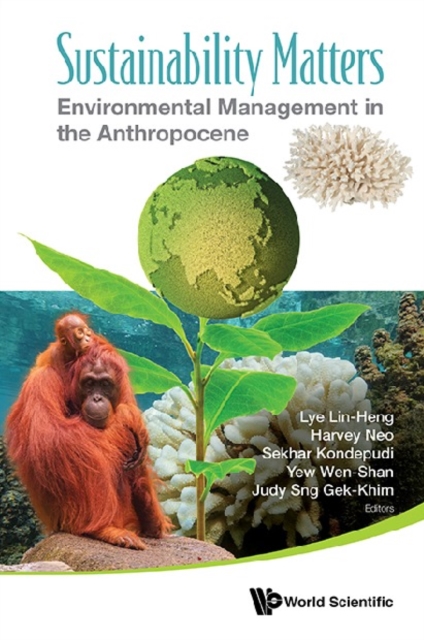
Sustainability Matters is a compilation of some of the best research papers submitted by students from the National University of Singapore's multi-disciplinary and inter-disciplinary graduate programme in environmental studies, as their MSc dissertations in Environmental Management [MEM].
In the context of climate change and fossil fuel pollution, solar energy appears as a cheap and sustainable fuel for many environmental applications, yet the efficiency of techniques has to be improved.
This book introduces the highly topical issue from many different angles, sensitizing readers to the various challenges to human life posed by climate change, identifying possible intentional and inadvertent anthropogenic factors and consequences, and seeking socially and environmentally viable solutions.
This book provides an essential overview of ecotechnologies (also known as green infrastructure or nature-based solutions) which are considered to be relatively resilient to variations in stormwater and wastewater inflow.
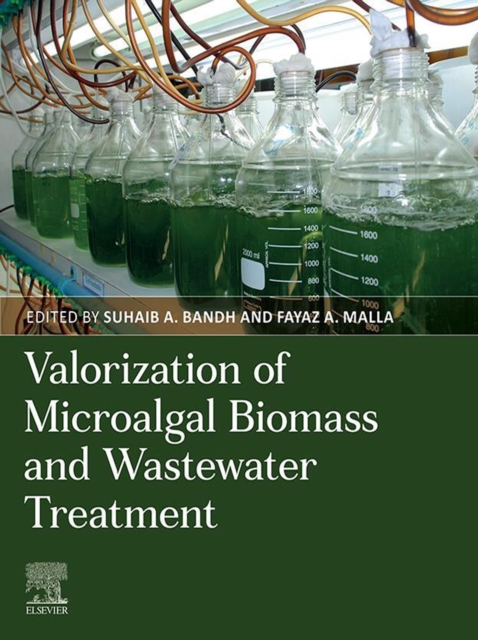
Valorization of Microalgal Biomass and Wastewater Treatment provides tools, techniques, data and case studies to demonstrate the use of algal biomass in the production of valuable products like biofuels, food and fertilizers, etc.
In diesem Band werden unter anderem Handlungsempfehlungen für die Überflutungsvorsorge gegeben, die Hebung des energetischen Potenzials von Abwasser besprochen und Praxisbeispiele zur ökologischen Sanierung oder ökologischen Baubegleitung dargestellt.