The first book to present a detailed analysis of the electrochemistry, development, modeling, optimization, testing, and technology behind modern zirconia-based sensors, Electrochemistry of Zirconia Gas Sensors explores how to tailor these sensors to meet specific industrial needs.
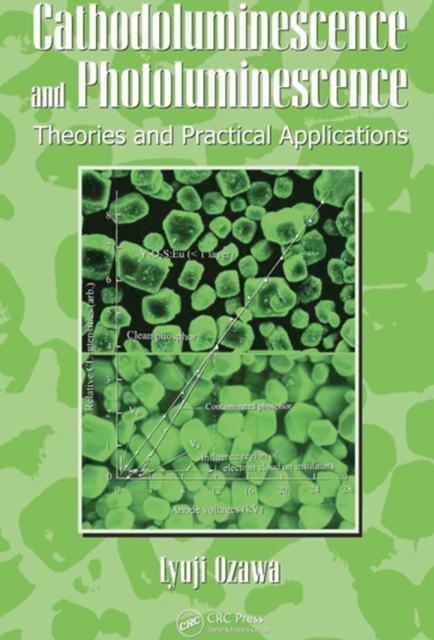
Written by a senior industry expert with nearly 40 years of hands-on experience, Cathodoluminescence and Photoluminescence: Theories and Practical Applications presents a thorough review of advances, challenges, and recommendations for improving photoluminescent (PL) and cathodoluminescent (CL) phosphor display devices in terms of energy efficiency, image quality, color fidelity, operational lifetime, and production cost.
With contributions from leading experts in their respective fields, Metal and Ceramic Matrix Composites provides a comprehensive overview of topics on specific materials and trends.
In spite of the apparent simplicity of silica's composition and structure, scientists are still investigating fundamental questions regarding the formation, constitution, and behavior of colloidal silica systems.
Many believe that the silicon/information age is heading to the Age of Biology and that the next frontier in ceramics will most likely require molecular level or nanoscale control.
Ceramics were among the first materials used as substrates for mass-produced electronics, and they remain an important class of packaging and interconnect material today.
This book presents a comprehensive review of the most important methods used in the characterisation of piezoelectric, ferroelectric and pyroelectric materials.
Thermal drying has been recognized as an important unit operation as it is ener- intensive and has a decisive effect on the quality of most products that are dried commercially.
The development of materials for any replacement or regeneration application should be based on the thorough understanding of the structure to be substituted.
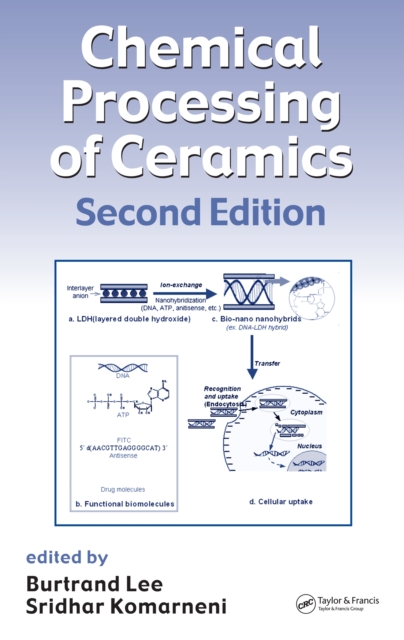
As the field's premiere source, this reference is extensively revised and expanded to collect hard-to-find applications, equations, derivations, and examples illustrating the latest developments in ceramic processing technology.
Ceramics were among the first materials used as substrates for mass-produced electronics, and they remain an important class of packaging and interconnect material today.
Written by a senior industry expert with nearly 40 years of hands-on experience, Cathodoluminescence and Photoluminescence: Theories and Practical Applications presents a thorough review of advances, challenges, and recommendations for improving photoluminescent (PL) and cathodoluminescent (CL) phosphor display devices in terms of energy efficiency, image quality, color fidelity, operational lifetime, and production cost.
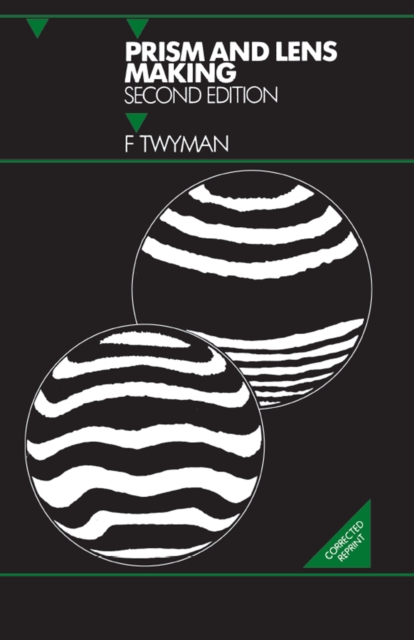
Prism and Lens Making: A Textbook for Optical Glassworkers, Second Edition is a unique compendium of the art and science of the optical working of glass for the production of mirrors, lenses, and prisms.
Prism and Lens Making: A Textbook for Optical Glassworkers, Second Edition is a unique compendium of the art and science of the optical working of glass for the production of mirrors, lenses, and prisms.
This book gives a comprehensive account on the manufacturing techniques to synchronize the desired properties of both traditional and advanced ceramics.
This book gives a comprehensive account on the manufacturing techniques to synchronize the desired properties of both traditional and advanced ceramics.
The first chapters are fundamental, in that the physical chemistry of calcium phosphate salts is discussed, along with mineralization (with emphasis on teeth) and remodelling of mineralized tissues.
The first chapters are fundamental, in that the physical chemistry of calcium phosphate salts is discussed, along with mineralization (with emphasis on teeth) and remodelling of mineralized tissues.
This book presents state-of-the-art contributions related to advanced structural characterization techniques in the field of clean energy materials with particular emphasis on solid oxide fuel cells and hydrogen storage materials.
This comprehensive and engaging text, now in an expanded second edition, is meant for advanced undergraduate and graduate students and covers the fundamental relationships between the structure and properties of materials and biological tissues.
The 78th Glass Problem Conference (GPC) including the 11th Advances in Fusion and Processing of Glass (AFPG) Symposium is organized by the Kazuo Inamori School of Engineering, The New York State College of Ceramics, Alfred University, Alfred, NY 14802 and The Glass Manufacturing Industry Council (GMIC), Westerville, OH 43082.
The 78th Glass Problem Conference (GPC) including the 11th Advances in Fusion and Processing of Glass (AFPG) Symposium is organized by the Kazuo Inamori School of Engineering, The New York State College of Ceramics, Alfred University, Alfred, NY 14802 and The Glass Manufacturing Industry Council (GMIC), Westerville, OH 43082.
An updated edition of the essential guide to the technology of glass-ceramic technology Glass-ceramic materials share many properties with both glass and more traditional crystalline ceramics.
An updated edition of the essential guide to the technology of glass-ceramic technology Glass-ceramic materials share many properties with both glass and more traditional crystalline ceramics.
This proceedings volume contains a collection of 34 papers from the following symposia held during the 2015 Materials Science and Technology (MS&T '15) meeting: Innovative Processing and Synthesis of Ceramics, Glasses and Composites Advances in Ceramic Matrix Composites Advanced Materials for Harsh Environments Advances in Dielectric Materials and Electronic Devices Controlled Synthesis, Processing, and Applications of Structure and Functional Nanomaterials Processing and Performance of Materials Using Microwaves, Electric and Magnetic Fields, Ultrasound, Lasers, and Mechanical Work, Rustum Roy Memorial Symposium Sintering and Related Powder Processing Science and Technologies Surface Protection for Enhanced Materials Performance: Science, Technology, and Application Thermal Protection Materials and Systems Ceramic Optical Materials Alumina at the Forefront of Technology