Diet, Microbiome and Health, Volume 11, in the Handbook of Food Bioengineering series, presents the most up-to-date research to help scientists, researchers and students in the field of food engineering understand the different microbial species we have in our guts, why they are important to human development, immunity and health, and how to use that understanding to further promote research to create healthy food products.
Bioactive Polysaccharides offers a comprehensive review of the structures and bioactivities of bioactive polysaccharides isolated from traditional herbs, fungi, and seaweeds.
Microbial Contamination and Food Degradation, Volume 10 in the Handbook of Food Bioengineering series, provides an understanding of the most common microbial agents involved in food contamination and spoilage, and highlights the main detection techniques to help pinpoint the cause of contamination.
Food Packaging and Preservation, Volume 9 in the Handbook of Food Bioengineering series, explores recent approaches to preserving and prolonging safe use of food products while also maintaining the properties of fresh foods.
Therapeutic Foods, Volume 8 in the Handbook of Food Bioengineering series, is an essential resource for anyone investigating foods that may be utilized as therapeutic agents.
Genetically Engineered Foods, Volume 6 in the Handbook of Food Bioengineering series, is a solid reference for researchers and professionals needing information on genetically engineered foods in human and animal diets.
Handbook of Coffee Processing By-Products: Sustainable Applications presents alternative and sustainable solutions for coffee processing by-products and specifies their industrial potential, both as a source for the recovery of bioactive compounds and their reutilization in the pharmaceutical, biotechnological, food, biotechnology, and cosmetic industries, also covering environmental and agronomic applications.
The Molecular Nutrition of Fats presents the nutritional and molecular aspects of fats by assessing their dietary components, their structural and metabolic effects on the cell, and their role in health and disease.
Microalgae in Health and Disease Prevention is a comprehensive reference that addresses the historical and potential use of microalgae, its extracts, secondary metabolites, and molecular constituents for enhancing human health and preventing diseases.
Nanoencapsulation Technologies for the Food and Nutraceutical Industries is a compendium which collects, in an easy and compact way, state-of-the-art details on techniques for nanoencapsulation of bioactive compounds in food and nutraceutical industries.
Water Quality Monitoring and Management: Basis, Technology and Case Studies presents recent innovations in operations management for water quality monitoring.
Polyunsaturated Fatty Acid Metabolism explores a number of major roles of PUFA in the body, including its role as a component of cell membranes and how it provides substrates for the synthesis of lipid second messengers.
Food Biosynthesis, Volume One in the Handbook of Food Bioengineering series, describes the main aspects related to the biological production of synthetic ingredients and natural foods, highlighting the impact of bacteria and plants in the biosynthesis of key food components.
Food Bioconversion, Volume Two in the Handbook of Food Bioengineering series is an interdisciplinary resource of fundamental information on waste recovery and biomaterials under certain environmental conditions.
Soft Chemistry and Food Fermentation, Volume Three, the latest release in the Handbook of Food Bioengineering series is a practical resource that provides significant knowledge and new perspectives in food processing and preservation, promoting renewable resources by applying soft ecological techniques (i.
Ingredients Extraction by Physico-chemical Methods, Volume Four, the latest release in the Handbook of Food Bioengineering series, reveals the most investigated extraction methods of ingredients and their impact on the food industry.
Microbial Production of Food Ingredients and Additives, Volume Five, the latest release in the Handbook of Food Bioengineering series, is a solid resource on how microorganisms can increase food production and quality.
Human Resilience against Food Insecurity focuses on the human factors involved in building resilience against food and nutrition insecurity in perpetuity through better managing risks (such as 'better-spacing' of children), diversifying the asset portfolio, behavioral change, and communication strategies for to help achieve these goals.
Agro-Ecosystem Diversity: Impact on Food Security and Environmental Quality presents cutting-edge exploration of developing novel farming systems and introduces landscape ecology to agronomy.
Irradiation for Quality Improvement, Microbial Safety and Phytosanitation of Fresh Produce presents the last six and a half decades of scientific information on the topic.
Innovative Technologies for Food Preservation: Inactivation of Spoilage and Pathogenic Microorganisms covers the latest advances in non-thermal processing, including mechanical processes (such as high pressure processing, high pressure homogenization, high hydrodynamic pressure processing, pressurized fluids); electromagnetic technologies (like pulsed electric fields, high voltage electrical discharges, Ohmic heating, chemical electrolysis, microwaves, radiofrequency, cold plasma, UV-light); acoustic technologies (ultrasound, shockwaves); innovative chemical processing technologies (ozone, chlorine dioxide, electrolysis, oxidized water) and others like membrane filtration and dense phase CO2.
Validating Preventive Food Safety and Quality Controls: An Organizational Approach to System Design and Implementation is a how-to-guide for food industry personnel providing essential preventative control system guidance to help design and implement scientifically verifiable food safety controls in food processes.
While products such as bananas, pineapples, kiwifruit and citrus have long been available to consumers in temperate zones, new fruits such as lychee, longan, carambola, and mangosteen are now also entering the market.
The Portfolio Diet for Cardiovascular Disease Risk Reduction: An Evidence Based Approach to Lower Cholesterol through Plant Food Consumption examines the science of this recommended dietary approach to reduce cholesterol in addition to other risk factors for cardiovascular disease.
Hazard Analysis and Risk Based Preventive Controls: Building a (Better) Food Safety Plan is directed to those food safety professionals charged with ensuring or assisting with FSMA's preventative controls (PC) implementation and compliance in their routine job duties.
Bubbles give novelty and distinctiveness to many food and drink products including the most important and interesting ones such as bread, beer, ice cream, whipped cream, souffles and champagne.
The explosion of interest around the health benefits of whole grains has led to a new focus on the bioactive components of cereals, including their location and physiological effects.
For the first major update of this topic in 21 years, editors Kulp, Loewe, Lorenz, and Gelroth have gathered an elite group of internationally recognized experts.
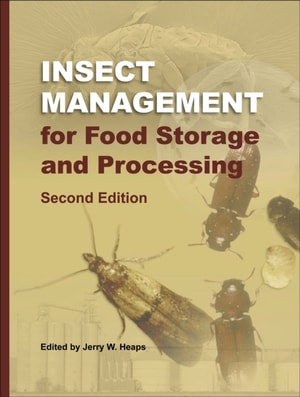
Insect Management for Food Storage and Processing, Second Edition is completely revised and updated with new chapters on topics including inspection techniques; retail pest management; environmental manipulation (e.
Consumer Driven Cereal Innovation: Where Science Meets Industry includes a collection of papers from oral and poster presentations, along with all the abstracts from the first Spring Meeting organized by Cereals&Europe, the European section of AACC International.
In genetically susceptible individuals, the ingestion of gluten and related proteins triggers an immune-mediated enteropathy known as celiac disease (CD).
The most extensive and comprehensive reference on durum wheat chemistry and technology ever available, this ambitious update to the first edition covers more diverse and interesting topics in a new expanded format.
This reference discusses the fundamentals of stored-product entomology that need to be considered in planning, implementation, and evaluation of a pest management program.
Thiamine Deficiency Disease, Dysautonomia, and High Calorie Malnutrition explores thiamine and how its deficiency affects the functions of the brainstem and autonomic nervous system by way of metabolic changes at the level of the mitochondria.
A Primer in Financial Data Management describes concepts and methods, considering financial data management, not as a technological challenge, but as a key asset that underpins effective business management.
Probiotics in The Prevention and Management of Human Diseases: A Scientific Perspective addresses the use of probiotics and their mechanistic aspects in diverse human diseases.
Handbook of Grape Processing By-Products explores the alternatives of upgrading production by-products, also denoting their industrial potential, commercial applications and sustainable solutions in the field of grape valorization and sustainable management in the wine industry.
Advances in Food Security and Sustainability takes a scientific look at the challenges, constraints, and solutions necessary to maintain a healthy and accessible food supply in different communities around the world.