This book collates bioactive compounds from the by-products of bulb, flower and fruit vegetables, and it explores vegetable processing by-products utilization.
Microbial diversity and microbial technology are critical to achieving most of the UN Sustainable Development Goals (SDGs), mainly due to their central role in the provision and regulation of ecosystem services.
This book presents evidence-based translational research in Nutri-Ayur through the integration of traditional knowledge of Ayurveda, Genomics, and modern medicine.
This book collates bioactive compounds from the by-products of bulb, flower and fruit vegetables, and it explores vegetable processing by-products utilization.
Fermentation-based processing advanced with global food systems as humanity started to organize the domestication of agriculture from plant and animal sources.
This book offers an extensive overview of the current and future potential of polysaccharides-based films, providing in-depth coverage of the fundamentals and basics of polysaccharide-based films.
Solar Energy in the Winemaking Industry fully documents all aspects of the modern solar winery, beginning with the main drivers (environmental, economic and political) and detailing the current winemaking industry and solar technologies available.
This book presents evidence-based translational research in Nutri-Ayur through the integration of traditional knowledge of Ayurveda, Genomics, and modern medicine.
This book highlights the science underlying honey, which is central to an understanding of conventional medicine or ingredients of food used mostly in all societies and it is attracting increasing interest among food scientists and professionals worldwide.
This book offers a comprehensive exploration of food and dairy process engineering, catering to a diverse audience ranging from students and budding engineers to seasoned professionals in the food industry.
This book discusses the recent advancements in chemical engineering and their role in achieving the United Nations' 2030 Agenda and Sustainable Development Goals (SDGs).
Traditional foods can be defined as foods that have been consumed for several generations by a specific community in a particular locality, region or country.
This book comprehensively describes biological phenomena, adaptation mechanisms, and strategies of living organisms to survive under extremely cold or desiccated conditions at molecular, cellular, and organ levels.
Tropical root and tuber crops form an important group of food crops for millions of people (about one-fifth of the world population), especially those living in the tropical and sub-tropical zones.
Rice is a fundamental principal food for more than half of the world’s people, providing more than 20% of the calories consumed globally, particularly in Latin America and West Indies, the Middle East, and Southeast Asia.
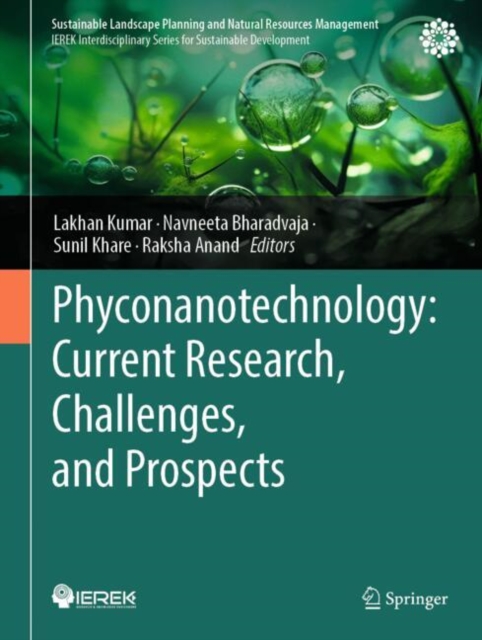
This book explores the scientific development in the field of algal-based nanomaterials synthesis, production methods, and commercial and utilization aspects of phyconanomaterials to address a range of problems of humanity.
Keine ausfuhrliche Beschreibung fur "e;Lebensmittelwissenschaften und Chemie - ausgewahlte Aspekte der Erschlieung der Ackerbohne als Lebensmittelrohstoff"e; verfugbar.
Spectroscopy and Machine Learning Tools for Food Quality and Safety, Volume 115 in the Advances in Food and Nutrition Research series, highlights new advances in the field, with this new volume presenting interesting chapters related to Spectroscopy and Machine Learning Tools.
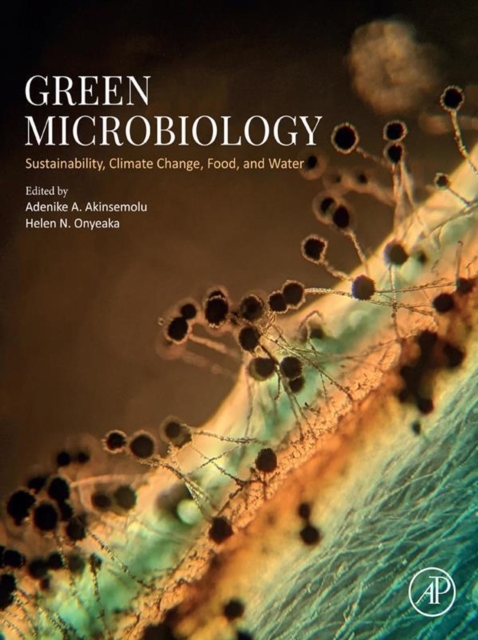
Green Microbiology: Sustainability, Climate Change, Food, and Water provides a comprehensive overview of the principles and applications of green microbiology.
Advances in Agronomy, Volume 193, the latest release in this leading reference on agronomy, contains a variety of updates that highlight new advances in the field, each written by an international board of authors.
This volume details reliable protocols for the successful implementation of LAMP assays for the detection of the most relevant foodborne pathogens and antibiotic resistance microorganisms.
This volume details reliable protocols for the successful implementation of LAMP assays for the detection of the most relevant foodborne pathogens and antibiotic resistance microorganisms.
The purpose of this book is to give a comprehensive introduction into methods and procedures on the production of micro and nanoencapsulation systems suitable for posterior incorporation in food products.
The purpose of this book is to give a comprehensive introduction into methods and procedures on the production of micro and nanoencapsulation systems suitable for posterior incorporation in food products.
Fruits are valuable products; they are, however, highly perishable in nature and need special measures to maintain their quality while transporting them long distances for sale.
This volume provides a comprehensive overview of Isolation of G+Ve Food Borne Pathogens, detection of their toxins by various approaches like Traditional methods, Spectrophotometric tool, Nucleic acid assay methods, Immunological assay methods and Biosensor approaches.