This book highlights how terpenoids act as biological messengers and can be used as medicine against liver disease, neurodegenerative disease, cancer, infectious disease, cardiovascular disease, and inflammatory diseases.
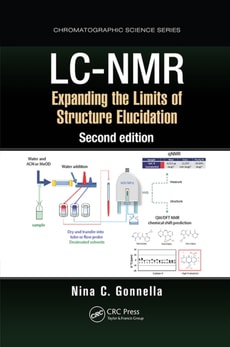
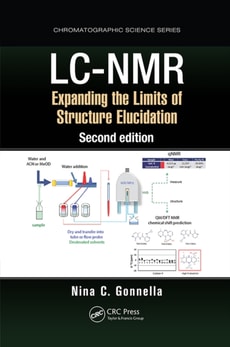
The isolation and structural characterization of substances present at very low concentrations, as is necessary to satisfy regulatory requirements for pharmaceutical drug degradants and impurities, can present scientific challenges.
The isolation and structural characterization of substances present at very low concentrations, as is necessary to satisfy regulatory requirements for pharmaceutical drug degradants and impurities, can present scientific challenges.
Biopharmaceuticals: Challenges and OpportunitiesThis book highlights how the traditional microbial process technology has been upgraded for the production of biologic drugs how manufacturing processes have evolved to meet the global market demand with quality products under the guidelines of internally recognized regulatory bodies.
Biopharmaceuticals: Challenges and OpportunitiesThis book highlights how the traditional microbial process technology has been upgraded for the production of biologic drugs how manufacturing processes have evolved to meet the global market demand with quality products under the guidelines of internally recognized regulatory bodies.
Medicinal Chemistry of Neglected and Tropical Diseases: Advances in the Design and Synthesis of Antimicrobial Agents consolidates and describes modern drug discovery and development approaches currently employed to identify effective chemotherapeutic agents for the treatment of Neglected Tropical Diseases (NTDs) from a medicinal chemistry perspective.
Medicinal Chemistry of Neglected and Tropical Diseases: Advances in the Design and Synthesis of Antimicrobial Agents consolidates and describes modern drug discovery and development approaches currently employed to identify effective chemotherapeutic agents for the treatment of Neglected Tropical Diseases (NTDs) from a medicinal chemistry perspective.
This new 2-volume set aims to share and preserve ethnic and traditional knowledge of herbal medicine and treatments, while also emphasizing the link between biodiversity, human nutrition, and food security.
The fourth edition of Process Validation in Manufacturing of Biopharmaceuticals is a practical and comprehensive resource illustrating the different approaches for successful validation of biopharmaceutical processes.
There has been an enormous growth of interest in the field of toxicologic pathology and particularly on its impact on nonclinical safety assessment in global drug development and in the environment.
BioMedWomen 2015 - Clinical and BioEngineering for Women's Health contains all author contributions presented at BioMedWomen 2015 (Porto, Portugal, 20-23 June 2015).
Drugs in Society: Causes, Concepts, and Control, Eighth Edition, focuses on the many critical areas of America's drug problem, providing a foundation for rational decision-making within this complex and multidisciplinary field.
Drugs in Society: Causes, Concepts, and Control, Eighth Edition, focuses on the many critical areas of America's drug problem, providing a foundation for rational decision-making within this complex and multidisciplinary field.
This revised publication serves as a handy and current reference for professionals engaged in planning, designing, building, validating and maintaining modern cGMP pharmaceutical manufacturing facilities in the U.
The premise of Quality by Design (QbD) is that the quality of the pharmaceutical product should be based upon a thorough understanding of both the product and the manufacturing process.
Cancer Clinical Trials: Current and Controversial Issues in Design and Analysis provides statisticians with an understanding of the critical challenges currently encountered in oncology trials.
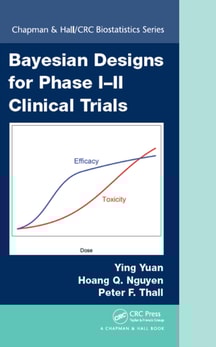
Reliably optimizing a new treatment in humans is a critical first step in clinical evaluation since choosing a suboptimal dose or schedule may lead to failure in later trials.
With the continued advancement of better-quality control and patient outcome reporting systems, changes in the development, control, and regulation of all pharmaceutical delivery systems including transdermal and topical products have been happening on a continuous basis.
Maintaining a practical perspective, Bioequivalence and Statistics in Clinical Pharmacology, Second Edition explores statistics used in day-to-day clinical pharmacology work.
The aim of this book is to equip biostatisticians and other quantitative scientists with the necessary skills, knowledge, and habits to collaborate effectively with clinicians in the healthcare field.
Cluster Randomised Trials, Second Edition discusses the design, conduct, and analysis of trials that randomise groups of individuals to different treatments.
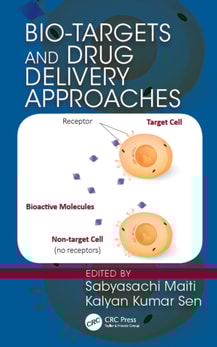
The advances in drug delivery systems over recent years have resulted in a large number of novel delivery systems with the potential to revolutionize the treatment and prevention of diseases.
A follow-up to the experimental and instrumental aspects described in Basic Principles of Analytical Ultracentrifugation, the volume Sedimentation Velocity Analytical Ultracentrifugation: Discrete Species and Size-Distributions of Macromolecules and Particles describes the theory and practice of data analysis.
Nature is an attractive source of therapeutic and preventive compounds, and with such chemical diversity found in millions of species of plants, over 60% of currently used anticancer agents are derived from natural sources.
Based on the authors' experiences of working with a wide variety of retail pharmacies, this book is designed to provide pharmacists with a clear understanding of the nature of marketing, and the ways it can contribute to the effective management of their business.
The third edition of this popular and highly-regarded guide uncovers the ethics, conventions and often unwritten rules of publishing in peer-reviewed journals and at conferences.