Clay-Polymer Nanocomposites is a complete summary of the existing knowledge on this topic, from the basic concepts of synthesis and design to their applications in timely topics such as high-performance composites, environment, and energy issues.
Biopolymer Grafting: Applications presents the latest research and developments in the practical application of these methods in industry, both to enable polymer scientists and engineers to keep up with the latest research trends, as well as to propose ideas for further research and application.
Biopolymer Grafting: Synthesis and Properties presents the latest research and developments in fundamental of synthesis and properties of biopolymer-based graft copolymers.
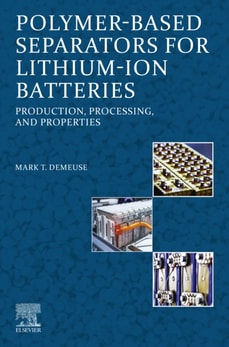
Polymer-Based Separators for Lithium-Ion Batteries: Production, Processing, and Properties takes a detailed, systematic approach to the development of polymer separators for lithium-ion batteries, supporting the reader in selecting materials and processes for high-performance polymer separators with enhanced properties.
Polymers are important and attractive biomaterials for researchers and clinical applications due to the ease of tailoring their chemical, physical and biological properties for target devices.
Hydrogels are important polymer-based materials with innate fascinating properties and applications: they are three-dimensional, hydrophilic, polymeric networks that can absorb large amounts of water or aqueous fluids and are biocompatible, mechanically flexible, and soft.
Hydrogels are important polymer-based materials with innate fascinating properties and applications: they are three-dimensional, hydrophilic, polymeric networks that can absorb large amounts of water or aqueous fluids and are biocompatible, mechanically flexible, and soft.
Materials Processing is the first textbook to bring the fundamental concepts of materials processing together in a unified approach that highlights the overlap in scientific and engineering principles.
The Elements of Polymer Science and Engineering, Third Edition, is a textbook for one- or two-semester introductory courses in polymer science and engineering taught primarily to senior undergraduate and first-year graduate students in a variety of disciplines, but primarily chemical engineering and materials science.
Plastics: Microstructure and Applications is a key text for senior students studying the science and engineering of plastics materials (or polymers) and will serve as a valuable introduction to the fundamentals of polymer properties for those new to the field.
The Impact and Prospects of Green Chemistry for Textile Technology provides a review and summary of the role of green chemistry in textiles, including the use of green agents and sustainable technologies in different textile applications.
Smart Textile Coatings and Laminates, Second Edition, reviews a variety of topics regarding textile coatings and laminates to provide a stimulus for developing new and improved textile products.
Smart Textiles for in situ Monitoring of Composites proposes a 'smart textile' approach to help solve the problem of real-time monitoring of the structural health of composites.
Materials Selection for Natural Fiber Composites covers the use of various tools and techniques that can be applied for natural fiber composite selection to expand the sustainable design possibilities and support cleaner production requirements.
Cost Management in Plastics Processing: Strategies, Targets, Techniques, and Tools, Fourth Edition, makes readers think about current practices and how to go forward with effective cost management.
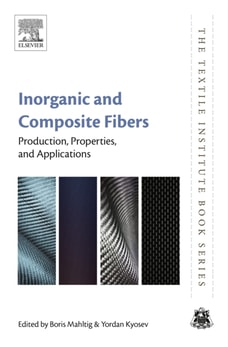
Inorganic and Composite Fibers: Production, Properties, and Applications provides a comprehensive review on the development, production and application of modern inorganic and composite fibers.
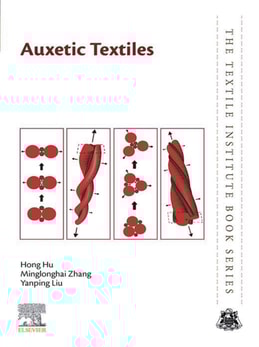
Auxetic Textiles provides a detailed introduction to the basic properties of auxetic materials and how they differ from conventional materials, particularly auxetic textiles, such as polymers, fibers, yarns, fabrics and textile composites.
Biopolymer-Based Composites: Drug Delivery and Biomedical Applications presents a comprehensive review on recent developments in biopolymer-based composites and their use in drug delivery and biomedical applications.
Biodegradable and Biocompatible Polymer Composites: Processing, Properties and Applications begins by discussing the current state-of-the-art, new challenges and opportunities for various biodegradable and biocompatible polymer composite systems.
The Elements of Polymer Science and Engineering, Third Edition, is a textbook for one- or two-semester introductory courses in polymer science and engineering taught primarily to senior undergraduate and first-year graduate students in a variety of disciplines, but primarily chemical engineering and materials science.
Compostable Polymer Materials, Second Edition, deals with the environmentally important family of polymers designed to be disposed of in industrial and municipal compost facilities after their useful life.
Ion Beam Treatment of Polymers, Second Edition presents the results of polymer investigations and technique development in the field of polymer modification by high-energy ion beams.
Compostable Polymer Materials, Second Edition, deals with the environmentally important family of polymers designed to be disposed of in industrial and municipal compost facilities after their useful life.
This revised and updated Second Edition of Polymer Synthesis II continues in the tradition of Volume I in presenting detailed laboratory instructions for the preparation of various polymers.
Advances in Smart Nanomaterials and their Applications brings together the latest advances and novel methods in the preparation of smart nanomaterials for cutting-edge applications.
Industrialists developing new food and pharmaceutical products face the challenge of innovation in an increasingly competitive market that must consider incredient cost, product added-value, expectations of a healthy life-style, improved sensory impact, controlled delivery of active compounds and last, but not lease, product stability.
Gold and Silver Nanoparticles: Synthesis and Applications provides detailed information on the preparation and utilization of Au- and Ag-based nanoparticles in a range of novel areas.
UHMWPE Biomaterials Handbook describes the science, development, properties and application of of ultra-high molecular weight polyethylene (UHMWPE) used in artificial joints.
Compostable Polymer Materials deals with an environmentally important family of polymers designed to be disposed of in industrial and municipal compost facilities after their useful life.
The progressive dwindling of fossil resources, coupled with the drastic increase in oil prices, have sparked a feverish activity in search of alternatives based on renewable resources for the production of energy.
Dielectric Elastomers as Electromechanical Transducers provides a comprehensive and updated insight into dielectric elastomers; one of the most promising classes of polymer-based smart materials and technologies.
Crystallisable polymers represent a large share of the polymers used for manufacturing a wide variety of objects, and consequently have received continuous attention from scientists these past 60 years.
The series Advances in Dendritic Macromolecules aims to cover the synthesis and supramolecular chemistry of dendritic or cascade super-molecules as well as their less perfect hyperbranched cousins.
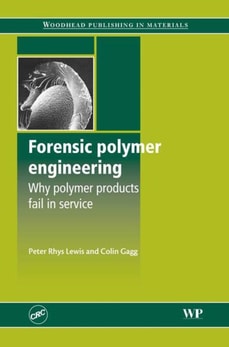
Given the infinite number of applications of polymeric materials in everyday life, especially applications where a failure in service may lead to economic loss, injury or death, the ability to determine the cause of failure using forensic engineering techniques is essential.
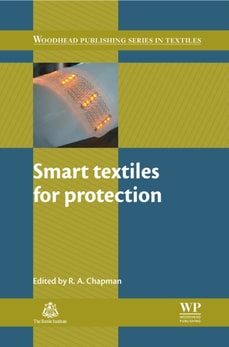
Smart textiles are materials and structures that sense and react to environmental conditions or stimuli, and their integration into protective clothing has led to the development of products with greatly enhanced protective capabilities in hazardous situations.
This laboratory manual covers important techniques for polymer synthesis and characterization, and provides newcomers with a comprehensive introduction to the basic principles of highlighted techniques.