Enhanced concern for the quality and safety of food products, increased preference for natural products, and stricter regulations on the residual level of solvents, all contribute to the growing use of supercritical fluid technology as a primary alternative for the extraction, fractionation, and isolation of active ingredients.
Volume 2 From Color Measurement to Metal Effect Pigments With contributions on various industrially important dyes, inorganic pigments and organic pigments, on color measurement and historical pigments, dyes and binders A comprehensive overview on all important dyes, inorganic and organic pigments supplemented by information on all relevant applications and color fundamentals The chapters are clearly structured and arranged in alphabetical order in the 3-volumes.
Particle Technology and Applications presents the theoretical and technological background of particle science and explores up-to-date applications of particle technologies in the chemical, petrochemical, energy, mechanical, and materials industries.
Volume 2 From Color Measurement to Metal Effect Pigments With contributions on various industrially important dyes, inorganic pigments and organic pigments, on color measurement and historical pigments, dyes and binders A comprehensive overview on all important dyes, inorganic and organic pigments supplemented by information on all relevant applications and color fundamentals The chapters are clearly structured and arranged in alphabetical order in the 3-volumes.
Explores Worldwide Trends Involving the Production and Use of BiofuelsWith the depletion of oil resources as well as the negative environmental impact of fossil fuels, there is much interest in alternative energy sources.
The first book of its kind, Handbook of Chemical Regulations: Benchmarking, Implementation, and Engineering Concepts introduces the concept of global harmonization and interlinks between regulations and examines the reasons behind major requirements for chemical manufacture, article production, and distribution, importation, and usage.
To achieve environmental sustainability in industrial plants, resource conservation activities such as material recovery have begun incorporating process integration techniques for reusing and recycling water, utility gases, solvents, and solid waste.
While continuous processes have found widespread application within chemical production, members of the research and development communities have historically favored the centuries old technique of iterative batch reactions.
The Scientific Group Thermodata Europe (SGTE) is a consortium involved in the development and application of thermodynamic databanks for materials such as metals.
A volume that includes examples of the newest ideas and practices how green chemistry and green science can be applied - in the classroom, but also in the connections between classes and the work place.
Since the first groundbreaking edition of Developments in Pressure-Sensitive Products was introduced in 1998, heavy research has resulted in substantial progress in the field.
Shorter reaction times, higher product yields, and enhanced selectivity are some of the advantages microwave heating has over conventional methods, causing its use to transition from a curiosity to mainstream, both in industrial and academic settings.
The 2nd International Conference on Futuristic Advancements in Materials, Manufacturing and Thermal Sciences (ICFAMMT-2024) was jointly organized by the Department of Mechanical and Aerospace Engineering, Institute of Infrastructure, Technology, Research and Management (IITRAM), Ahmedabad, India, and the Space Society of Mechanical Engineers (SSME), Space Applications Centre, ISRO, Ahmedabad.
Realizing that water, energy and food are the three pillars to sustain the growth of human population in the future, this book deals with all the above aspects with particular emphasis on water and energy.
Mass transfer along with separation processes is an area that is often quite challenging to master, as most volumes currently available complicate the learning by teaching mass transfer linked with heat transfer, rather than focusing on more relevant techniques.
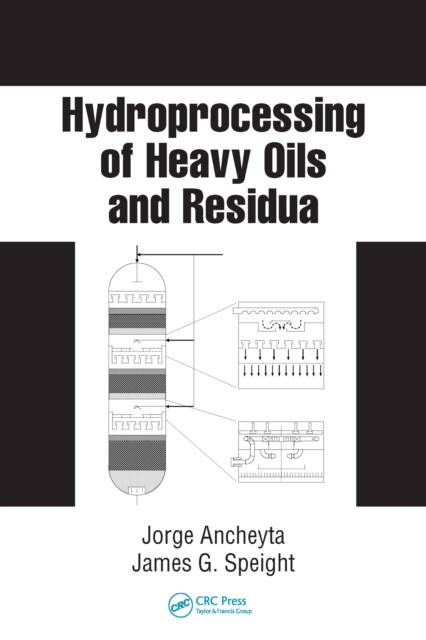
During the upgrading of heavy petroleum, asphaltene is the most problematic impurity since it is the main cause of catalyst deactivation and sediments formation.
Compiling recent advances in membrane separations technology, this highly relevant book introduces cost-effective solutions for separation problems in a wide range of industries.
This book addresses the problems involved in the modelling and simulation of shale gas reservoirs at pore scale, and details recent advances in the field.
Taking a straight-forward approach, the Practical Guide to Injection Blow Molding explores the entire industry from conception, design, costing, tooling, and machinery, to trouble-shooting, testing, and daily production.
Presenting diffusion and mass transfer from both engineering and fundamental science perspectives, this book offers a comprehensive summary of the theory and applies that theory to obtain detailed solutions to a wide variety of problems.
Written for chemical, mechanical, and aerospace engineering students taking courses on heat and mass transfer, this textbook presents the basics and proceeds to the required theory and its application aspects.
This book presents the current state of the art and future perspectives of the heterogeneous catalytic production of fuels, complete with reaction mechanism schemes, engineering solutions, and valuable industry insights.
Bringing together the leading European expertise in behaviour and design of silos, this important new book is an essential reference source for all concerned with current problems and developments in silo technology.
"e;Product and process design - driving sustainable innovation"e; is the 2nd edition of a comprehensive textbook for product and process design courses at BSc, MSc, EngD, and PhD level.
"e;Product and process design - driving sustainable innovation"e; is the 2nd edition of a comprehensive textbook for product and process design courses at BSc, MSc, EngD, and PhD level.
This book provides recent developments and future perspectives of pulp and paper processing based on biotechnology to replace conventional environmental unfriendly chemical processes.
This book is a valuable resource for achieving and promoting a culture of risk awareness and integrating risk management principles and practices into the educational environment.
A wide range of chemical products (especially fine chemicals) are important for a healthy and enjoyable modern life; therefore efficient syntheses of these materials are essential.