Nucleation and Growth of Metals: From Thin Films to Nanoparticles explores how nucleation and growth phenomena condition the morphology and related characteristics of metallic thin films and nanoparticles to help control the functional properties of these objects.
Corrosion-under-insulation (CUI) refers to the external corrosion of piping and vessels that occurs underneath externally clad/jacketed insulation as a result of the penetration of water.
The Science of Armour Materials comprehensively covers the range of armor materials from steels and light alloys, through glasses and ceramics, to fibers, textiles, and protective apparel.
Hot-Dip Galvanizing of Steel Structures contains practical information that is useful for both researchers in hot-dip galvanizing and engineers, designers, and inspectors.
Extractive Metallurgy of Copper, Sixth Edition, expands on previous editions, including sections on orogenesis and copper mineralogy and new processes for efficiently recovering copper from ever-declining Cu-grade mineral deposits.
Magnesium (Mg) alloys are receiving increasing attention due to their abundance, light weight, castability, formability, mechanical properties and corrosion performance.
Steels: Structure and Properties, Fourth Edition is an essential text and reference, providing indispensable foundational content for researchers, metallurgists, and engineers in industry and academia.
Structure and Properties of Nanoalloys is devoted to the topic of alloy nanoparticles, the bi-or multicomponent metallic nanoparticles that are often called nanoalloys.
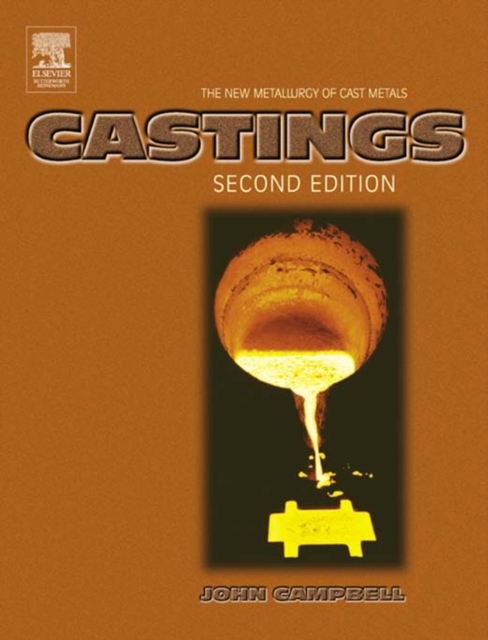
Campbell's Complete Casting Handbook: Metal Casting Processes, Techniques and Design, Second Edition provides an update to the first single-volume guide to cover modern principles and processes in such breadth and depth, while also retaining a clear, practical focus.
Stress Corrosion Cracking of Nickel Based Alloys in Water-Cooled Nuclear Reactors: The Coriou Effect presents the latest information on brittle failure of metals in corrosive chemical environments under the influence of tensile stresses.
Although the present edition of Fundamentals of Creep in Metals and Alloys remains broadly up to date for metals, there are a range of improvements and updates that are either desirable, or required, in order to ensure that the book continues to meet the needs of researchers and scholars in the general area of creep plasticity.
Rapidly Quenched Metals 6, Volume 1 covers the proceedings of the Sixth International Conference on Rapidly Quenched Metals held at Le Centre Sheraton, Montreal, Canada from August 3 to 7, 1987.
These papers provide an interesting collection of contributions on fundamental magnetic behaviour, microstructural studies, processing methods and applications of rare earth, iron-rich, high performance permanent magnets.
Modern Physical Metallurgy describes, in a very readable form, the fundamental principles of physical metallurgy and the basic techniques for assessing microstructure.
The field of nanoscience has undergone tremendous growth in the past decade as the number of applications of nanoparticles and nanostructured materials have proliferated.
Process metallurgy provides academics with the fundamentals of the manufacturing of metallic materials, from raw materials into finished parts or products.
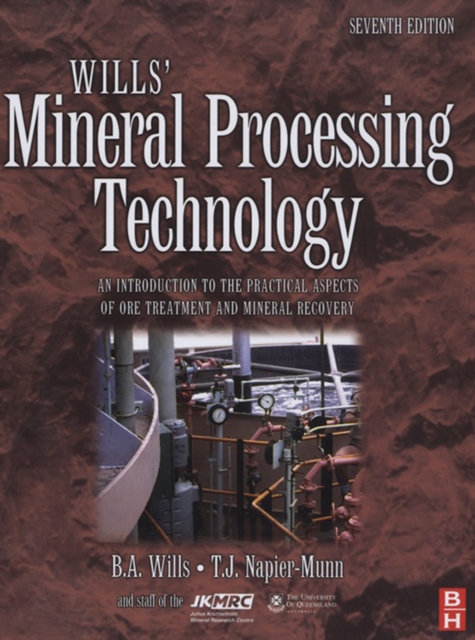
Wills' Mineral Processing Technology: An Introduction to the Practical Aspects of Ore Treatment and Mineral Recovery has been the definitive reference for the mineral processing industry for over thirty years.
Complete Casting Handbook is the result of a long-awaited update, consolidation and expansion of expert John Campbell's market-leading casting books into one essential resource for metallurgists and foundry professionals who design, specify or manufacture metal castings.
This book describes and explains the methods by which three related ores and recyclables are made into high purity metals and chemicals, for materials processing.
This book provides in a single and unified volume a clear and thorough presentation of the recent advances in continuum damage mechanics for metals and metal matrix composites.
Since the publication Comprehensive Organometallic Chemistry in 1982, studies on the chemistry of moleculeswith carbon-metal bonds have continued to expand rapidly.
This widely-acclaimed serial contains authoritative reviews that address all aspects of organometallic chemistry, a field which has expanded enormously since the publication of Volume 1 in 1964.
This widely acclaimed serial contains authoritative reviews that address all aspects of organometallic chemistry, a field which has expanded enormously since the publication of Volume 1 in 1964.
The book includes a synthesis of research findings on the structure and evolution of the Central Indian Ocean Basin and its ferromanganese deposits, in particular, on the exploration campaign since 1980s.
This book is concerned with providing a fundamental basis for understanding the alloy-gas oxidation and corrosion reactions observed in practice and in the laboratory.
Physical Metallurgy and Advanced Materials is the latest edition of the classic book previously published as Modern Physical Metallurgy and Materials Engineering.