Whilst the greatest effort has been made to ensure the quality of this text, due to the historical nature of this content, in some rare cases there may be minor issues with legibility.
This book surveys the broad field of mechanical alloying from a scientific and technological perspective to form a timely and comprehensive resource valuable to both students and researchers.
In the past twenty years, new experimental approaches, improved models and progress in simulation techniques brought new insights into long-standing issues concerning dislocation-based plasticity in crystalline materials.
This is the first book to provide a comprehensive treatment of theories and applications in the rapidly expanding field of the crystallography of modular materials.
This text presents a concise and thorough introduction to the main concepts and practical applications of thermodynamics and kinetics in materials science.
This first volume provides the basic matters needed for understanding the thermophysical properties of metallic liquids and for developing reliable models to accurately predict the thermophysical properties of almost all metallic elements in the liquid state, together with methods for quantitative assessment of models/equations.
The atomic arrangement and subsequent properties of a material are determined by the type and conditions of growth leading to epitaxy, making control of these conditions key to the fabrication of higher quality materials.
Solidification and Solid-State Transformations of Metals and Alloys describes solidification and the industrial problems presented when manufacturing structural parts by casting, or semi-products for forging, in order to obtain large, flat or specifically shaped parts.
Complete Casting Handbook is the result of a long-awaited update, consolidation and expansion of expert John Campbell's market-leading casting books into one essential resource for metallurgists and foundry professionals who design, specify or manufacture metal castings.
A Complete and Current Guide to Structural Steel DesignFully updated with the most recent design codes, standards, and specifications, Structural Steel Designer's Handbook, Fifth Edition, provides a convenient, single source of the latest information essential to the practical design of steel structures.
Magnetic, Ferroelectric, and Multiferroic Metal Oxides covers the fundamental and theoretical aspects of ferroics and magnetoelectrics, their properties, and important technological applications, serving as the most comprehensive, up-to-date reference on the subject.
Polymeric Materials in Corrosion Inhibition: Fundamentals and Applications brings together the very latest information and techniques in the preparation and application of a broad range of polymeric materials as corrosion inhibitors in diverse corrosive environments.
Because lithium is the least dense elemental metal, materials scientists and engineers have been working for decades to develop a commercially viable aluminum-lithium (Al-Li) alloy that would be even lighter and stiffer than other aluminum alloys.
The book includes a synthesis of research findings on the structure and evolution of the Central Indian Ocean Basin and its ferromanganese deposits, in particular, on the exploration campaign since 1980s.
Polymeric Materials in Corrosion Inhibition: Fundamentals and Applications brings together the very latest information and techniques in the preparation and application of a broad range of polymeric materials as corrosion inhibitors in diverse corrosive environments.
Corrosion Under Insulation (CUI) Guidelines: Technical Guide for Managing CUI, Third Edition, Volume 55 builds upon the success of the first two editions to provide a fully up-to-date, practical source of information on how to monitor and manage insulated systems.
Applied Welding Engineering: Processes, Codes and Standards, Third Edition, provides expert advice on how to comply with international codes and work them into "e;day-to-day"e; design, construction and inspection.
Nanoalloys, Second Edition, provides a self-contained reference on the physics and chemistry of nanoscale alloys, dealing with all important aspects that range from the theoretical concepts and the practical synthesis methods to the characterization tools.
Extractive Metallurgy of Copper, Sixth Edition, expands on previous editions, including sections on orogenesis and copper mineralogy and new processes for efficiently recovering copper from ever-declining Cu-grade mineral deposits.
Nano Plating (II): A Metallurgical Approach to Electrochemical Theory and Its Applications to Technology is the result of the author's 50 years of research.
Graphene Oxide-Metal Oxide and other Graphene Oxide-Based Composites in Photocatalysis and Electrocatalysis reflects on recent progress and challenges in graphene-metal oxide composites.
Heterocyclic Organic Corrosion Inhibitors: Principles and Applications aims to comprehend the synthesis and application of organic heterocyclic compounds as corrosion inhibitors in various corrosive environments.
Shape Memory Alloy Engineering: For Aerospace, Structural and Biomedical Applications, Second Edition embraces new advancements in materials, systems and applications introduced since the first edition.
Mechanical Alloying: Energy Storage, Protective Coatings, and Medical Applications, Third Edition is a detailed introduction to mechanical alloying that offers guidelines on the necessary equipment and facilities needed to carry out the process, also giving a fundamental background to the reactions taking place.
Metal Oxide Powder Technologies: Fundamentals, Processing Methods and Applications reviews the fundamentals, processing methods and applications of this key materials system.
Science, Technology and Applications of Metal Additive Manufacturing provides a holistic picture of metal Additive Manufacturing (AM) that encompasses the science, technology and applications for the use of metal AM.
Although the last two generations have seen an enormous amount of attention paid to advances in electronics, the fact remains that high-income, high-energy societies could thrive without microchips, etc.
Casting Aluminum Alloys, Second Edition, the follow up to the fall 2007 work on the structure, properties, thermal resistance, corrosion and fatigue of aluminum alloys in industrial manufacturing, discusses findings from the past decade, including sections on new casting alloys, novel casting technologies, and new methods of alloys design.
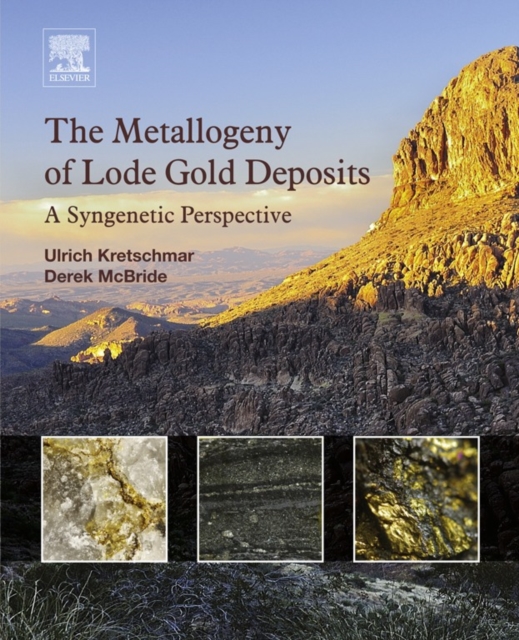
The Metallogeny of Lode Gold Deposits: A Syngenetic Perspective is a synthesis of lode gold vein forming processes, addressing the commonality in similar worldwide deposits.
Nanocrystalline Titanium discusses the features of nanocrystalline titanium production by various SPD methods, also comparing their microstructure and properties.
Metal Matrix Composites by Friction Stir Processing discusses the capabilities of utilizing friction stir processing (FSP) as a tool to manufacture new materials, such as composites.
Severe Plastic Deformation: Methods, Processing and Properties examines all severe plastic deformation techniques developed over the past two decades, exploring the appropriate severe plastic deformation method for a particular case.
The Laser Cutting Process: Analysis and Applications presents a comprehensive understanding of the laser cutting process and its practical applications.
Pincer Compounds: Chemistry and Applications offers valuable state-of-the-art coverage highlighting highly active areas of research-from mechanistic work to synthesis and characterization.
Solidification and Solid-State Transformations of Metals and Alloys describes solidification and the industrial problems presented when manufacturing structural parts by casting, or semi-products for forging, in order to obtain large, flat or specifically shaped parts.
Metal Semiconductor Core-Shell Nanostructures for Energy and Environmental Applications provides a concise, scholarly overview of current research into the characterization of metal semiconductor core-shell nanostructures; the book shows how their properties can be best used in energy and environmental applications, particularly for solar cell and catalysis application.
The conservation of metallic archaeological and historic artefacts is a major challenge whether they are ancient bronzes or relics of our more recent industrial past.