Applications of Polymers and Plastics in Medical Devices: Design, Manufacture, and Performance is a comprehensive guide to plastic materials for medical devices, covering fundamentals, materials, applications and regulatory requirements.
This title includes: Origins and development: The process, The first twenty years; Development after 1955; Principles: Equipment, Joint preparation and welding procedure; Welding conditions; Special techniques; Weld defects; Process variants: Single electrode welding; Multiple electrode welding; Metal powder additions; Narrow gap submerged-arc welding; Consumables: Types of flux and their development; Wires; Flux/wire combination; Consumables for different steel types; Flux delivery system; Welding procedures: Welding costs; Establishing a procedure; Procedural options; Application and uses of optimisation; Heat input.
This compendium, compiled by two senior engineers from TWI, draws together information from more than 150 individual specifications, covering national, international and industrial toughness requirements for ferritic materials.
Fatigue of Textile Composites provides a current, state-of-art review on recent investigations on the fatigue behavior of composite materials, mainly those reinforced with textiles.
The atomic arrangement and subsequent properties of a material are determined by the type and conditions of growth leading to epitaxy, making control of these conditions key to the fabrication of higher quality materials.
Recent concerns over the possible effects of metal-on-metal orthopaedic implants and the evolution of more natural structures made from fibre have made medical device manufacturers consider the potential of fibre.
In the Dictionary of textile finishing the textile engineer will find the correct technical terms for 16,000 keywords within their field of activity in the German language and vice versa.
This text provides a general background as a course module in the area of inorganic reaction mechanisms, suitable for advanced undergraduate and postgraduate study and/or research.
Surface modification of magnesium and its alloys for biomedical applications: Biological interactions, mechanical properties and testing, the first of two volumes, is an essential guide on the use of magnesium as a degradable implant material.
The textile industry impacts the environment in a number of ways, including its use of resources, its impact on global warming, and the amount of pollution and waste it generates.
Natural fiber-reinforced composites have the potential to replace synthetic composites, leading to less expensive, stronger and more environmentally-friendly materials.
The conservation of metallic archaeological and historic artefacts is a major challenge whether they are ancient bronzes or relics of our more recent industrial past.
Silk is a natural, environmentally-friendly fibre with a remarkable range of properties, making it ideal for use in apparel and many other applications.
Iron Ore: Mineralogy, Processing and Environmental Issues summarizes recent, key research on the characterization of iron ores, including important topics such as beneficiation (separation and refining), agglomeration (e.
Textiles for Sportswear is an important book that systematically covers key trends in design and materials, the use of novel and smart fabrics, and a range of specific applications.
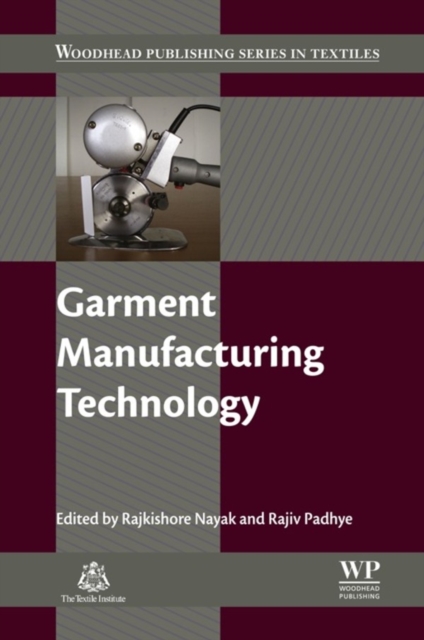
Garment Manufacturing Technology provides an insiders' look at this multifaceted process, systematically going from design and production to finishing and quality control.
Fabric Structures in Architecture covers the varying ways textiles and their properties are used in building construction, with particular focus given to tensile structures.
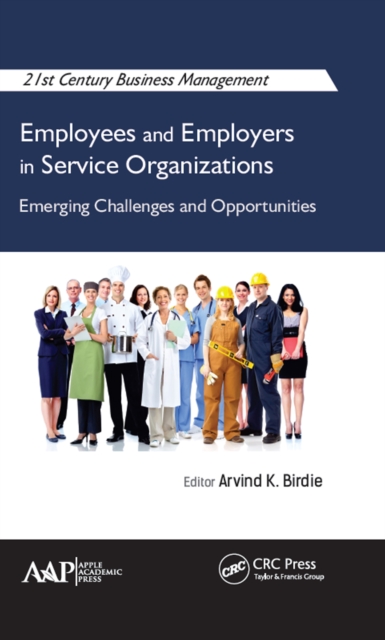
With the increasing globalization and fast-paced technological advances in business today, service organizations must to respond to the changing business dynamic between employers and employees.
Machining Principles for Shape Generation of Metals explains the basics of machining techniques and metal cutting, as well as the Laplace transform and how it can be applied to understand complex machining processes.
This book offers comprehensive insight into recent advances in geopolymer composites and emerging processing technologies such as 3D printing that offer promising application prospects in a wide range of industries.
For model engineers and small workshops that don't have access to sophisticated and expensive measuring equipment, this guide will show them how to sufficiently measure and mark themselves!
Create useful and essential items that can't be purchased commercially, from an auxiliary workbench and tap holders to distance and height gauges, a lathe backstop, faceplate clamps, and so much more.
From the leading magazine for metalworkers since 1898, Model Engineer, comes this curated collection of practical advice and useful tips anyone in the industry needs to know!
The perfect resource for beginners, Metalwork and Machining Hints and Tips for Home Machinists is an informative anthology that combines useful advice and instruction with explanations of tools and techniques.
This student lab manual reinforces the chapter content and lecture material from Apparel Quality, but may also be used as a standalone product in conjunction with another apparel quality textbook.
This book focuses on a practical application of how to coach senior leaders and executives to be personal lean leadership champions and how leaders coach their teams to do the same.
In this book, the results of the chemical modification of cellulose fibres were presented, aimed at protecting the textile material against biodegradation.
The book discusses the latest trends such as 4D printing, wire arc additive manufacturing (WAAM), direct energy deposition, and topological optimization in additive manufacturing (AM), and its compliance with the ASTM/ISO standards.
A truly unusual and unique resource, this extremely hands-on book brings together three popular but long-out-of-print classics (THE MODERN BLACKSMITH; THE RECYCLING, USE, AND REPAIR OF TOOLS; and THE MAKING OF TOOLS) essential for anyone interested in the making, repair, maintenance, or arcana of tools.
The text provides the reader with an in-depth understanding of the need for next-generation materials and manufacturing, especially in terms of their designing process, manufacturing, upscaling, and finally their selection for industrial applications.