This book presents the latest development of fibre/ceramic-polymer composites for biocompatible applications, with a special emphasis on the effect of different types of fibre and ceramic fillers on the characteristics of the composites.
With a wealth of illustrations, examples, discussion questions, and case studies, the Food Packaging Science and Technology covers basic principles and technologies as well as advanced topics such as active, intelligent, and sustainable packaging with unparalleled depth and breadth of scope.
Engineering Design with Polymers and Composites, Second Edition continues to provide one of the only textbooks on the analysis and design of mechanical components made from polymer materials.
Composite Materials and Processing provides the science and technology of processing several composites using different processing methods, and includes collective information on the processing of common and advanced composite materials.
This book presents the analysis and design of fiber-reinforced polymer (FRP) bridge decks, which have been increasingly implemented in rehabilitation projects and new construction due to their reduced weight, lower maintenance costs, and enhanced durability.
Most current applications of biomaterials involve structural functions, even in those organs and systems that are not primarily structural in their nature, or very simple chemical or electrical functions.
Engineering Design with Polymers and Composites, Second Edition continues to provide one of the only textbooks on the analysis and design of mechanical components made from polymer materials.
Polymer Brushes: Substrates, Technologies, and Properties covers various aspects of polymer brush technology, including synthesis, properties, performance, and applications.
With their broad range of properties, polymer blends are widely used in adhesion, colloidal stability, the design of composite and biocompatible materials, and other areas.
Over the past four decades, notable advancements in the theory and application of ion exchange science uncovered a wealth of knowledge that fueled new scientific pursuits and created synergies with myriad scientific endeavors.
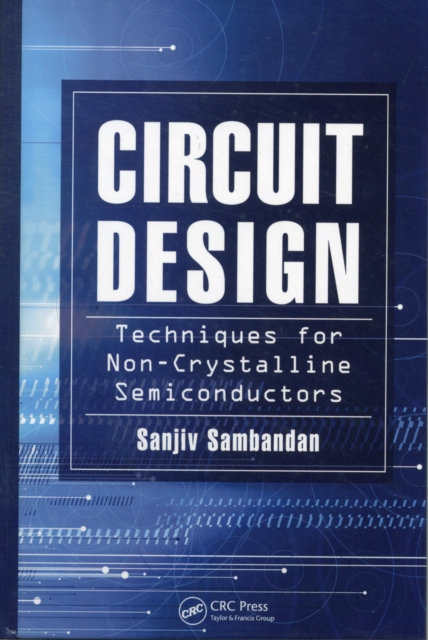
Written for students and professionals within the fields of Materials Science and Engineering, Electronics Engineering, and Applied Physics, this reference provides a systematic means to synthesize circuits with disordered semiconductor field effect transistors (DS-FETs) and explanation of the issues involved.
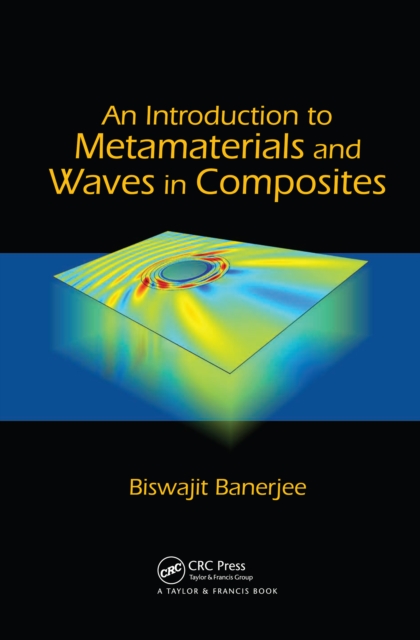
Requiring no advanced knowledge of wave propagation, An Introduction to Metamaterials and Waves in Composites focuses on theoretical aspects of metamaterials, periodic composites, and layered composites.
Optimization of aviation and space vehicle design requires accurate assessment of the dynamic stability and general properties of hybrid materials used in aviation parts.
Discovered in the twentieth century, carbon nanotubes (CNT) were an integral part of science and industry by the beginning of the twenty first century, revolutionizing chemistry, physics, and materials science.
Known as the bible of biomedical engineering, The Biomedical Engineering Handbook, Fourth Edition, sets the standard against which all other references of this nature are measured.
Among the many atomic/molecular assembling techniques used to develop artificial materials, molecular layer deposition (MLD) continues to receive special attention as the next-generation growth technique for organic thin-film materials used in photonics and electronics.
In the years since the development and subsequent success of Stone Matrix Asphalt (SMA), a plethora of articles have emerged, scattered throughout various publications.
The self-contained properties of discotic liquid crystals (DLCs) render them powerful functional materials for many semiconducting device applications and models for energy and charge migration in self-organized dynamic functional soft materials.
Expanded PTFE Applications Handbook: Technology, Manufacturing and Applications is a comprehensive guide to ePTFE, explaining manufacturing technologies, properties, and applications.
Authored by leading experts from around the world, the three-volume Handbook of Nanostructured Thin Films and Coatings gives scientific researchers and product engineers a resource as dynamic and flexible as the field itself.
Artificial neural networks (ANN) can provide new insight into the study of composite materials and can normally be combined with other artificial intelligence tools such as expert system, genetic algorithm, and fuzzy logic.
Integrating fundamental research with the technical applications of this rapidly evolving field, Structure and Functional Properties of Colloidal Systems clearly presents the connections between structure and functional aspects in colloid and interface science.
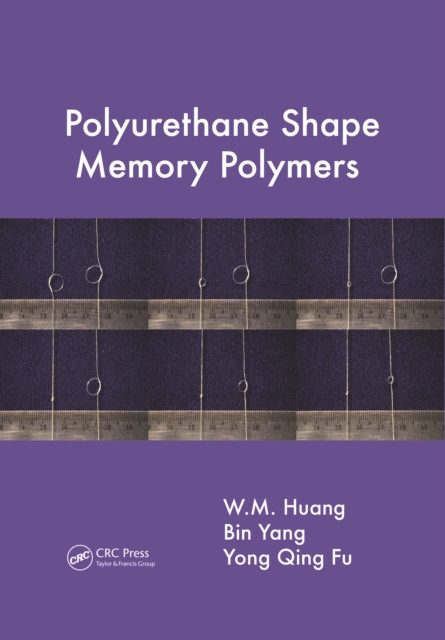
Admired for their extraordinary stimuli-sensitive behavior and shape-changing capabilities, shape-memory polymers (SMPs) and multifunctional composites are among the most important smart materials.
Derived from the fourth edition of the well-known Plastics Technology Handbook, Plastics Fabrication and Recycling presents the molding and fabrication processes of plastics as well as several important fe
,Derived from the fourth edition of the well-known Plastics Technology Handbook, Industrial Polymers, Specialty Polymers, and Their Applications covers a wide range of general and special types of polymers
In a carefully crafted, multidisciplinary, skillfully focused format, Polymers for Vascular and Urogenital Applications covers attributes of polymers used for vascular, urological, and gynecological materials.
With electromagnetic compliance (EMC) now a major factor in the design of all electronic products, it is crucial to understand how electromagnetic interference (EMI) shielding products are used in various industries.
Discussing the definition of pressure sensitivity and characterization of pressure-sensitive behavior, Volume 1 of the Handbook of Pressure-Sensitive Adhesives and Products presents the underlying theory beh
By consolidating into one volume the fundamentals currently covered piecemeal across several reference, this book simplifies the learning of polymer science.
Written by pioneering experts in the field, this book offers a wide range of approaches for molecular imprinting, experimental protocols that exemplify specific techniques, and a detailed survey on molecular imprinting research and applications.
Organic light-emitting diode(OLED) technology has achieved significant penetration in the commercial market for small, low-voltage and inexpensive displays.
Although the use of composites has increased in many industrial, commercial, medical, and defense applications, there is a lack of technical literature that examines composites in conjunction with concrete construction.
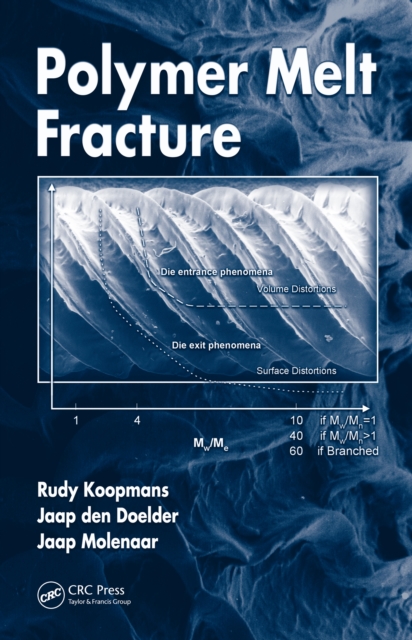
The continually growing plastics market consists of more than 250 million tons of product annually, making the recurring problem of polymer melt fracture an acute issue in the extrusion of these materials.