Specifically focusing on fluid film, hydrodynamic, and elastohydrodynamic lubrication, this edition studies the most important principles of fluid film lubrication for the correct design of bearings, gears, and rolling operations, and for the prevention of friction and wear in engineering designs.
This classic book in the Kemp and Young series has been fully revised and updated by David J Eyres, author of the well-known Butterworth-Heinemann title "e;Ship Construction,"e; and will prove indispensable to the student reader.
This classic book in the Kemp and Young series has been fully revised and updated by David J Eyres, author of the well-known Butterworth-Heinemann title "e;Ship Construction,"e; and will prove indispensable to the student reader.
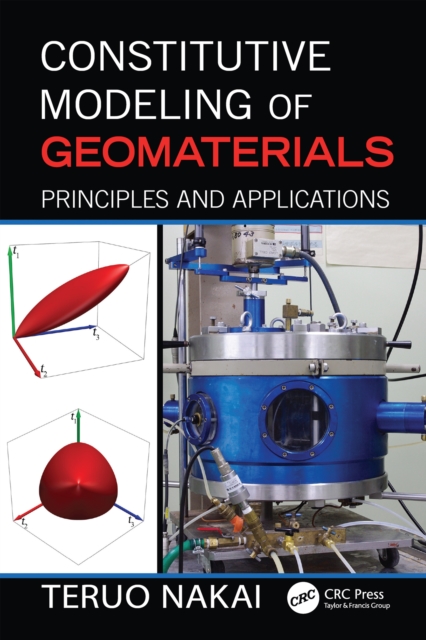
Winner of the Japanese Geotechnical Society 2016 publication awardWritten by a veteran geotechnical engineer with a long record of research discoveries, Constitutive Modeling of Geomaterials: Principles and Applications presents a simple and unified approach to modeling various features of geomaterials in general stress systems.
Input-to-State Stability presents the dominating stability paradigm in nonlinear control theory that revolutionized our view on stabilization of nonlinear systems, design of robust nonlinear observers, and stability of nonlinear interconnected control systems.
Fracture and flow of rocks under stress and their geophysical and seismological implications raise fundamental questions in rock mechanics, particularly in the areas of tectonophysics and seismology.
Fracture and flow of rocks under stress and their geophysical and seismological implications raise fundamental questions in rock mechanics, particularly in the areas of tectonophysics and seismology.
Working and living onboard vessels imposes a series of generally low-frequency mechanical vibrations as well as single-impulse shock loads on the human body.
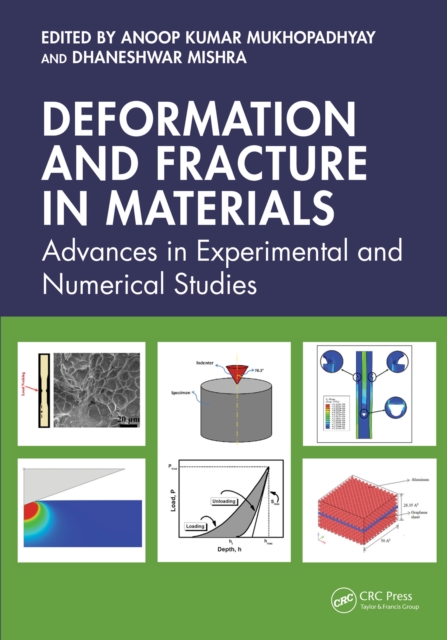
This book provides information on the basics of deformation and fracture in materials and on current, state-of-the-art experimental and numerical/theoretical methods, including data-driven approaches in the deformation and fracture study of materials.
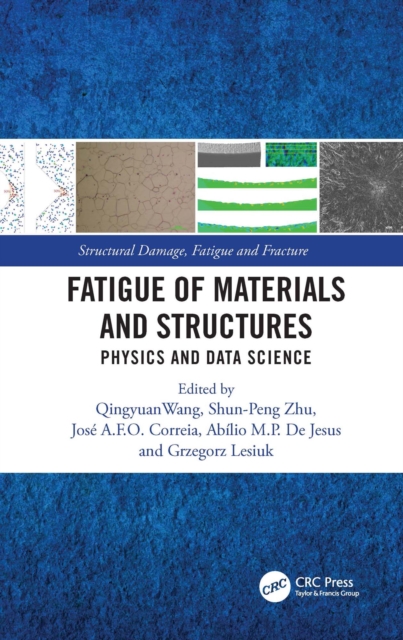
Fatigue failure of engineering materials and structures has long been a great challenge for structural integrity, reliability and safety in mechanical, civil and aerospace engineering.
Mechanics and Physics of Porous Solids addresses the mechanics and physics of deformable porous materials whose porous space is filled by one or several fluid mixtures interacting with the solid matrix.
The subject of computational plasticity encapsulates the numerical methods used for the finite element simulation of the behaviour of a wide range of engineering materials considered to be plastic i.
Chronicling the 11th US France 'Mechanics and physics of solids at macro- and nano-scales' symposium, organized by ICACM (International Center for Applied Computational Mechanics) in Paris, June 2018, this book addresses the breadth of issues raised.
Chronicling the 11th US France 'Mechanics and physics of solids at macro- and nano-scales' symposium, organized by ICACM (International Center for Applied Computational Mechanics) in Paris, June 2018, this book addresses the breadth of issues raised.
From the characterization of materials to accelerated life testing, experimentation with solids and structures is present in all stages of the design of mechanical devices.
From the characterization of materials to accelerated life testing, experimentation with solids and structures is present in all stages of the design of mechanical devices.
This book covers the impact of sustainable masonry on the environment, touting the many benefits of utilizing local and/or low embodied energy materials in the construction of sustainable buildings.
This book covers the impact of sustainable masonry on the environment, touting the many benefits of utilizing local and/or low embodied energy materials in the construction of sustainable buildings.
Introduction to Computational Contact Mechanics: A Geometrical Approach covers the fundamentals of computational contact mechanics and focuses on its practical implementation.
Introduction to Computational Contact Mechanics: A Geometrical Approach covers the fundamentals of computational contact mechanics and focuses on its practical implementation.
Computational contact mechanics is a broad topic which brings together algorithmic, geometrical, optimization and numerical aspects for a robust, fast and accurate treatment of contact problems.
Computational contact mechanics is a broad topic which brings together algorithmic, geometrical, optimization and numerical aspects for a robust, fast and accurate treatment of contact problems.
This timely book presents cutting-edge developments by experts in the field on the rapidly developing and scientifically challenging area of full-field measurement techniques used in solid mechanics including photoelasticity, grid methods, deflectometry, holography, speckle interferometry and digital image correlation.
This timely book presents cutting-edge developments by experts in the field on the rapidly developing and scientifically challenging area of full-field measurement techniques used in solid mechanics including photoelasticity, grid methods, deflectometry, holography, speckle interferometry and digital image correlation.
This book provides a systematic approach to realizing NiTi shape memory alloy actuation, and is aimed at science and engineering students who would like to develop a better understanding of the behaviors of SMAs, and learn to design, simulate, control, and fabricate these actuators in a systematic approach.
This book provides a systematic approach to realizing NiTi shape memory alloy actuation, and is aimed at science and engineering students who would like to develop a better understanding of the behaviors of SMAs, and learn to design, simulate, control, and fabricate these actuators in a systematic approach.
Your ticket to excelling in mechanics of materials With roots in physics and mathematics, engineering mechanics is the basis of all the mechanical sciences: civil engineering, materials science and engineering, mechanical engineering, and aeronautical and aerospace engineering.
Your ticket to excelling in mechanics of materials With roots in physics and mathematics, engineering mechanics is the basis of all the mechanical sciences: civil engineering, materials science and engineering, mechanical engineering, and aeronautical and aerospace engineering.