The effect of combined extreme transient loadings on a structure is not well understood-whether the source is man-made, such as an explosion and fire, or natural, such as an earthquake or extreme wind loading.
The effect of combined extreme transient loadings on a structure is not well understood-whether the source is man-made, such as an explosion and fire, or natural, such as an earthquake or extreme wind loading.
Advanced Mechanical Vibrations: Physics, Mathematics and Applications provides a concise and solid exposition of the fundamental concepts and ideas that pervade many specialised disciplines where linear engineering vibrations are involved.
Advanced Mechanical Vibrations: Physics, Mathematics and Applications provides a concise and solid exposition of the fundamental concepts and ideas that pervade many specialised disciplines where linear engineering vibrations are involved.
A comprehensive textbook that encompasses the full range of material covered in undergraduate courses in Structures in departments of Civil and Mechanical Engineering.
The second edition of this highly informative book retains much original material covering the principles of structural mechanics and the strength of materials, together with the underlying concepts requisite to the theory of structure and structural design.
The second edition of this highly informative book retains much original material covering the principles of structural mechanics and the strength of materials, together with the underlying concepts requisite to the theory of structure and structural design.
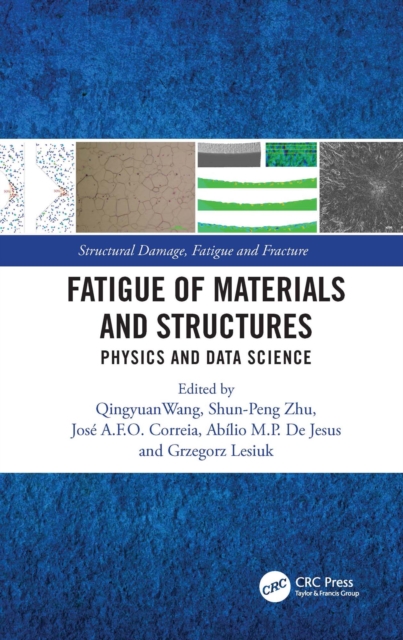
Fatigue failure of engineering materials and structures has long been a great challenge for structural integrity, reliability and safety in mechanical, civil and aerospace engineering.
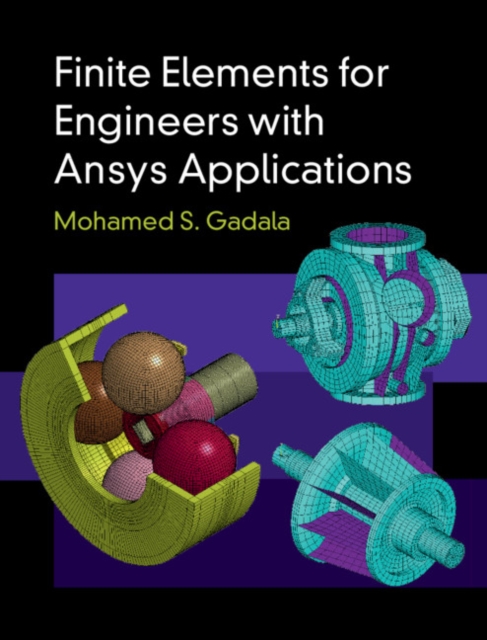
Covering theory and practical industry usage of the finite element method, this highly-illustrated step-by-step approach thoroughly introduces methods using ANSYS.
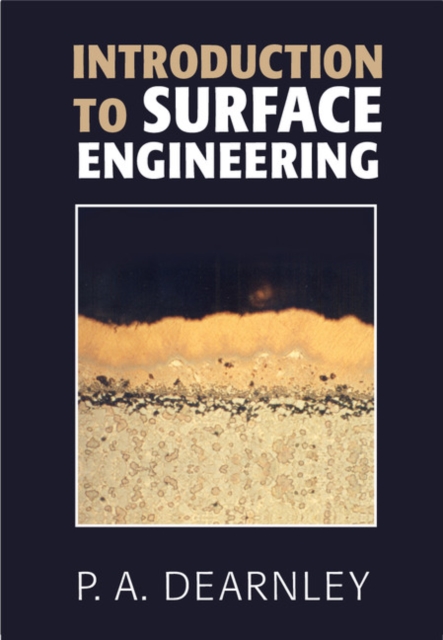
This illustrated reference work provides a comprehensive overview of the surface engineering discipline, focusing on automotive, machining, and biomedical fields.
This illustrated reference work provides a comprehensive overview of the surface engineering discipline, focusing on automotive, machining, and biomedical fields.
Discusses polymer nanocomposites composed of a family of polymeric materials whose properties are capable of being tailored to meet specific applications.
Discusses polymer nanocomposites composed of a family of polymeric materials whose properties are capable of being tailored to meet specific applications.
Due to their unique properties, rubber materials are found in multiple engineering applications such as tires, engine mounts, shock absorbers, flexible joints, seals, etc.
Introductory Guide on the Design of Aerospace StructuresDeveloped from a course taught at Concordia University for more than 20 years, Principles of Aeroelasticity utilizes the author's extensive teaching experience to immerse undergraduate and first-year graduate students into this very specialized subject.
Building on the author's Structural Mechanics Fundamentals, this text presents a complete and uniform treatment of the more advanced topics in structural mechanics, ranging from beam frames to shell structures, from dynamics to buckling analysis, from plasticity to fracture mechanics, from long-span to high-rise civil structures.
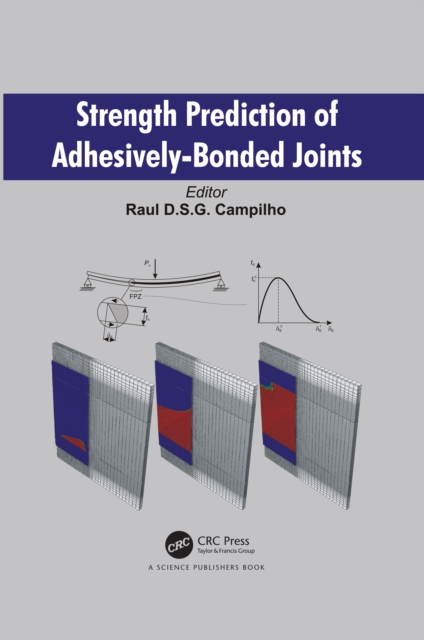
Adhesively-bonded joints provide many advantages over conventional mechanical fasteners and are increasingly receiving attention as an alternative to mechanical joints in engineering applications.
This book provides practicing engineers working in the field of design, construction and monitoring of rock structures such as tunnels and slopes with technical information on how to design, how to excavate and how to monitor the structures during their construction.
Elastic Waves: High Frequency Theory is concerned with mathematical aspects of the theory of high-frequency elastic waves, which is based on the ray method.
Elastic Waves: High Frequency Theory is concerned with mathematical aspects of the theory of high-frequency elastic waves, which is based on the ray method.
Designed for continuum mechanics courses and features both the theoretical framework and numerical methods required to model continuous material behaviour.
Designed for continuum mechanics courses and features both the theoretical framework and numerical methods required to model continuous material behaviour.
Fatigue Prediction for Random Loads serves as a comprehensive treatise for methods for fatigue estimation and fatigue life prediction in randomly excited structural systems using the rainflow cycle counting method.
Current computer graphics hardware and software make it possible to synthesize near photo-realistic images, but the simulation of natural-looking motion of articulated figures remains a difficultand challenging task.
Current computer graphics hardware and software make it possible to synthesize near photo-realistic images, but the simulation of natural-looking motion of articulated figures remains a difficultand challenging task.
This book gives a sufficient grounding in mechanics for engineers to tackle a significant range of problems encountered in the design and specification of simple structures and machines.
This book gives a sufficient grounding in mechanics for engineers to tackle a significant range of problems encountered in the design and specification of simple structures and machines.
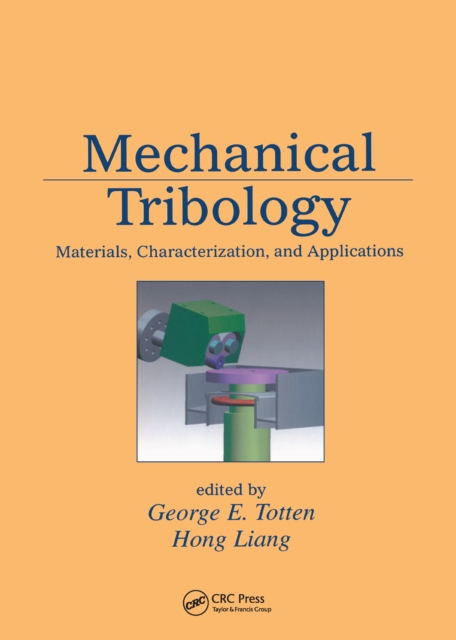
Studying the morphology, defects, and wear behavior of a variety of material surfaces, Mechanical Tribology examines popular and emerging surface characterization techniques for assessment of the physical, mechanical, and chemical properties of various modified surfaces, thin films, and coatings.
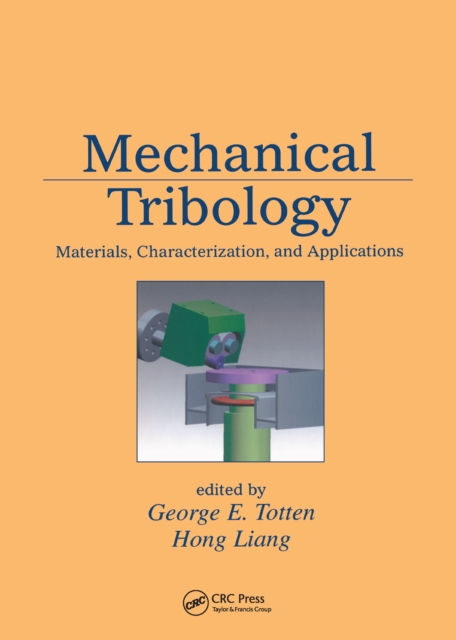
Studying the morphology, defects, and wear behavior of a variety of material surfaces, Mechanical Tribology examines popular and emerging surface characterization techniques for assessment of the physical, mechanical, and chemical properties of various modified surfaces, thin films, and coatings.
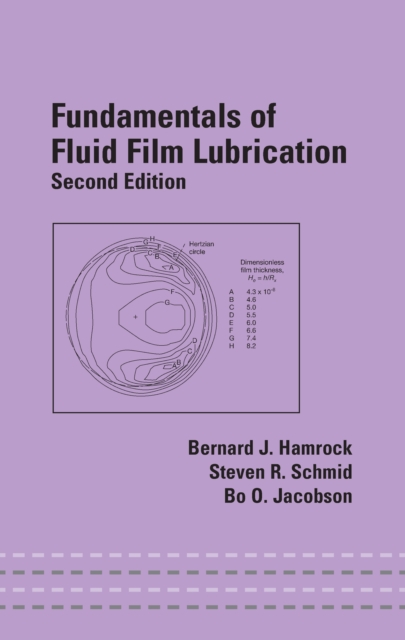
Specifically focusing on fluid film, hydrodynamic, and elastohydrodynamic lubrication, this edition studies the most important principles of fluid film lubrication for the correct design of bearings, gears, and rolling operations, and for the prevention of friction and wear in engineering designs.
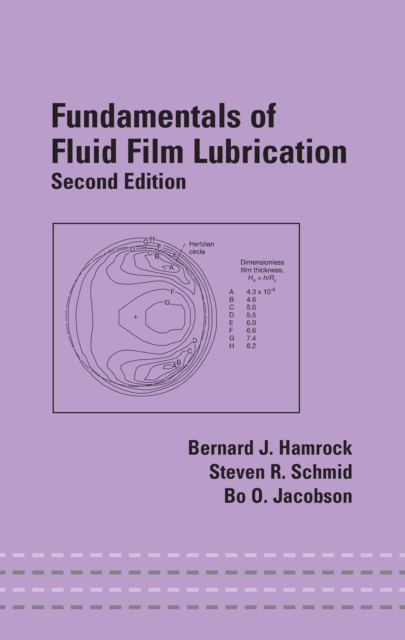
Specifically focusing on fluid film, hydrodynamic, and elastohydrodynamic lubrication, this edition studies the most important principles of fluid film lubrication for the correct design of bearings, gears, and rolling operations, and for the prevention of friction and wear in engineering designs.