The book includes the best articles presented by researchers, academicians and industrial experts at the International Conference on "e;Innovative Design and Development Practices in Aerospace and Automotive Engineering (I-DAD 2018)"e;.
This book is intended as a text for undergraduate and graduate courses in aerodynamics, typically offered to students of aerospace and mechanical engineering programs.
This book addresses anti-fatigue manufacturing, analysis and test verification technologies for typical aircraft structures, including fastening holes, shot peening plates, different types of joints and wing boxes.
This book presents technologies and solutions related to the test and launch control of rockets and other vehicles, and offers the first comprehensive and systematic introduction to the contributions of the Chinese Long March (Chang Zheng in Chinese, or abbreviated as CZ) rockets in this field.
This book introduces readers to the navigation, guidance and control technologies involved in single-spacecraft, double-spacecraft, and multiple-spacecraft tasks in elliptical orbits.
This book uses the entire flying process, starting from ground launching of the orbital transfer vehicle (OTV) to injecting payload into earth synchronous orbit, as an example for real-world engineering practices.
This book is a monograph on aerodynamics of aero-engine gas turbines focusing on the new progresses on flow mechanism and design methods in the recent 20 years.
This book introduces readers to adaptive interference mitigation techniques based on multiple antennas for global navigation satellite systems (GNSS) in the time, domain, spatial and spatial-temporal domains.
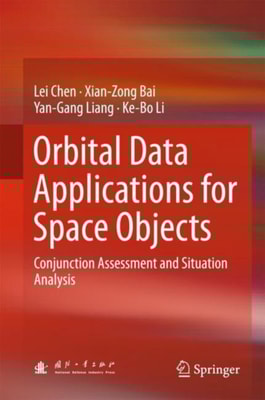
This book introduces readers to the application of orbital data on space objects in the contexts of conjunction assessment and space situation analysis, including theories and methodologies.
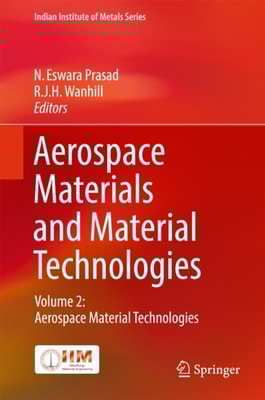
This book serves as a comprehensive resource on various traditional, advanced and futuristic material technologies for aerospace applications encompassing nearly 20 major areas.
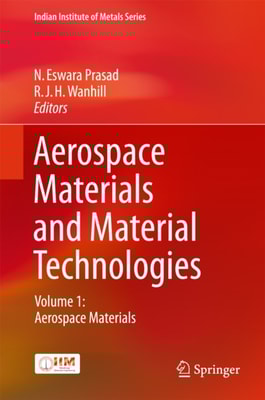
This book is a comprehensive compilation of chapters on materials (both established and evolving) and material technologies that are important for aerospace systems.
The book presents the best articles presented by researchers, academicians and industrial experts in the International Conference on "e;Innovative Design and Development Practices in Aerospace and Automotive Engineering (I-DAD 2016)"e;.
The Future of Electric Aviation and Artificial Intelligence presents a unique collection of proceedings papers from two multi-disciplinary symposiums on sustainable aviation and unmanned systems, offering a comprehensive view of the latest research and insights.
This book provides a concise discussion of fatigue crack growth (FCG) failure and lifing analysis methods for metallic aircraft structures and components.
Written to teach students the nature of transonic flow and its mathematical foundation, this book offers a much-needed introduction to transonic aerodynamics.
This book introduces the topics most relevant to autonomously flying flapping wing robots: flapping-wing design, aerodynamics, and artificial intelligence.
In May 1995 a meeting took place at the Manchester Metropolitan Uni- versity, UK, with the title International Workshop on Numerical Methods for Wave Propagation Phenomena.
Honeycomb Technology is a guide to honeycomb cores and honeycomb sandwich panels, from the manufacturing methods by which they are produced, to the different types of design, applications for usage and methods of testing the materials.
This book focuses on the nonlinear behaviour of thin-wall shells (single- and multilayered with delamination areas) under various uniform and non-uniform loadings.
The range of solar sailing is very vast; it is a fully in-space means of propulsion that should allow us to accomplish various mission classes that are literally impossible using rocket propulsion, no matter if nuclear or electric.
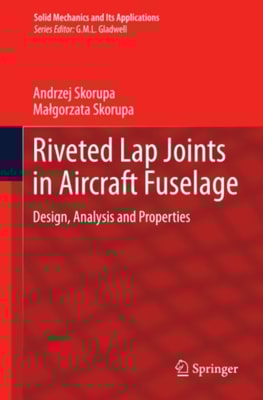
Fatigue of the pressurized fuselages of transport aircraft is a significant problem all builders and users of aircraft have to cope with for reasons associated with assuring a sufficient lifetime and safety, and formulating adequate inspection procedures.
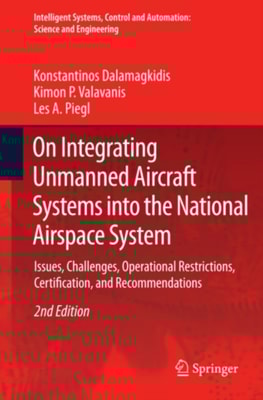
This book presents, in a comprehensive way, current unmanned aviation regulation, airworthiness certification, special aircraft categories, pilot certification, federal aviation requirements, operation rules, airspace classes and regulation development models.
Proceedings of the 26th Symposium of the International Committee on Aeronautical Fatigue are a widely referenced summary of advances in aeronautical design against fatigue.
Introduction to Avionic Systems, Third Edition explains the basic principles and underlying theory of the core avionic systems in modern civil and military aircraft, comprising the pilot's head-up and head-down displays, data entry and control systems, fly by wire flight control systems, inertial sensor and air data systems, navigation systems, autopilots and flight management systems.
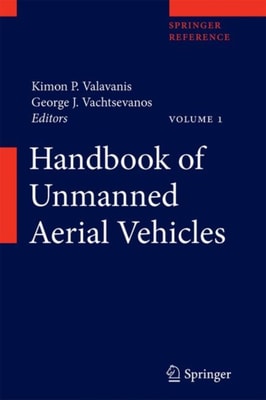
The Handbook of Unmanned Aerial Vehicles is a reference text for the academic and research communities, industry, manufacturers, users, practitioners, Federal Government, Federal and State Agencies, the private sector, as well as all organizations that are and will be using unmanned aircraft in a wide spectrum of applications.
Random Vibration in Spacecraft Structures Design is based on the lecture notes "e;Spacecraft structures"e; and "e;Special topics concerning vibration in spacecraft structures"e; from courses given at Delft University of Technology.
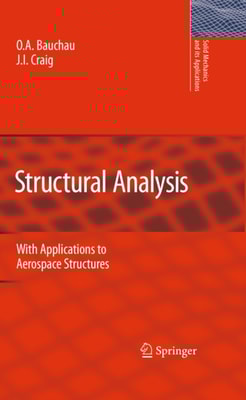
The authors and their colleagues developed this text over many years, teaching undergraduate and graduate courses in structural analysis courses at the Daniel Guggenheim School of Aerospace Engineering of the Georgia Institute of Technology.
This book uses the entire flying process, starting from ground launching of the orbital transfer vehicle (OTV) to injecting payload into earth synchronous orbit, as an example for real-world engineering practices.
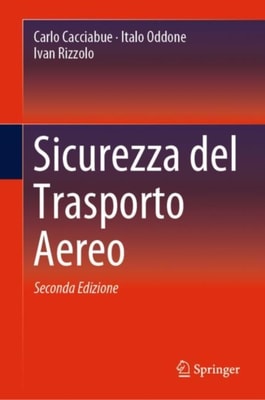
Il testo si propone di far acquisire al lettore le conoscenze delle metodologie e teorie di base per effettuare delle analisi di sicurezza e valutazione del rischio in diversi ambienti aeronautici, in un quadro di "Safety Management System".
The objective of this Workshop is to confront models, methods and tools developed within the projects with the ongoing research worldwide and to provide an environment for fruitful exchange of ideas.
La realizzazione e il lancio nello spazio di satelliti o sonde attraverso missili o navette spaziali sono un esempio di attività industriale di enorme complessità e di lungo periodo.