Before 1930, the domestic market for electrical appliances was segmented, but New Deal policies and programs created a true mass market, reshaping the electrical and housing markets and guiding them toward mandated social goals.
'An utterly dazzling book, the best piece of history I have read for a long time' Jerry Brotton, author of A History of the World in Twelve Maps'Not merely an horologist's delight, but an ingenious meditation on the nature and symbolism of time-keeping itself' Richard HolmesThe measurement of time has always been essential to human civilization, from early Roman sundials to the advent of GPS.
Discover the history behind the amazing machines that power our world, and the inventors that created them, in this mini children's encyclopedia to the story of inventions.
This compelling story of exploration charts and celebrates humankind in space, from Sputnik's launch in 1957 through the Apollo Moon landings and the International Space Station to future missions to Mars and beyond.
*Longlisted for the William MB Berger Prize for British Art History, 2022*A spectacular biography of the great designer, entrepreneur, abolitionist and beacon of the Industrial Revolution, from acclaimed historian and Director of the Victoria and Albert Museum, Tristram HuntJosiah Wedgwood, perhaps the greatest English potter who ever lived, epitomized the best of his age.
'Celebrates human cognitive diversity, and is rich with empathy and psychological insight' Steven Pinker 'Bold, intriguing, profound' Jay Elwes, Spectator Why can humans alone invent?
Angela Ki Che Leung's meticulous study begins with the classical annals of the imperial era, which contain the first descriptions of a feared and stigmatized disorder modern researchers now identify as leprosy.
On October 19, 1876 a group of leading French citizens, both men and women included, joined together to form an unusual group, The Society of Mutual Autopsy, with the aim of proving that souls do not exist.
One theme of this volume is whether the complementarity between technology and human capital is a recent phenomenon, or whether it can be traced through history.
This book charts the history of the worldwide introduction of an operative treatment method for broken bones, osteosynthesis, by a Swiss-based association, called AO.
The Republic of Color delves deep into the history of color science in the United States to unearth its origins and examine the scope of its influence on the industrial transformation of turn-of-the-century America.
Between the catastrophic flood of the Tiber River in 1557 and the death of the "e;engineering pope"e; Sixtus V in 1590, the city of Rome was transformed by intense activity involving building construction and engineering projects of all kinds.
Traditional narratives of capitalist change often rely on the myth of the willful entrepreneur from the global North who transforms the economy and delivers modernity-for good or ill-to the rest of the world.
Orson Welles's greatest breakthrough into the popular consciousness occurred in 1938, three years before Citizen Kane, when his War of the Worlds radio broadcast succeeded so spectacularly that terrified listeners believed they were hearing a genuine report of an alien invasion-a landmark in the history of radio's powerful relationship with its audience.
Galileo never set foot on the Iberian Peninsula, yet, as Enrique Garcia Santo-Tomas unfolds in The Refracted Muse, the news of his work with telescopes brought him to surprising prominence-not just among Spaniards working in the developing science of optometry but among creative writers as well.
In 1968 a team of scientists and engineers from RCA announced the creation of a new form of electronic display that relied upon an obscure set of materials known as liquid crystals.
After the atomic bombing at the end of World War II, anxieties about survival in the nuclear age led scientists to begin stockpiling and freezing hundreds of thousands of blood samples from indigenous communities around the world.
From Blaise Pascal in the 1600s to Charles Babbage in the first half of the nineteenth century, inventors struggled to create the first calculating machines.
Painting with Fire shows how experiments with chemicals known to change visibly over the course of time transformed British pictorial arts of the long eighteenth century-and how they can alter our conceptions of photography today.
Like many of the traditional medicines of South Asia, Ayurvedic practice transformed dramatically in the later nineteenth and early twentieth centuries.
The years between roughly 1760 and 1810, a period stretching from the rise of Joseph Haydn's career to the height of Ludwig van Beethoven's, are often viewed as a golden age for musical culture, when audiences started to revel in the sounds of the concert hall.
Water may seem innocuous, but as a universal necessity, it inevitably intersects with politics when it comes to acquisition, control, and associated technologies.
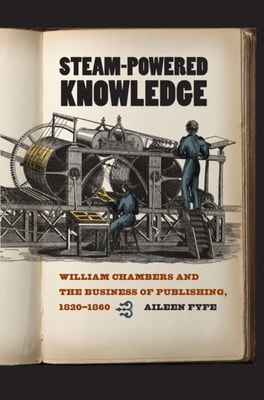
With the overwhelming amount of new information that bombards us each day, it is perhaps difficult to imagine a time when the widespread availability of the printed word was a novelty.
Before the hydrogen bomb indelibly associated radioactivity with death, many chemists, physicians, botanists, and geneticists believed that radium might hold the secret to life.
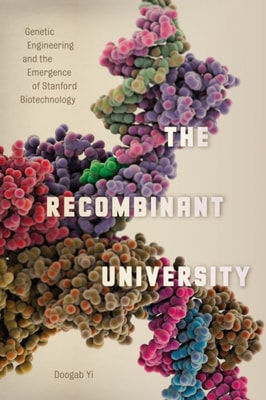
The advent of recombinant DNA technology in the 1970s was a key moment in the history of both biotechnology and the commercialization of academic research.
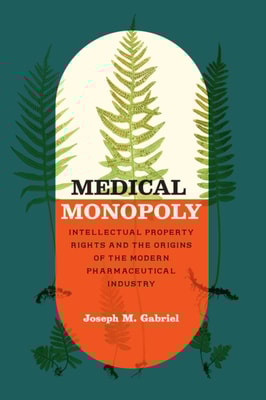
During most of the nineteenth century, physicians and pharmacists alike considered medical patenting and the use of trademarks by drug manufacturers unethical forms of monopoly; physicians who prescribed patented drugs could be, and were, ostracized from the medical community.