A thought-provoking analysis of how the acquisition and utilization of information has determined the course of history over the past five centuries and shaped the world as we know it today Information is power.
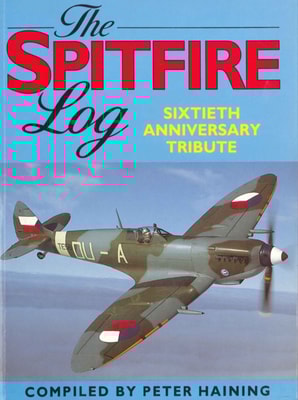
Of all the airplanes that defended Britain during World War Two, none inspired as much affection as the Spitfire, the plane that became a symbol of courage and determination during the Battle of Britain.
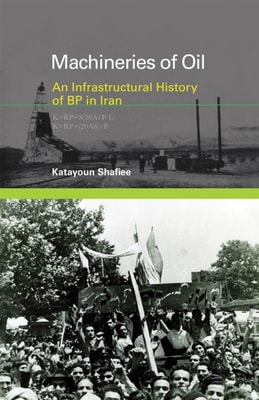
The emergence of the international oil corporation as a political actor in the twentieth century, seen in BP''s infrastructure and information arrangements in Iran.
How the presence of the tsetse fly turned the African forest into an open laboratory where African knowledge formed the basis of colonial tsetse control policies.
An account of the complex relationship between technology and romanticism that links nineteenth-century monsters, automata, and mesmerism with twenty-first-century technology''s magic devices and romantic cyborgs.
How America used its technological leadership in the 1950s and the 1960s to foster European collaboration and curb nuclear proliferation, with varying degrees of success.
How, beginning in the mid 1960s, the US semiconductor industry helped shape changes in American science, including a new orientation to the short-term and the commercial.
Explorations of science, technology, and innovation in Africa not as the product of “technology transfer” from elsewhere but as the working of African knowledge.
The evolution of the multi-billion-dollar computer services industry, from consulting and programming to data analytics and cloud computing, with case studies of important companies.
How xerography became a creative medium and political tool, arming artists and activists on the margins with an accessible means of making their messages public.
How, despite thirty years of effort, Soviet attempts to build a national computer network were undone by socialists who seemed to behave like capitalists.
How a team of musicians, engineers, computer scientists, and psychologists developed computer music as an academic field and ushered in the era of digital music.
Analysis and case studies explore the concept of vulnerability, offering a novel and broader approach to understanding the risks and benefits of science and technology.
A study of science and technology practices that shows how even emergent aspects of research and development remain entangled with established hierarchies.
An argument that technology accelerates biological discovery, with case studies ranging from chromosome discovery with early microscopes to how DNA replicates using radioisotope labels.
An expert investigates Russia''s long history of technological invention followed by commercial failure and points to new opportunities to break the pattern.
How women coped with both formal barriers and informal opposition to their entry into the traditionally masculine field of engineering in American higher education.
Episodes in the history of data, from early modern math problems to today''s inescapable “dataveillance,” that demonstrate the dependence of data on culture.
How radio astronomers challenged national borders, disciplinary boundaries, and the constraints of vision to create an international scientific community.
An account of conflicts within engineering in the 1960s that helped shape our dominant contemporary understanding of technological change as the driver of history.
How networked structures of collaboration and competition within a community of researchers led to the invention, spread, and commercialization of scanning probe microscopy.
Blackouts—whether they result from military planning, network failure, human error, or terrorism—offer snapshots of electricity''s increasingly central role in American society.
How Paris, London, Chicago, Berlin, and Tokyo created modernity through science and technology by means of urban planning, international expositions, and museums.
French-born and self-trained civil engineer Octave Chanute designed America's two largest stockyards, created innovative and influential structures such as the Kansas City Bridge over the previously "e;unbridgeable"e; Missouri River, and was a passionate aviation pioneer whose collaborative approach to aeronautical engineering problems encouraged other experimenters, including the Wright brothers.