How radio astronomers challenged national borders, disciplinary boundaries, and the constraints of vision to create an international scientific community.
An account of conflicts within engineering in the 1960s that helped shape our dominant contemporary understanding of technological change as the driver of history.
How networked structures of collaboration and competition within a community of researchers led to the invention, spread, and commercialization of scanning probe microscopy.
Blackouts—whether they result from military planning, network failure, human error, or terrorism—offer snapshots of electricity''s increasingly central role in American society.
How Paris, London, Chicago, Berlin, and Tokyo created modernity through science and technology by means of urban planning, international expositions, and museums.
French-born and self-trained civil engineer Octave Chanute designed America's two largest stockyards, created innovative and influential structures such as the Kansas City Bridge over the previously "e;unbridgeable"e; Missouri River, and was a passionate aviation pioneer whose collaborative approach to aeronautical engineering problems encouraged other experimenters, including the Wright brothers.
Before 1930, the domestic market for electrical appliances was segmented, but New Deal policies and programs created a true mass market, reshaping the electrical and housing markets and guiding them toward mandated social goals.
'An utterly dazzling book, the best piece of history I have read for a long time' Jerry Brotton, author of A History of the World in Twelve Maps'Not merely an horologist's delight, but an ingenious meditation on the nature and symbolism of time-keeping itself' Richard HolmesThe measurement of time has always been essential to human civilization, from early Roman sundials to the advent of GPS.
Discover the history behind the amazing machines that power our world, and the inventors that created them, in this mini children's encyclopedia to the story of inventions.
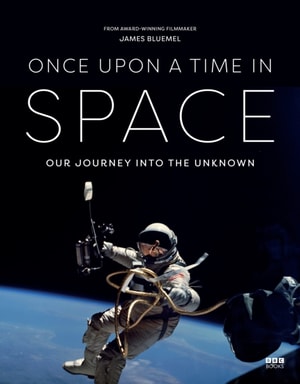
This compelling story of exploration charts and celebrates humankind in space, from Sputnik's launch in 1957 through the Apollo Moon landings and the International Space Station to future missions to Mars and beyond.
*Longlisted for the William MB Berger Prize for British Art History, 2022*A spectacular biography of the great designer, entrepreneur, abolitionist and beacon of the Industrial Revolution, from acclaimed historian and Director of the Victoria and Albert Museum, Tristram HuntJosiah Wedgwood, perhaps the greatest English potter who ever lived, epitomized the best of his age.
'Celebrates human cognitive diversity, and is rich with empathy and psychological insight' Steven Pinker 'Bold, intriguing, profound' Jay Elwes, Spectator Why can humans alone invent?
Angela Ki Che Leung's meticulous study begins with the classical annals of the imperial era, which contain the first descriptions of a feared and stigmatized disorder modern researchers now identify as leprosy.
On October 19, 1876 a group of leading French citizens, both men and women included, joined together to form an unusual group, The Society of Mutual Autopsy, with the aim of proving that souls do not exist.
One theme of this volume is whether the complementarity between technology and human capital is a recent phenomenon, or whether it can be traced through history.
This book charts the history of the worldwide introduction of an operative treatment method for broken bones, osteosynthesis, by a Swiss-based association, called AO.
The Republic of Color delves deep into the history of color science in the United States to unearth its origins and examine the scope of its influence on the industrial transformation of turn-of-the-century America.
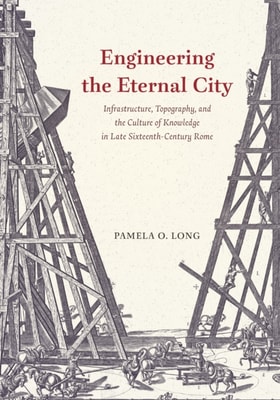
Between the catastrophic flood of the Tiber River in 1557 and the death of the "e;engineering pope"e; Sixtus V in 1590, the city of Rome was transformed by intense activity involving building construction and engineering projects of all kinds.