After World War II, the US Atomic Energy Commission (AEC) began mass-producing radioisotopes, sending out nearly 64,000 shipments of radioactive materials to scientists and physicians by 1955.
The four contributors to this volume examine the eugenics movements in Germany, France, Brazil, and the Soviet Union, and describe how geneticists and physicians participated in the development of policies concerning the improvement of hereditary qualities in humans.
While historians have given ample attention to stories of entrepreneurship, invention, and labor conflict, they have told us little about actual work-places and how people worked.
Orson Welles's greatest breakthrough into the popular consciousness occurred in 1938, three years before Citizen Kane, when his War of the Worlds radio broadcast succeeded so spectacularly that terrified listeners believed they were hearing a genuine report of an alien invasion-a landmark in the history of radio's powerful relationship with its audience.
In the folklore of mathematics, James Joseph Sylvester (1814-1897) is the eccentric, hot-tempered, sword-cane-wielding, nineteenth-century British Jew who, together with the taciturn Arthur Cayley, developed a theory and language of invariants that then died spectacularly in the 1890s as a result of David Hilbert's groundbreaking, `modern' techniques.
This book covers the history of 'Big Ben', the great clock and bells at Westminster, from the origins of Westminster as the seat of government right up to the celebrations of the Great Clock's 150th anniversary in 2009.
This book covers the history of 'Big Ben', the great clock and bells at Westminster, from the origins of Westminster as the seat of government right up to the celebrations of the Great Clock's 150th anniversary in 2009.
Drawing on entirely new evidence, The English Renaissance Stage: Geometry, Poetics, and the Practical Spatial Arts 1580-1630 examines the history of English dramatic form and its relationship to the mathematics, technology, and early scientific thought during the Renaissance period.
The late medieval English milling industry epitomizes one of the most important technical achievements of early societies: the exploitation of wind, water and muscle power for augmenting human endeavours.
At the turn of the twenty-first century, typical households were equipped with a landline telephone, a desktop computer connected to a dial-up modem, and a shared television set.
At the turn of the twenty-first century, typical households were equipped with a landline telephone, a desktop computer connected to a dial-up modem, and a shared television set.
The Oxford Handbook of Philosophy of Technology gives readers a view into this increasingly vital and urgently needed domain of philosophical understanding, offering an in-depth collection of leading and emerging voices in the philosophy of technology.
The Oxford Handbook of Philosophy of Technology gives readers a view into this increasingly vital and urgently needed domain of philosophical understanding, offering an in-depth collection of leading and emerging voices in the philosophy of technology.
This penetrating examination of a paradox of colonial rule shows how the massive transfers of technology--including equipment, techniques, and experts--from the European imperial powers to their colonies in Asia and Africa resulted not in industrialization but in underdevelopment.
From the moment news reached Peru in 1910 that Jorge Chavez Dartnell, a pilot of Peruvian parentage, had become the first man to fly across the Alps, aviation fired the imagination of the masses in his home country.
From the moment news reached Peru in 1910 that Jorge Chavez Dartnell, a pilot of Peruvian parentage, had become the first man to fly across the Alps, aviation fired the imagination of the masses in his home country.
The world is undergoing a profound set of digital disruptions that are changing the nature of how governments counter dissent and assert control over their countries.
The world is undergoing a profound set of digital disruptions that are changing the nature of how governments counter dissent and assert control over their countries.
A FINANCIAL TIMES BOOK OF THE YEAR 2020How did we end up in a world where humans coexist with technologies we can no longer fully control or understand?
This book examines the development of nuclear propulsion in the Royal Navy from the first proposal in 1946 to the start-up of the last core improvement for the first submarine reactor power plant PWR 1 in December 1974.
This book is dedicated to the history and contemporary activities of IGIP that occupies a unique position among world organizations who are focused on Engineering Education.
This volume is a collection of essays of a philosophical nature on the subject of technology, introducing authors from the Portuguese-speaking community, namely from Portugal itself, Africa and Brazil.
Cyber security is the greatest risk faced by financial institutions today, a risk they have understood and managed for decades longer than is commonly understood.
This contributed volume provides 11 illustrative case studies of technological transformation in the global pulp and paper industry from the inception of mechanical papermaking in early nineteenth century Europe until its recent developments in today's business environment with rapidly changing market dynamics and consumer behaviour.
The advent of recombinant DNA technology in the 1970s was a key moment in the history of both biotechnology and the commercialization of academic research.
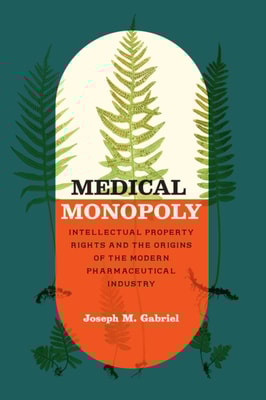
During most of the nineteenth century, physicians and pharmacists alike considered medical patenting and the use of trademarks by drug manufacturers unethical forms of monopoly; physicians who prescribed patented drugs could be, and were, ostracized from the medical community.
A NEW YORK TIMES BESTSELLERThe official book behind the Academy Award-winning film The Imitation Game, starring Benedict Cumberbatch and Keira KnightleyIt is only a slight exaggeration to say that the British mathematician Alan Turing (19121954) saved the Allies from the Nazis, invented the computer and artificial intelligence, and anticipated gay liberation by decadesall before his suicide at age forty-one.