The eighteenth century saw the creation of a number of remarkable mechanical androids: at least ten prominent automata were built between 1735 and 1810 by clockmakers, court mechanics, and other artisans from France, Switzerland, Austria, and the German lands.
After World War II, the US Atomic Energy Commission (AEC) began mass-producing radioisotopes, sending out nearly 64,000 shipments of radioactive materials to scientists and physicians by 1955.
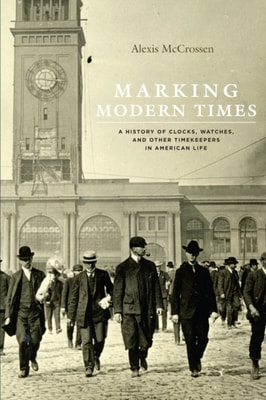
The public spaces and buildings of the United States are home to many thousands of timepieces-bells, time balls, and clock faces-that tower over urban streets, peek out from lobbies, and gleam in store windows.
Journey Through the Ages of Technological MarvelsEmbark on a compelling odyssey from the primitive sparks of human ingenuity to the cutting-edge advancements of our digital world.
Water may seem innocuous, but as a universal necessity, it inevitably intersects with politics when it comes to acquisition, control, and associated technologies.
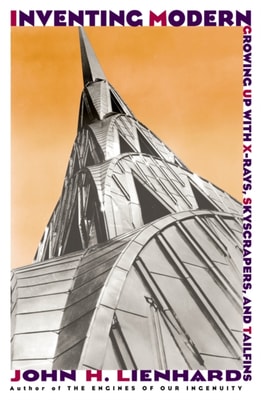
In How Invention Begins, Lienhard reconciles the ends of invention with the individual leaps upon which they are built, illuminating the vast web of individual inspirations that lie behind whole technologies.
This inquiry into the technical advances that shaped the 20th century follows the evolutions of all the principal innovations introduced before 1913 (as detailed in the first volume) as well as the origins and elaborations of all fundamental 20th century advances.
Although the Information Age is often described as a new era, a cultural leap springing directly from the invention of modern computers, it is simply the latest step in a long cultural process.
The History and Practice of Ancient Astronomy combines new scholarship with hands-on science to bring readers into direct contact with the work of ancient astronomers.
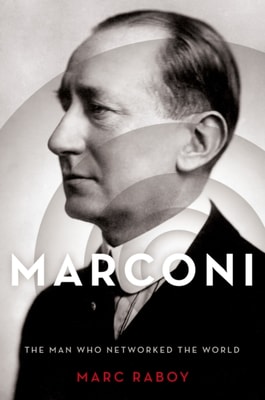
In the history of electronic communication, the last quarter of the nineteenth century holds a special place, for it was during this period that the telephone, phonograph, electric light, wireless, and cinema were all invented.
The History and Practice of Ancient Astronomy combines new scholarship with hands-on science to bring readers into direct contact with the work of ancient astronomers.
Autos and Progress reinterprets twentieth-century Brazilian history through automobiles, using them as a window for understanding the nation's struggle for modernity in the face of its massive geographical size, weak central government, and dependence on agricultural exports.
The technological realm provides an unusually active laboratory not only for new ideas and products but also for the remarkable linguistic innovations that accompany and describe them.
The technological realm provides an unusually active laboratory not only for new ideas and products but also for the remarkable linguistic innovations that accompany and describe them.
Autos and Progress reinterprets twentieth-century Brazilian history through automobiles, using them as a window for understanding the nation's struggle for modernity in the face of its massive geographical size, weak central government, and dependence on agricultural exports.
A House in the Sun describes a number of experiments in solar house heating in American architectural, engineering, political, economic, and corporate contexts from the beginning of World War II until the late 1950s.
A House in the Sun describes a number of experiments in solar house heating in American architectural, engineering, political, economic, and corporate contexts from the beginning of World War II until the late 1950s.
A compelling call to apply Buckminster Fuller's creative problem-solving to present-day problemsA self-professed "e;comprehensive anticipatory design scientist,"e; the inventor Buckminster Fuller (1895-1983) was undoubtedly a visionary.
A compelling call to apply Buckminster Fuller's creative problem-solving to present-day problemsA self-professed "e;comprehensive anticipatory design scientist,"e; the inventor Buckminster Fuller (1895-1983) was undoubtedly a visionary.
Once a sleeping giant, China today is the world's fastest growing economy--the leading manufacturer of cell phones, laptop computers, and digital cameras--a dramatic turn-around that alarms many Westerners.
In How Invention Begins, Lienhard reconciles the ends of invention with the individual leaps upon which they are built, illuminating the vast web of individual inspirations that lie behind whole technologies.
This inquiry into the technical advances that shaped the 20th century follows the evolutions of all the principal innovations introduced before 1913 (as detailed in the first volume) as well as the origins and elaborations of all fundamental 20th century advances.
This abridgement of The Oxford Companion to African American Literature will make the entries of the greatest general interest available to a wider audience, providing the same calibre of scholarship and information as the original volume.
Although the Information Age is often described as a new era, a cultural leap springing directly from the invention of modern computers, it is simply the latest step in a long cultural process.
This penetrating examination of a paradox of colonial rule shows how the massive transfers of technology--including equipment, techniques, and experts--from the European imperial powers to their colonies in Asia and Africa resulted not in industrialization but in underdevelopment.
In the history of electronic communication, the last quarter of the nineteenth century holds a special place, for it was during this period that the telephone, phonograph, electric light, wireless, and cinema were all invented.