Traditional narratives of capitalist change often rely on the myth of the willful entrepreneur from the global North who transforms the economy and delivers modernity-for good or ill-to the rest of the world.
Orson Welles's greatest breakthrough into the popular consciousness occurred in 1938, three years before Citizen Kane, when his War of the Worlds radio broadcast succeeded so spectacularly that terrified listeners believed they were hearing a genuine report of an alien invasion-a landmark in the history of radio's powerful relationship with its audience.
Galileo never set foot on the Iberian Peninsula, yet, as Enrique Garcia Santo-Tomas unfolds in The Refracted Muse, the news of his work with telescopes brought him to surprising prominence-not just among Spaniards working in the developing science of optometry but among creative writers as well.
In 1968 a team of scientists and engineers from RCA announced the creation of a new form of electronic display that relied upon an obscure set of materials known as liquid crystals.
After the atomic bombing at the end of World War II, anxieties about survival in the nuclear age led scientists to begin stockpiling and freezing hundreds of thousands of blood samples from indigenous communities around the world.
From Blaise Pascal in the 1600s to Charles Babbage in the first half of the nineteenth century, inventors struggled to create the first calculating machines.
Painting with Fire shows how experiments with chemicals known to change visibly over the course of time transformed British pictorial arts of the long eighteenth century-and how they can alter our conceptions of photography today.
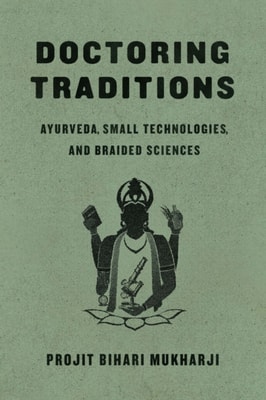
Like many of the traditional medicines of South Asia, Ayurvedic practice transformed dramatically in the later nineteenth and early twentieth centuries.
The years between roughly 1760 and 1810, a period stretching from the rise of Joseph Haydn's career to the height of Ludwig van Beethoven's, are often viewed as a golden age for musical culture, when audiences started to revel in the sounds of the concert hall.
Water may seem innocuous, but as a universal necessity, it inevitably intersects with politics when it comes to acquisition, control, and associated technologies.
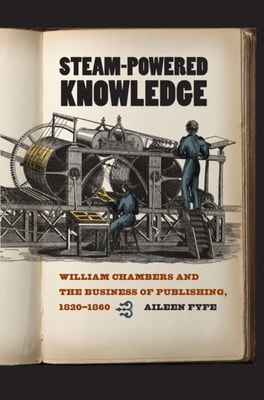
With the overwhelming amount of new information that bombards us each day, it is perhaps difficult to imagine a time when the widespread availability of the printed word was a novelty.
Before the hydrogen bomb indelibly associated radioactivity with death, many chemists, physicians, botanists, and geneticists believed that radium might hold the secret to life.
The advent of recombinant DNA technology in the 1970s was a key moment in the history of both biotechnology and the commercialization of academic research.
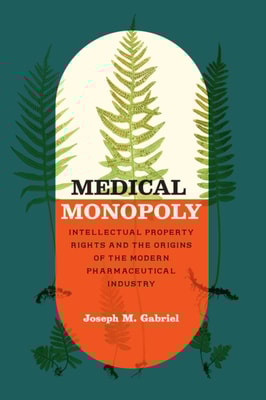
During most of the nineteenth century, physicians and pharmacists alike considered medical patenting and the use of trademarks by drug manufacturers unethical forms of monopoly; physicians who prescribed patented drugs could be, and were, ostracized from the medical community.
The eighteenth century saw the creation of a number of remarkable mechanical androids: at least ten prominent automata were built between 1735 and 1810 by clockmakers, court mechanics, and other artisans from France, Switzerland, Austria, and the German lands.
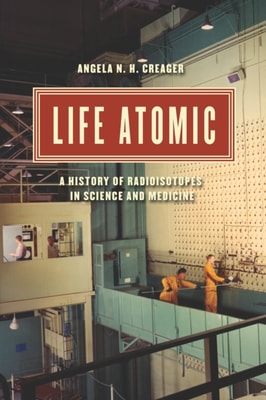
After World War II, the US Atomic Energy Commission (AEC) began mass-producing radioisotopes, sending out nearly 64,000 shipments of radioactive materials to scientists and physicians by 1955.
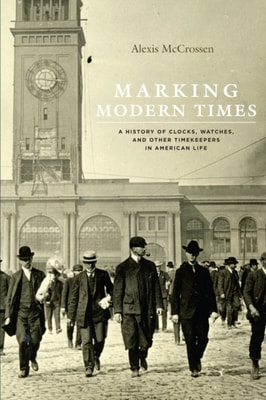
The public spaces and buildings of the United States are home to many thousands of timepieces-bells, time balls, and clock faces-that tower over urban streets, peek out from lobbies, and gleam in store windows.
Journey Through the Ages of Technological MarvelsEmbark on a compelling odyssey from the primitive sparks of human ingenuity to the cutting-edge advancements of our digital world.
Water may seem innocuous, but as a universal necessity, it inevitably intersects with politics when it comes to acquisition, control, and associated technologies.
In How Invention Begins, Lienhard reconciles the ends of invention with the individual leaps upon which they are built, illuminating the vast web of individual inspirations that lie behind whole technologies.
This inquiry into the technical advances that shaped the 20th century follows the evolutions of all the principal innovations introduced before 1913 (as detailed in the first volume) as well as the origins and elaborations of all fundamental 20th century advances.
Although the Information Age is often described as a new era, a cultural leap springing directly from the invention of modern computers, it is simply the latest step in a long cultural process.
The History and Practice of Ancient Astronomy combines new scholarship with hands-on science to bring readers into direct contact with the work of ancient astronomers.
In the history of electronic communication, the last quarter of the nineteenth century holds a special place, for it was during this period that the telephone, phonograph, electric light, wireless, and cinema were all invented.
The History and Practice of Ancient Astronomy combines new scholarship with hands-on science to bring readers into direct contact with the work of ancient astronomers.
Autos and Progress reinterprets twentieth-century Brazilian history through automobiles, using them as a window for understanding the nation's struggle for modernity in the face of its massive geographical size, weak central government, and dependence on agricultural exports.