The Oxford Handbook of Philosophy of Technology gives readers a view into this increasingly vital and urgently needed domain of philosophical understanding, offering an in-depth collection of leading and emerging voices in the philosophy of technology.
The Oxford Handbook of Philosophy of Technology gives readers a view into this increasingly vital and urgently needed domain of philosophical understanding, offering an in-depth collection of leading and emerging voices in the philosophy of technology.
This penetrating examination of a paradox of colonial rule shows how the massive transfers of technology--including equipment, techniques, and experts--from the European imperial powers to their colonies in Asia and Africa resulted not in industrialization but in underdevelopment.
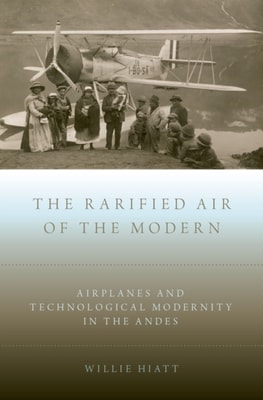
From the moment news reached Peru in 1910 that Jorge Chavez Dartnell, a pilot of Peruvian parentage, had become the first man to fly across the Alps, aviation fired the imagination of the masses in his home country.
From the moment news reached Peru in 1910 that Jorge Chavez Dartnell, a pilot of Peruvian parentage, had become the first man to fly across the Alps, aviation fired the imagination of the masses in his home country.
The world is undergoing a profound set of digital disruptions that are changing the nature of how governments counter dissent and assert control over their countries.
The world is undergoing a profound set of digital disruptions that are changing the nature of how governments counter dissent and assert control over their countries.
A FINANCIAL TIMES BOOK OF THE YEAR 2020How did we end up in a world where humans coexist with technologies we can no longer fully control or understand?
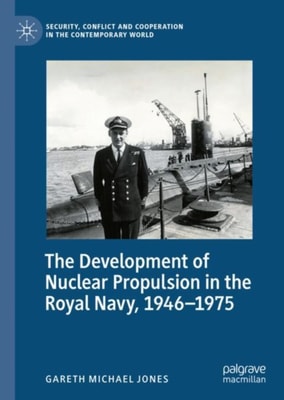
This book examines the development of nuclear propulsion in the Royal Navy from the first proposal in 1946 to the start-up of the last core improvement for the first submarine reactor power plant PWR 1 in December 1974.
This book is dedicated to the history and contemporary activities of IGIP that occupies a unique position among world organizations who are focused on Engineering Education.
This volume is a collection of essays of a philosophical nature on the subject of technology, introducing authors from the Portuguese-speaking community, namely from Portugal itself, Africa and Brazil.
Cyber security is the greatest risk faced by financial institutions today, a risk they have understood and managed for decades longer than is commonly understood.
This contributed volume provides 11 illustrative case studies of technological transformation in the global pulp and paper industry from the inception of mechanical papermaking in early nineteenth century Europe until its recent developments in today's business environment with rapidly changing market dynamics and consumer behaviour.
The advent of recombinant DNA technology in the 1970s was a key moment in the history of both biotechnology and the commercialization of academic research.
During most of the nineteenth century, physicians and pharmacists alike considered medical patenting and the use of trademarks by drug manufacturers unethical forms of monopoly; physicians who prescribed patented drugs could be, and were, ostracized from the medical community.
A NEW YORK TIMES BESTSELLERThe official book behind the Academy Award-winning film The Imitation Game, starring Benedict Cumberbatch and Keira KnightleyIt is only a slight exaggeration to say that the British mathematician Alan Turing (19121954) saved the Allies from the Nazis, invented the computer and artificial intelligence, and anticipated gay liberation by decadesall before his suicide at age forty-one.
A panoramic global history of the nineteenth centuryA monumental history of the nineteenth century, The Transformation of the World offers a panoramic and multifaceted portrait of a world in transition.
THE FINANCIAL TIMES BEST BOOKS OF THE YEARThis absorbing collective biography of the genius Nobel family reveals how the Nobels' business and personal lives were fundamentally intertwined with the histories of Sweden and Russia, as well as the economic and entrepreneurial development of Europe in the long 19th century.
THE FINANCIAL TIMES BEST BOOKS OF THE YEARThis absorbing collective biography of the genius Nobel family reveals how the Nobels' business and personal lives were fundamentally intertwined with the histories of Sweden and Russia, as well as the economic and entrepreneurial development of Europe in the long 19th century.
This book is dedicated to the history and contemporary activities of IGIP that occupies a unique position among world organizations who are focused on Engineering Education.
This book presents a critical examination of conversations between engineering, social sciences, and the humanities asking whether their conversations have come of age.
This is a volume of chapters on the historical study of information, computing, and society written by seven of the most senior, distinguished members of the History of Computing field.
'By mixing lo-fi charm into hi-fi science Into the Groove captures all the wonder and absurdity of its subject, jumping and skipping with real analogue delight.
Leading technologists, historians, and journalists reveal the stories behind the computer coding that touches all aspects of life-for better or worseFew of us give much thought to computer code or how it comes to be.
This book explores the global technological transformations that have shaped development of society for eons, from the emergence of Homo sapiens to the modern day.
Journey Through the Ages of Technological MarvelsEmbark on a compelling odyssey from the primitive sparks of human ingenuity to the cutting-edge advancements of our digital world.
This book systematically summarizes China Internet development over the past 25 years, highlighting its strong impact on China's economy and society, and discussing the Chinese people's transition from beneficiaries and participants to builders, contributors and joint maintainers of cyberspace development.
A richly illustrated introduction to the engineering triumphs that made America modernIn this age of microchips and deep space probes, it's hard to imagine life before electricity or passenger trains.
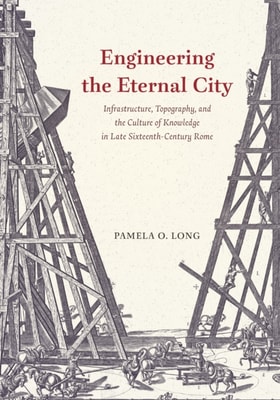
Between the catastrophic flood of the Tiber River in 1557 and the death of the "e;engineering pope"e; Sixtus V in 1590, the city of Rome was transformed by intense activity involving building construction and engineering projects of all kinds.