The technological realm provides an unusually active laboratory not only for new ideas and products but also for the remarkable linguistic innovations that accompany and describe them.
The technological realm provides an unusually active laboratory not only for new ideas and products but also for the remarkable linguistic innovations that accompany and describe them.
Autos and Progress reinterprets twentieth-century Brazilian history through automobiles, using them as a window for understanding the nation's struggle for modernity in the face of its massive geographical size, weak central government, and dependence on agricultural exports.
A House in the Sun describes a number of experiments in solar house heating in American architectural, engineering, political, economic, and corporate contexts from the beginning of World War II until the late 1950s.
A House in the Sun describes a number of experiments in solar house heating in American architectural, engineering, political, economic, and corporate contexts from the beginning of World War II until the late 1950s.
A compelling call to apply Buckminster Fuller's creative problem-solving to present-day problemsA self-professed "e;comprehensive anticipatory design scientist,"e; the inventor Buckminster Fuller (1895-1983) was undoubtedly a visionary.
A compelling call to apply Buckminster Fuller's creative problem-solving to present-day problemsA self-professed "e;comprehensive anticipatory design scientist,"e; the inventor Buckminster Fuller (1895-1983) was undoubtedly a visionary.
Once a sleeping giant, China today is the world's fastest growing economy--the leading manufacturer of cell phones, laptop computers, and digital cameras--a dramatic turn-around that alarms many Westerners.
In How Invention Begins, Lienhard reconciles the ends of invention with the individual leaps upon which they are built, illuminating the vast web of individual inspirations that lie behind whole technologies.
This inquiry into the technical advances that shaped the 20th century follows the evolutions of all the principal innovations introduced before 1913 (as detailed in the first volume) as well as the origins and elaborations of all fundamental 20th century advances.
This abridgement of The Oxford Companion to African American Literature will make the entries of the greatest general interest available to a wider audience, providing the same calibre of scholarship and information as the original volume.
Although the Information Age is often described as a new era, a cultural leap springing directly from the invention of modern computers, it is simply the latest step in a long cultural process.
This penetrating examination of a paradox of colonial rule shows how the massive transfers of technology--including equipment, techniques, and experts--from the European imperial powers to their colonies in Asia and Africa resulted not in industrialization but in underdevelopment.
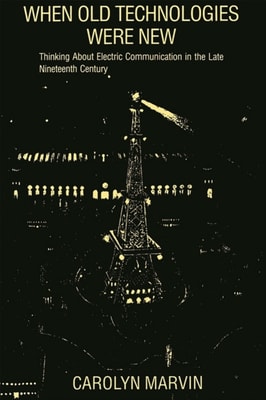
In the history of electronic communication, the last quarter of the nineteenth century holds a special place, for it was during this period that the telephone, phonograph, electric light, wireless, and cinema were all invented.
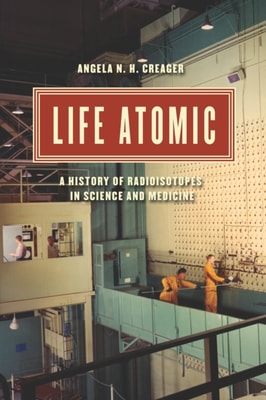
After World War II, the US Atomic Energy Commission (AEC) began mass-producing radioisotopes, sending out nearly 64,000 shipments of radioactive materials to scientists and physicians by 1955.
The four contributors to this volume examine the eugenics movements in Germany, France, Brazil, and the Soviet Union, and describe how geneticists and physicians participated in the development of policies concerning the improvement of hereditary qualities in humans.
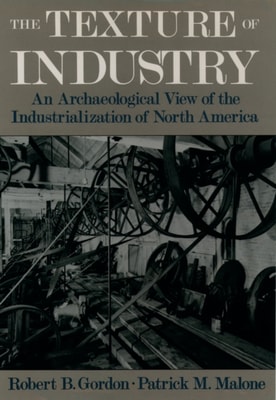
While historians have given ample attention to stories of entrepreneurship, invention, and labor conflict, they have told us little about actual work-places and how people worked.
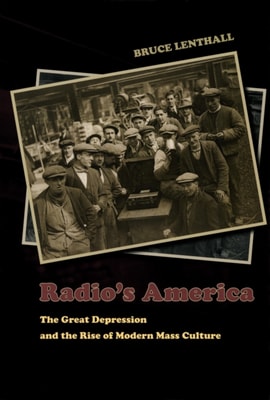
Orson Welles's greatest breakthrough into the popular consciousness occurred in 1938, three years before Citizen Kane, when his War of the Worlds radio broadcast succeeded so spectacularly that terrified listeners believed they were hearing a genuine report of an alien invasion-a landmark in the history of radio's powerful relationship with its audience.
In the folklore of mathematics, James Joseph Sylvester (1814-1897) is the eccentric, hot-tempered, sword-cane-wielding, nineteenth-century British Jew who, together with the taciturn Arthur Cayley, developed a theory and language of invariants that then died spectacularly in the 1890s as a result of David Hilbert's groundbreaking, `modern' techniques.
This book covers the history of 'Big Ben', the great clock and bells at Westminster, from the origins of Westminster as the seat of government right up to the celebrations of the Great Clock's 150th anniversary in 2009.
This book covers the history of 'Big Ben', the great clock and bells at Westminster, from the origins of Westminster as the seat of government right up to the celebrations of the Great Clock's 150th anniversary in 2009.
Drawing on entirely new evidence, The English Renaissance Stage: Geometry, Poetics, and the Practical Spatial Arts 1580-1630 examines the history of English dramatic form and its relationship to the mathematics, technology, and early scientific thought during the Renaissance period.
The late medieval English milling industry epitomizes one of the most important technical achievements of early societies: the exploitation of wind, water and muscle power for augmenting human endeavours.
At the turn of the twenty-first century, typical households were equipped with a landline telephone, a desktop computer connected to a dial-up modem, and a shared television set.
At the turn of the twenty-first century, typical households were equipped with a landline telephone, a desktop computer connected to a dial-up modem, and a shared television set.