The book discusses instrumentation and control in modern fossil fuel power plants, with an emphasis on selecting the most appropriate systems subject to constraints engineers have for their projects.
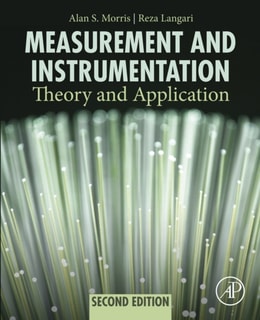
Measurement and Instrumentation: Theory and Application, Second Edition, introduces undergraduate engineering students to measurement principles and the range of sensors and instruments used for measuring physical variables.
This book builds upon a wide variety of academic and professional resources to offer an in-depth analysis of the nature, causes, and consequences of major business and technology trends of our time.
In this book, the role of Artificial Intelligence (AI), Internet of Things (IoT) and Blockchain in smart healthcare is explained through a detailed study of Artificial Neural Network, Fuzzy Set Theory, Intuitionistic Fuzzy Set, Machine Learning and Big Data technology.
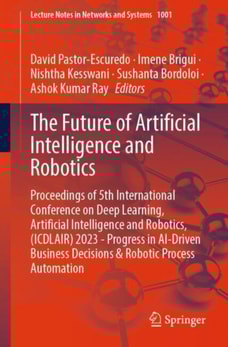
This book includes the results from the 5th International Conference on Deep Learning, Artificial Intelligence and Robotics (ICDLAIR), held in National Institute of Technology, Kurukshetra, on December 07-09, 2023, which brought together visionaries, researchers, and industry leaders at the forefront of technological innovation.
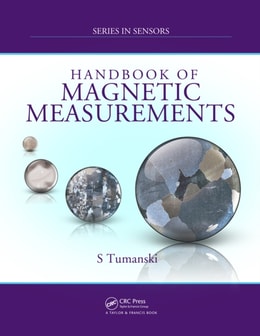
Collecting state-of-the-art knowledge from information scattered throughout the literature, this handbook describes magnetic materials and sensors, the testing of magnetic materials, and applications of magnetic measurements.
Electrical Impedance: Principles, Measurement, and Applications provides a modern and much-needed overview of electrical impedance measurement science and its application in metrology, sensor reading, device and material characterizations.
Mantenimiento industrial aplicado es un libro didáctico destinado a crear una gestión de mantenimiento integral, orientada a la mejora y al desarrollo de la actividad industrial.
The book, written for a general educated public, compares the most important elements of the human nervous system to the corresponding capacities of robots.
Telexistence is a fundamental concept which refers to the general technology that enables a human being to have the real-time sensation of being at a place other than where he or she actually exists, while being able to interact with the remote environment, which may be real, virtual, or a combination of both.
The proceedings volume includes about 50 invited talks by experts, covering advances in the following fields of instrumentation for colliding beam physics: 1.
Most of the books on infrared characterization are for applications in chemistry and no book has been dedicated to infrared characterization for microelectronics.
Since four decades, rapid detection and monitoring in clinical and food diagnostics and in environmental and biodefense have paved the way for the elaboration of electrochemical biosensors.
Present-day computers lack well-defined functions to accept various kinds of sensual information such as vision, hearing, and smelling (binding problem).
This book draws together recent data on both cytoplasmic and flagellar dyneins and the proteins they interact with, to give the reader a clear picture of what is currently known about the structure and mechanics of these remarkable macro-molecular machines.
This book presents select proceedings of the 8th International and 29th All India Manufacturing Technology, Design and Research Conference (AIMTDR 2021).
This book presents select peer-reviewed proceedings of the International Conference on Futuristic Advancements in Materials, Manufacturing, and Thermal Sciences (ICFAMMT 2022).
This book presents the select proceedings of the International Conference on Functional Material, Manufacturing and Performances (ICFMMP 2021), and aims to provide a comprehensive and broad-spectrum picture of the state-of-the-art research, development, and commercial prospective of various discoveries conducted in the real-world materials science applications.
In this book, researchers at the forefront of the field explain the minimum necessary background knowledge and introduce important topics in molecular robotics in an easy-to-understand manner.
This book presents selected proceedings of the 8th International and 29th All India Manufacturing Technology, Design and Research Conference (AIMTDR 2021).
This book presents the proceedings of 5th International and 20th National Conference on Machines and Mechanisms (iNaCoMM 2021) held at PDPM IIITDM Jabalpur during 9-11 December 2021.
This book introduces intelligent manufacturing system planning, design, and implementation, through the deep integration of the Internet, big data, artificial intelligence, and manufacturing process, to promote the transformation and upgrading of enterprises.
This book is as an extension of previous book "e;Computer Vision and Machine Learning in Agriculture"e; for academicians, researchers, and professionals interested in solving the problems of agricultural plants and products for boosting production by rendering the advanced machine learning including deep learning tools and techniques to computer vision algorithms.
The book presents latest research-based innovations in the field of mechanical infrastructure presented in the International Conference on Recent Advances in Mechanical Infrastructure (ICRAM 2021).
This book presents the progress, changes, and evolvement for apple mechanical harvest during the past decades, which include, but not limited to, bulky harvest method, harvest platform, apple infield sorting, and harvest robotics.
This book aims to explore and discuss theories and technologies for the development of socially competent and culture-aware embodied conversational agents for elderly care.
This book presents the breakthrough and cutting-edge progress for collaborative perception and mapping by proposing a novel framework of multimodal perception-relative localization-collaborative mapping for collaborative robot systems.
This book comprises the select proceedings of the International Conference on Materials, Design and Manufacturing for Sustainable Environment (ICMDMSE 2020).
The primary aim of this volume is to provide researchers and engineers from both academic and industry with up-to-date coverage of new results in the field of robotic welding, intelligent systems and automation.