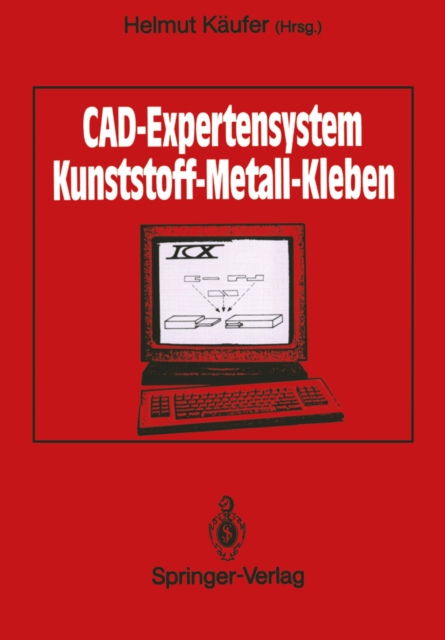
Die in diesem Band zusammengestellten Beiträge einer Seminarreihe am Zentrum für Graphische Datenverarbeitung behandeln Schnittstellenproblematiken aus einem aktuellen Bereich der CAD-Anwendungen.
The aim of this Conference was to become a forum for discussion of both academic and industrial research in those areas of computational engineering science and mechanics which involve and enrich the rational application of computers, numerical methods, and mechanics, in modern technology.
A knowledge of linear systems provides a firm foundation for the study of optimal control theory and many areas of system theory and signal processing.
Conceived by Count Jacopo Francesco Riccati more than a quarter of a millennium ago, the Riccati equation has been widely studied in the subsequent centuries.
he problem of analyzing sequences of images to extract three-dimensional T motion and structure has been at the heart of the research in computer vi- sion for many years.
This book is motivated largely by a desire to solve shape optimization prob- lems that arise in applications, particularly in structural mechanics and in the optimal control of distributed parameter systems.
Control technology is a new learning environment whichoffers the opportunity to take up the economic andeducational challenge of enabling people to adapt to newtechnologies and use them to solve problems.
Das Buch beschreibt den Entwurf und die Entwicklung des Expertensystems ICX, das, verbunden mit einem CAD-System, bei der Gestaltung, Dimensionierung, Planung und Ausführung einer Kunststoff-Metall-Klebung dem Konstrukteur hilfreich zur Seite steht.
The aim of the present book is the formulation, mathematical study and numerical treatment of static and dynamic problems in mechanics and engineering sciences involving nonconvex and nonsmooth energy functions, or nonmonotone and multivalued stress-strain laws.
Dieser Buchtitel ist Teil des Digitalisierungsprojekts Springer Book Archives mit Publikationen, die seit den Anfängen des Verlags von 1842 erschienen sind.
Dieser Buchtitel ist Teil des Digitalisierungsprojekts Springer Book Archives mit Publikationen, die seit den Anfängen des Verlags von 1842 erschienen sind.
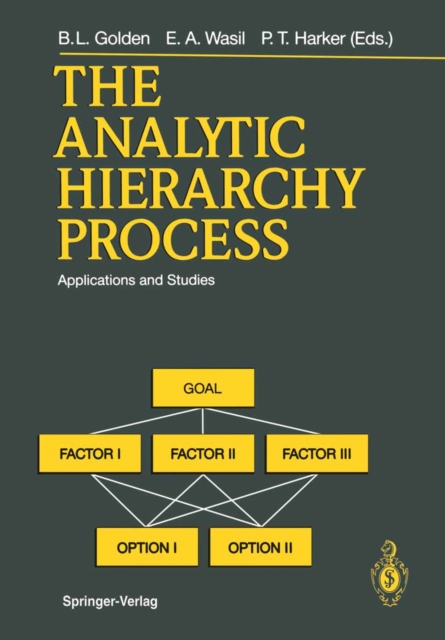
Management science is a di scipl ine dedicated to the development of techniques that enable decision makers to cope with the increasing complexity of our world.
The application of BEM in all fields of engineering and science has progressed at an accelerate rate since the first book on the method appeared in the late seventies.
Ever since the beginning of modern probability theory in the seventeenth century there has been a continuous debate over the meaning and applicability of the concept of probability.
The craft of designing mathematical models of dynamic objects offers a large number of methods to solve subproblems in the design, typically parameter estimation, order determination, validation, model reduc- tion, analysis of identifiability, sensi tivi ty and accuracy.
Dieser Buchtitel ist Teil des Digitalisierungsprojekts Springer Book Archives mit Publikationen, die seit den Anfängen des Verlags von 1842 erschienen sind.
Dieser Buchtitel ist Teil des Digitalisierungsprojekts Springer Book Archives mit Publikationen, die seit den Anfängen des Verlags von 1842 erschienen sind.
This monograph is intended for an advanced undergraduate or graduate course as well as for researchers, who want a compilation of developments in this rapidly growing field of operations research.
The articles of these proceedings arise from a NSF-CBMS regional conference on the mathematical modeling of the hearing process, that was held at Rensselaer Polytechnic Institute in the summer of 1980.